
Commercial Roof Inspection in Tuscaloosa, AL
The inspection that helps an asset manager is the one where a superintendent walks every foot of the roof, touches the details and writes down what is found in language a budget committee can use. A drive-by look or a drone image alone leaves out the seams, the terminations and the soft spots that decide whether a roof lasts three more years or ten. In Tuscaloosa, AL, where a single severe storm can reshape the condition of a whole portfolio, that detail pays for itself.
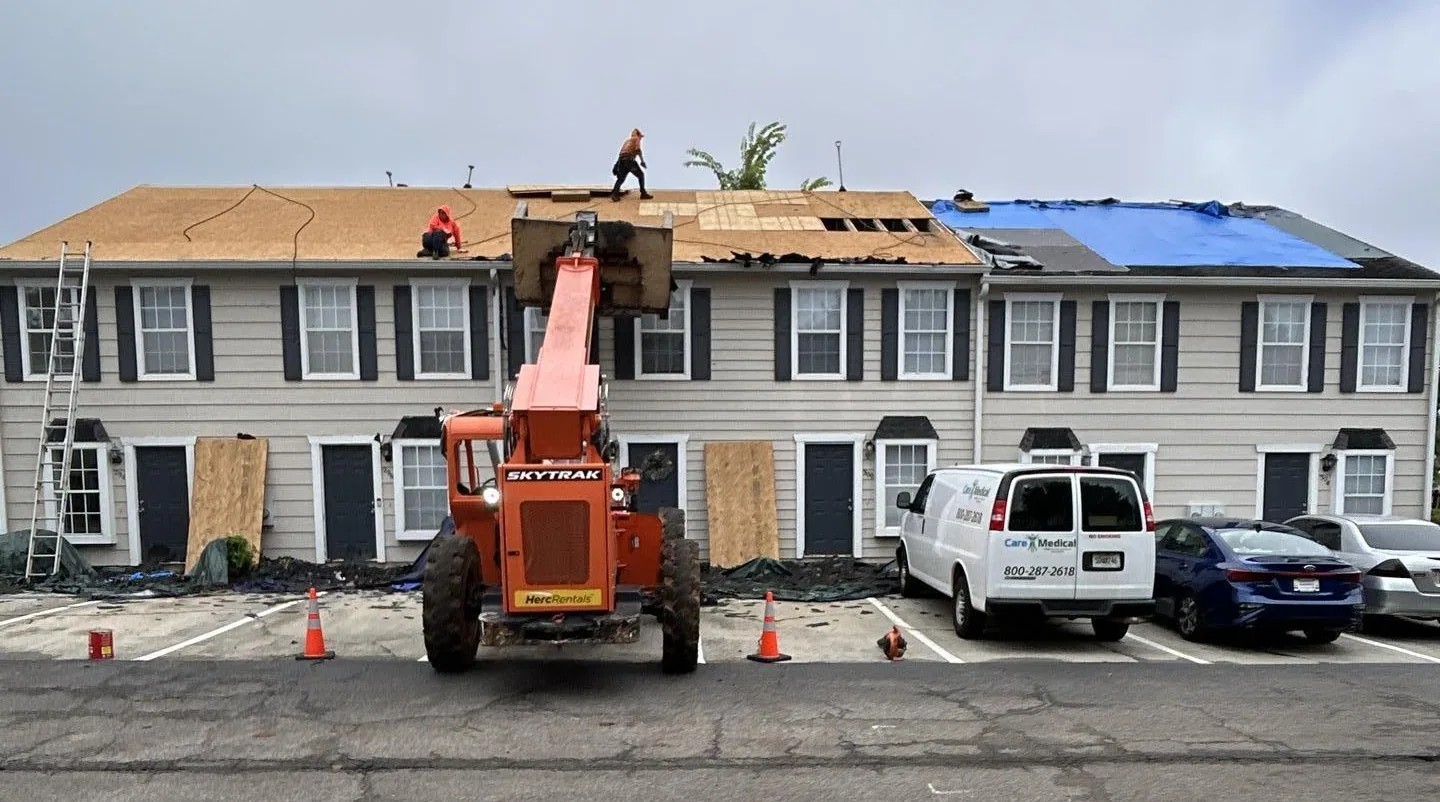
We inspect low-slope membrane roofs and metal roofs, and we produce a written condition report with photographs, a ranked list of sections and a plain recommendation for each: repair, replace, coat or monitor.
What Happens on the Roof Walk
The walk follows a set order. We start at the access point and the nearest drains, since ponding and clogged drains are the first signs of drainage trouble. Next come the perimeter and parapet walls, where flashing, coping and edge metal show wear. We then cover the field of the roof, checking seams, laps, blisters, punctures and patches, and finish at every penetration and piece of rooftop equipment.
Where a reading is doubtful, we probe it. A moisture meter or infrared scan shows where insulation may be wet, a core cut confirms it, and a fastener pull test checks the deck. We also look at what the roof carries: abandoned equipment, cable runs laid directly on the membrane, and worn walkway pads that signal heavy foot traffic. Each of these has a cost, and each goes on the list.
The last step on every walk is a look at the building from the ground. Water staining on exterior walls, discharge from downspouts and sagging gutters all tell us how the roof sheds water during a storm. We compare those clues against what we saw above and mark any mismatch for a second look.
The Condition Report an Owner Can Use
A good report reads as a decision tool. It starts with a roof plan divided into sections, and each section gets a condition rating, photographs and notes on what we found. A ranked list follows, showing which sections carry the highest leak risk and which can wait. Costs are expressed as ranges tied to the scope and are separated into repairs that protect the building now and capital items for later years.
The report also helps with the paperwork around the roof. Many manufacturers ask for dated inspection records when a warranty is questioned, and insurers ask for pre-loss condition when a storm claim arrives. Our roof condition reports are written to serve those needs, and the same data feeds a long-term plan when an owner chooses roof capital planning.
Access, Safety and Scheduling
Before the walk, we confirm how the crew reaches the roof: a fixed ladder, an interior hatch, a stair tower or a lift from the ground. Fall protection is set up at open edges and skylights, and any section with a questionable deck is marked and avoided until it is tested from below. On occupied buildings, we coordinate the visit with the manager so tenants know a crew will be overhead and mechanical contractors can keep their schedules.
A walk can be done outside normal hours when operations require it. Hospital and school roofs are often best visited early in the morning or on weekends, and distribution buildings sometimes ask for a window when docks are quiet. We also ask for the last repair history and any warranty documents before arriving, since comparing past work with present conditions often explains why a particular corner keeps leaking.
Tuscaloosa Weather and Inspection Timing
The city receives roughly 53 inches of precipitation a year, and summers have reached 107 degrees Fahrenheit. That combination ages membranes from both sides: heat softens and stretches them, and water finds the seams that open as a result. An inspection every spring finds winter damage before the summer heat expands it, and a second look after a major storm finds wind damage while it can still be documented.
Storm history sets the urgency. The April 27, 2011 EF4 tornado crossed 15th Street and McFarland Boulevard and Alberta City, and a May 2025 windstorm with straight-line gusts near 90 to 100 mph struck the county above Northport. Owners in Alberta City and the surrounding area who keep a dated inspection on file are better prepared to show what a roof looked like before a loss.
Inspections by Building Type
A distribution building in the Airport Industrial Park corridor often presents a wide roof with long runs of seams and few penetrations. Our attention goes to the drains, dock-end flashings and any fastener backing out of the deck. A shopping center along McFarland Boulevard has more equipment and more curbs, so the inspection leans toward penetrations and the patches left by previous contractors.
Hospitals and medical offices around Northport Medical Center ask different questions. Exhaust, air intakes and roof-mounted equipment affect safety, and any opening needs infection-control planning. Campuses and school roofs reward a building-by-building ranking that helps a facilities director decide where the next dollar goes. The checklist is tuned to the type: a warehouse roof is read for seams and drains, a hospital roof for equipment, intakes and access.
When We Add Drones and Infrared
Tools extend the walk without replacing it. A drone roof inspection gives a quick overview of very large or steep roofs, and it records a visual baseline. An infrared moisture survey points to wet insulation that no visual check can see.
We decide which tools to use after talking with the owner. A small roof needs no drone, and a roof with obvious open seams does not need infrared. A large roof with a history of leaks often needs both, and the combined result is stronger than either alone. The point is a report that matches the building and the question being asked, not a long list of services.
What Happens After the Report
After the report, we sit down with the manager to go through the findings. Urgent items are scheduled first, nonurgent repairs are grouped by building, and capital items are placed on a timeline. Some owners continue with a preventive roof maintenance plan, which repeats the inspection and handles small repairs before they grow.
The goal is for the roof to stop being a surprise. With a record in hand, a manager can defend a budget request, check a warranty claim and judge a contractor's proposal against known conditions.
Commercial Roofing Questions
Do I need an inspection if the roof is not leaking?
A dry ceiling does not prove a dry roof. Insulation can hold water for months before it shows below, and an inspection finds that damage while it is still a repair, not a replacement.
How long does a roof walk take?
A mid-size roof is walked in a few hours. Larger or more complex roofs take longer, especially when core cuts or moisture mapping are included. We give a timeline when the property is scheduled.
Will inspecting my roof void a warranty?
Walking the roof does not void coverage, though cutting a core without proper repair can. We repair every cut at once and document it, so the roof stays eligible.
Can the report be used for a sale or refinance?
It can support a buyer's or lender's review, since it shows condition and near-term costs. A formal due diligence roof survey is the better fit for a transaction.
What does the inspection cost?
Price depends on roof size, number of buildings, access and the tools used. We quote after reviewing the property list, so the number reflects the work.