
TPO Roofing in Tuscaloosa, AL
A white TPO sheet over polyiso insulation and a steel deck is the roof a superintendent walks with a probe in one hand, because the weld at each seam is what holds the membrane together and the only way to know a weld is good is to push on it. TPO on commercial buildings in Tuscaloosa, AL is something our crews install, repair and replace, and every walk ends with a ranked list for the asset manager's books: which seams are tight, which edges are loose, which drains hold water and which sections are due for a tear-off.
What a TPO Roof Is Made Of
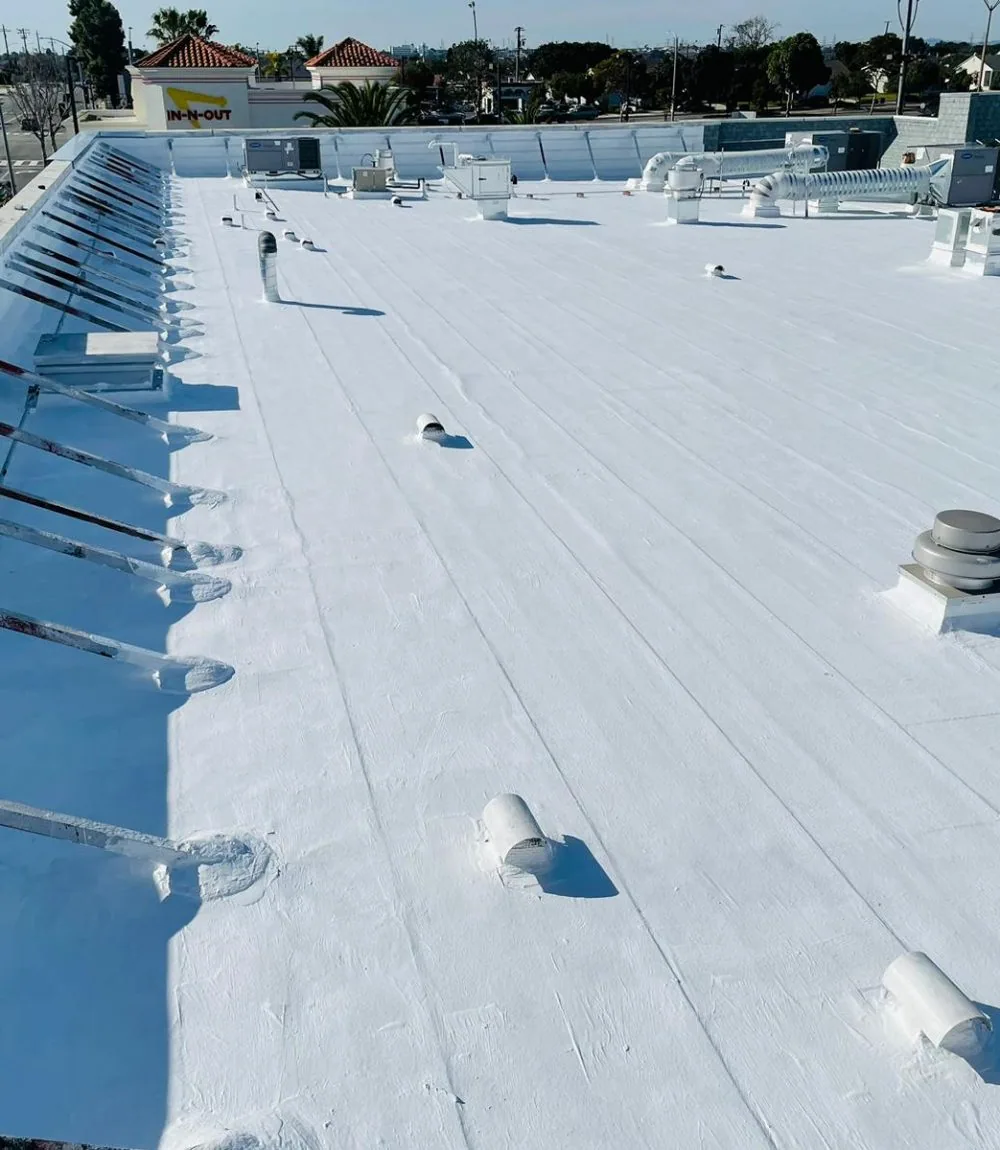
TPO is a thermoplastic polyolefin sheet, usually reinforced with a polyester scrim, delivered in wide rolls and joined with hot-air welds. It is laid over insulation boards, often polyisocyanurate, with a cover board between them in some assemblies, and the whole package is fastened to the deck mechanically, adhered with a bonding adhesive or ballasted in rare cases. The white surface reflects sunlight, which matters when summer heat has reached 107 F.
The sheet is only one layer. The deck beneath it, the tapered insulation that moves water to the drains, and the metal at the roof edge decide how the membrane performs, and a warranty walk reads all of them together. Mechanically attached sheets rely on fasteners and plates along the seam; fully adhered sheets rely on the bond across the whole field; each fails in its own way, and the repair method follows the attachment.
What We Find Up There
On a TPO roof that has aged, the common findings are seams that have lost bond at the lap edges, membrane that has shrunk and pulled at a parapet base, and surface crazing where the top layer has weathered thin over the scrim. We probe the welds, look at the flashing at every rooftop unit curb and pipe, and mark any spot where fasteners have backed out and lifted the sheet.
Where insulation feels soft underfoot, we cut a core and look at the layers. A core cut shows whether the polyiso is wet, whether the deck has rusted, and whether earlier repairs were made to the same sheet or laid over a failed one. That finding decides whether a section is patched, recovered or torn off. We also look at how earlier crews finished the work: hand-welded patches that were never probed, sealant used where a weld belonged, and fasteners left exposed at a curb. Those details tell us how much of the roof can be trusted and how much has to be reworked.
TPO on Industrial and Retail Buildings
Large low-slope roofs on industrial buildings are where TPO is most often specified, because wide sheets install quickly and seams can be welded in sections. The Tuscaloosa County Airport Industrial Park spans 1,000 acres off Robert Cardinal Road, and Cedar Cove Technology Park spans 950 acres near I-59, where SMP Automotive Systems planned a 700,000 square foot supplier facility. On buildings of that class, the roof is a section-by-section question: each area has its own drainage, penetrations and age.
Retail roofs along McFarland Boulevard and 15th Street ask different questions. Strip centers have many tenants and many rooftop units, so curb flashings and walkway pads matter as much as the field of the sheet. Each service technician who walks to a unit scuffs the surface a little, and a path worn through to the scrim is a leak waiting for the next heavy rain.
Wind Uplift and Edge Metal
Wind lifts a membrane from the edges first, which is why the edge metal, the perimeter fastening and the wind-uplift rating of the assembly are on every report. On April 27, 2011 an EF4 tornado, estimated at 190 mph, crossed 35th Street, wrecked warehouses in the industrial area and went on toward 15th Street and McFarland Boulevard. In May 2025 surveyors measured straight-line winds of 90 to 100 mph north of Northport.
A roof that has not been tested for uplift should have its edge termination checked: the cleat or coping that holds the sheet down, the fasteners behind it and the sealant at the joints. We pull fasteners to test their grip when the deck allows, a fastener pull test that shows whether the deck will hold a new attachment pattern or needs repair first. Where a section has lost edge metal, the exposed sheet is secured the same day.
Ponding, Drains and Heat Movement
With about 53.5 inches of rain a year, a TPO roof that holds water for days after a storm will age faster at the ponded area. We look for water at drain sumps, at low spots between deck flutes and behind curbs, and we measure how long it remains. Tapered insulation is the standard remedy when a re-roof is planned, because it moves water toward the drains.
Heat is the other stress. Heat near the 107 F record expands the sheet and the flashing, and seams at rooftop unit curbs show it first. Where a unit has been replaced with a larger one, the curb flashing is checked against the new footprint. Ponding is a repair item when a clogged drain is the cause and a design item when the deck has deflected, and the report says.
What to Carry on the Books
For an asset manager, the useful record is simple: roof section, membrane type and thickness if known, attachment method, last inspection date, seam condition, edge metal condition, repair count and an estimated service range in years. Insulation and wind provisions for a TPO replacement come from Alabama's adoption of the 2021 International Building Code, dated July 1, 2022 and carrying exceptions, plus the ASHRAE/IES 90.1-2013 energy standard.
Our roof condition reports are built to this format, and the commercial roof inspection that feeds them is the starting point. A dated photo of each seam, taken at the first warranty walk, gives the next inspector something concrete to compare against.
Scope and Sequence for a TPO Replacement
A TPO tear-off proceeds by section on an operating building: remove the old membrane and wet insulation, repair the deck, install tapered insulation and cover board, place the new sheet, weld the seams, flash curbs and penetrations, set new edge metal and walk the roof for a punch list. Each section is dried in before the crew moves on. Where the existing roof is sound, a recover over it may be considered, and roof recover overlay work follows its own checks.
Related systems include PVC roofing and EPDM roofing, and wind-driven damage is documented as wind damage roof repair. We serve the whole McFarland Boulevard corridor and the rest of the city.
Commercial Roofing Questions
How can you tell if a TPO seam has failed?
We probe it. A good weld resists the probe along the full lap, while a failed seam lifts or shows a gap at the edge. Seam failures are marked on the roof plan and repaired with a welded patch or cover strip.
Does TPO hold up in Tuscaloosa heat?
A white sheet reflects most sunlight, but heat still moves the membrane and flashing. Seams at rooftop unit curbs and parapet bases are the first to show it.
Can TPO be installed over the old roof?
Sometimes. A recover needs dry insulation and a sound deck, which a core cut and moisture check confirm. Otherwise the old roof comes off.
What wind rating should a TPO roof carry?
The one the building's design and the code require, with the edge metal and fastening pattern matching it. We record the rating on each section.