Emergency Roof Repair in Tuscaloosa, AL
A roof opened by wind has a short list of things that matter in the first hours: stop the water from entering, protect what is below, and make the structure safe to work around. A superintendent arriving at a damaged warehouse or retail center in Tuscaloosa, AL does not begin with a repair plan. The plan starts with a walk that identifies where membrane has lifted, where panels have shifted and where insulation has been exposed, because every one of those decisions changes what gets covered first.
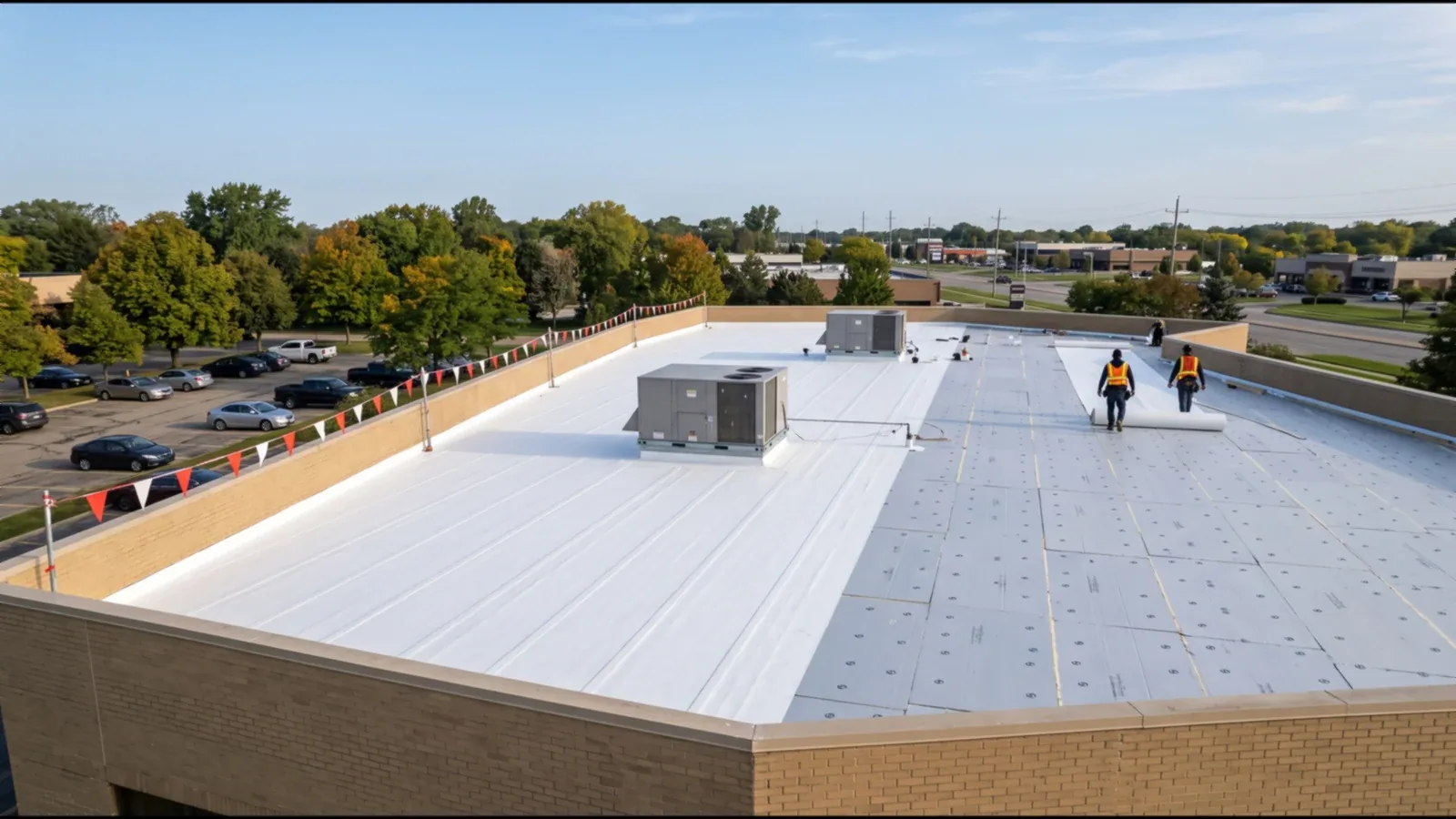
We answer calls day and night, every day of the year, holidays included. The call is not the repair. It is the beginning of a sequence in which temporary protection goes on quickly, the damage is documented, and the permanent scope follows once the weather and the building allow it.
The First Hours on a Damaged Roof
The first decision is safety. Wind-damaged roofs can hide weak decks, loose edge metal and torn membrane that will catch the foot or the wind. We check access, power lines and unstable sections before anyone steps onto the roof. If a section is unsafe, we protect from the edges and the inside until conditions improve.
The second decision is where the water is going. We mark the entry points, look at the interior and move to stop the largest source first. A torn membrane near a drain can send a stream into a building within minutes, while a lifted edge may allow a slower flow that soaks insulation. Triage keeps the crew effective: cover the worst openings, keep equipment and inventory dry, and return for the rest once the immediate threat has passed.
Tarping, Dry-In and Temporary Seals
Temporary protection is chosen to match the damage. Large tears and missing panels are covered with heavy tarps, battened and secured over the ridge or the edge, with sandbags or fasteners spread across the deck so that wind cannot lift them. Smaller openings receive membrane patches, sealant or tape applied to a dried and cleaned surface. Where insulation is exposed, it is covered first, since wet insulation is the quickest way to turn a small opening into a large repair.
Every temporary measure is documented with photos and marked on a plan, then tied into the roof so that a later permanent repair can replace it cleanly. A temporary seal is not a repair, and we say so at the end of each visit. It buys time for the owner to arrange permanent work and to notify the insurance carrier while the building stays dry.
What Tuscaloosa Storms Do to Roofs
The April 27, 2011 EF4 tornado tore through warehouses off 35th Street, then 15th Street and McFarland Boulevard, then Alberta City on its way toward Holt. Smaller events show up more often. In May 2025, straight-line winds estimated at 90 to 100 mph raked a belt nearly four miles wide north of Northport, and a 2007 tornado touched down near Samantha and crossed US 43 with 105 mile per hour winds.
These storms produce a predictable pattern on commercial roofs, whether the work falls under tornado damage repair or wind damage repair: lifted perimeter membrane, displaced coping, torn flashings, damaged rooftop equipment and debris puncturing the field. North of the river in Samantha and Northport, as anywhere with mature trees near buildings, a limb thrown onto a membrane is a common puncture. Our crews carry material for tarping, drying and temporary flashing on every emergency call, so the first visit can produce a dry building and not only an assessment.
Documenting Damage for the Carrier
Insurance claims go better with evidence taken at the time of the loss. We photograph the roof before and after any temporary work, record locations on a roof plan, and describe the damage in plain terms: what failed, where, and what the likely cause was. Moisture readings in insulation and photos of interior water entry round out the record.
We do not argue coverage, and we do not speak for the carrier. We provide the facts that an adjuster, a manager and a roofer need to agree on scope. After a larger event, that evidence is put into a form the carrier can use through roof insurance claim assistance, and the permanent scope for storm damage roof repair follows from the same photographs.
Priorities That Change by Building
A hospital roof is not handled like a warehouse. At the Tuscaloosa VA Medical Center, a campus of 25 major buildings, an opening over a clinical area is an operational issue, so protection of the interior comes first and access is coordinated with facilities staff. Schools and universities need safe pedestrian routes around the work. Retail centers on McFarland Boulevard and Skyland Boulevard need to reopen quickly, so we focus on getting each storefront dry.
A Mercedes supplier plant in Cedar Cove Technology Park carries the highest cost of interruption, so the first cover goes over electrical equipment and process lines. A distribution building in the Airport Industrial Park corridor may have racking and stored goods that need covers before the roof is touched. Each priority list is built with the building manager during the first call so that the crew arrives with the right plan.
From Dry-In to a Permanent Roof
Once the building is dry, the question is how much of the roof is still serviceable. A commercial roof inspection after the emergency separates damage that can be repaired from areas that should be replaced, and moisture scans show where water has traveled. Owners then choose between targeted repair and larger work.
Permanent work is scheduled around parts, weather and the carrier's timeline. We keep the temporary protection in place and checked until the permanent repair replaces it, and we tell the owner when the next heavy rain is a risk to any temporary measure.
Owners with several buildings should ask the same questions of each roof: which sections are open, which are protected, and which have been checked since the storm. We keep that list current and update it after each visit, so a portfolio manager can see at a glance which properties are dry, which are still temporary and which have moved to permanent repair.
Commercial Roofing Questions
What should I have ready when I call about storm damage?
The building address, where water is entering, and whether anyone has been on the roof. Photos of the damage, if they can be taken safely from the ground, help us decide what to load before we arrive.
Will a tarp last through the next storm?
A properly battened and fastened tarp can hold through ordinary rain, but strong wind will test it. We check temporary work after major weather and replace it with a permanent repair as soon as the roof is ready.
How much can I do myself before the crew arrives?
Move inventory and equipment away from the leak, shut off power to wet areas if an electrician says it is safe, and stay off the roof. Collect water where you can, but leave the roof work to a crew.
Do you work with my insurance adjuster?
We provide photos, moisture readings and written descriptions that the adjuster can use. Coverage decisions belong to the carrier and the owner.
Is emergency work billed differently from planned repair?
Emergency response involves after-hours crews and rapid mobilization, and the cost reflects that. We explain what the temporary work includes before it begins and again when it ends.
What happens if the weather stops us from reaching the roof?
Lightning, sustained high wind and standing water can keep a crew off the deck. In that case we protect the interior from below with covers and diverters, then go up the moment conditions are safe.