Roofing for Real Estate Investors and REITs in Tuscaloosa, AL
An investor looking at a Tuscaloosa, AL building wants one number from the roof before anything else: how much it will cost to carry for the length of the hold. A superintendent standing on that roof can give it, because the answer comes from the deck condition, the layers of membrane and insulation, the seams and the flashing at every penetration, and not from the age on the invoice. The metro of 277,494 people supports retail, automotive, manufacturing, healthcare, education and public-sector tenants, and the roofs over those tenants age at very different rates, so an investor with a portfolio needs each roof read on its own terms.
Acquisition walks and due diligence
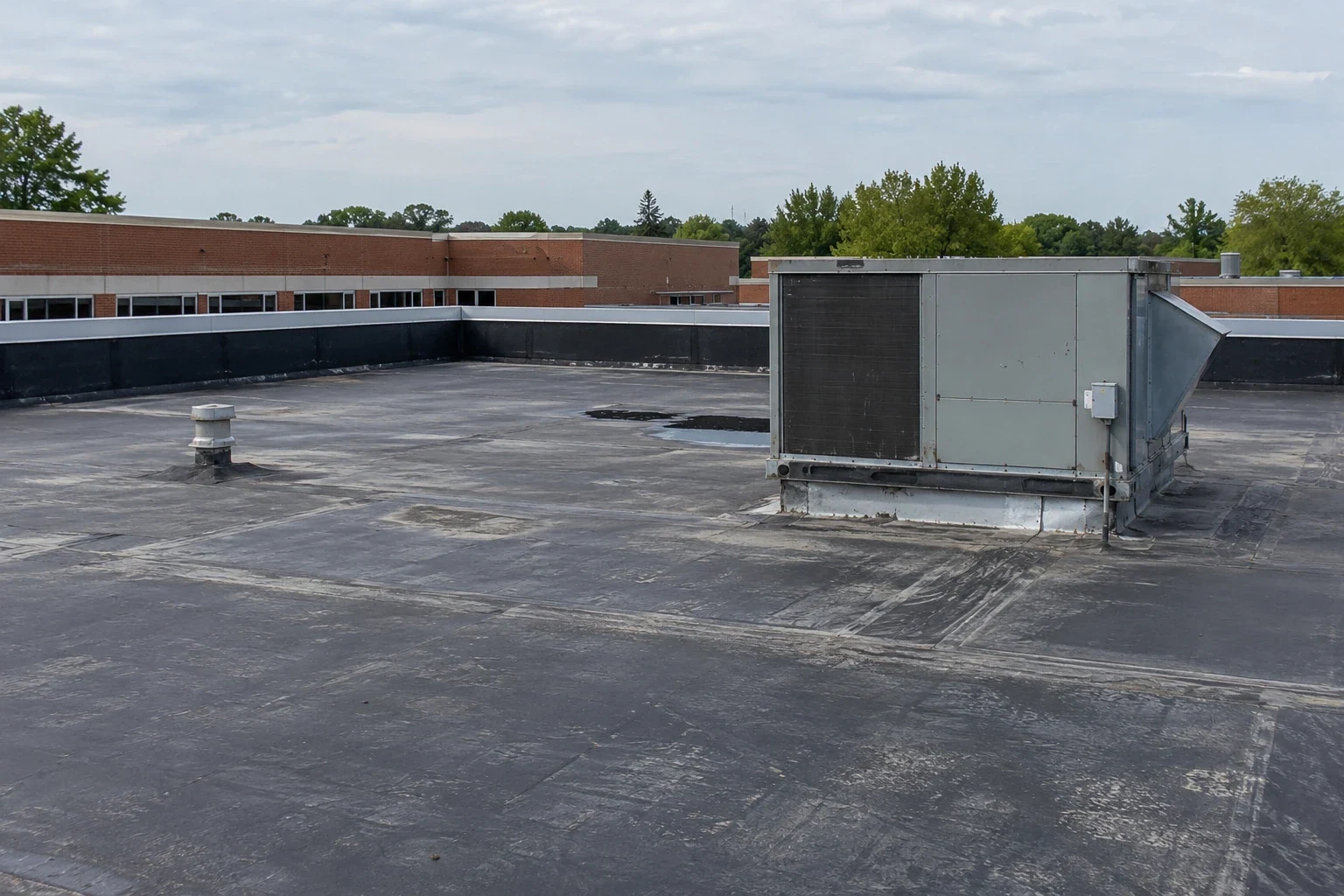
A buyer has days, not months, to learn what a roof is worth. We walk the roof, cut cores where the insulation feels wrong, probe the seams and flashing, check the drains and sumps and photograph every section. The due diligence roof survey that follows lists the system, the approximate age, the moisture findings, the wind-uplift rating if it is known, the immediate repairs and the likely replacement window. It states plainly what is not known, such as a membrane type hidden under gravel or a warranty status that the seller cannot document.
That report goes into the underwriting model as a repair reserve and a replacement reserve, with a cost for each, and it gives the buyer a basis for a price adjustment or a seller credit when the roof is closer to the end than the listing suggests.
Access during a contingency period is its own problem. We coordinate with the listing broker and the seller's property manager, arrange a safe route to each roof section, bring a drone where a section cannot be walked, and keep the photographs organized by section so the buyer's lender and insurer can read them without a guide. Where the seller has earlier reports, we compare them with what we found and note any change, which shows how fast the roof has been aging.
Matching the roof to the hold period
A roof plan depends on how long the investor expects to own the asset. A five-year hold favors repairs that stretch the existing roof past the exit, a coating restoration where the membrane is sound, or a recover that avoids tear-off. A long hold favors replacement with a system whose life covers the whole period, and a warranty that transfers to the next owner. We write the scope for each path and show the cost of each, so the asset manager can pick the one that fits the business plan and not simply the one that fits this quarter's budget. When a sale is the plan, a roof with a clean report, dated repairs and a transferable warranty is easier to underwrite than one with a history nobody can document, and the paper often matters as much as the membrane.
Where the building is leased, the roof plan also has to match lease responsibilities. Some leases make the landlord responsible for the structure and roof, and others pass repairs through. The report separates routine repair from capital replacement so the accounting follows the lease.
Industrial parks and the supplier base
Industrial investors watch two parks: Cedar Cove, the site of a planned 700,000-square-foot facility for Mercedes supplier SMP Automotive Systems, and the airport-area park off Robert Cardinal Road, which has WATCO rail. The Mercedes-Benz plant at Vance, 19 miles east of downtown, is what the supplier base behind both depends on. Buildings that serve suppliers and distributors tend to carry long-span roofs with heavy rooftop equipment and dock edges, and a failed roof is among the larger single capital items on the building. The walk states each building's actual system. Both Cedar Cove and the Airport Industrial Park fall inside our service area.
Wind exposure as an insurance and valuation question
Wind is the roof risk a Tuscaloosa investor has to price. On the county's wind record sit the EF4 of April 2011, estimated at 190 mph over 35th Street, 15th Street and McFarland Boulevard, and a straight-line event in May 2025 whose 90 to 100 mph gusts were surveyed north of Northport. An insurer asks for the roof's age, system and attachment, and a lender asks whether the building can withstand the next event. Both want the answer in writing, by section, with photographs, and neither is satisfied by a general statement that the roof is in good shape. We record the wind-uplift rating of each section, the edge metal and its fastening, and the results of any fastener pull test, and put them in a single sheet for each building.
Code, energy and permit exposure
Two code dates matter to an investor planning a replacement. The 2021 International Building Code, in effect since July 1, 2022 with exceptions, was amended on March 17, 2025 to take in parts of the 2024 IBC. ASHRAE/IES 90.1-2013 is the commercial energy standard the state lists, though the power to adopt an energy code has since moved to the licensing board for general contractors. For an investor planning a replacement, those rules decide the insulation level and wind design the permit will require, and we confirm them with the building official while the budget is still flexible, so a code upgrade does not appear as a surprise after the contract is signed.
Rain, heat and the cost of waiting
Rain near 53.5 inches a year, plus a 107 F record high, make Tuscaloosa hard on flat roofs. Ponding at a drain sump soaks seams and invites algae, and summer heat opens flashing and brittle sealant at rooftop unit curbs. Small leaks go into insulation first, so the repair cost climbs quietly until the roof has to be replaced. We state the cost of leaving each item alone in the report: the repair now, the repair next year if nothing is done and the likely point at which the section moves from repair to replacement.
What to carry on the books
The portfolio record names every building and roof section with its system, its approximate age, the latest seam and flashing report, the core cut results and the reserve assigned. A roof asset management file keeps those pages current from one hold period to the next, and the multi-site roof program turns them into one calendar. Investors who also run managed properties or work with general contractors on redevelopment can use the same pages with those partners.
Investors who hold buildings through separate entities benefit from one report format across all of them. The same page layout, the same rating words and the same reserve columns let an asset manager compare a retail strip in one entity with a warehouse in another and move capital to the roof that needs it.
Commercial Roofing Questions
How quickly can a due diligence roof survey be done?
A walk and a photographed report usually fit a normal inspection period. Access, weather and the number of roof sections set the real limit.
What goes into a repair and replacement reserve?
The cost of immediate repairs, the cost to replace each section and the year we expect each to be needed, with the reasoning shown.
Does the report help with insurance renewal?
Yes. It lists system, age, attachment and wind-uplift rating by section, which are the items an insurer asks about.
Can warranties be transferred to a buyer?
Some can. We collect the paperwork, note any transfer conditions and list the maintenance the warranty requires.
When is a recover better than replacement?
When the existing insulation is dry, the deck is sound and the structure can carry the added layer. A moisture survey and a core cut settle the question.