
Multi-Site Roof Programs in Tuscaloosa, AL
An owner with a single-ply plant roof in an industrial park, a modified bitumen retail strip on McFarland Boulevard and a clinic in Northport has three leak calls waiting on three different contractors, three report formats and three guesses at next year's budget, and the superintendent who walks all three finds that nothing about them can be compared. Multi-site roof programs in Tuscaloosa, AL put every building on the same grading scale, the same inspection calendar and the same record, so the asset manager sees the whole portfolio on one page and the next dollar goes to the roof where water is entering.
One List, One Grade
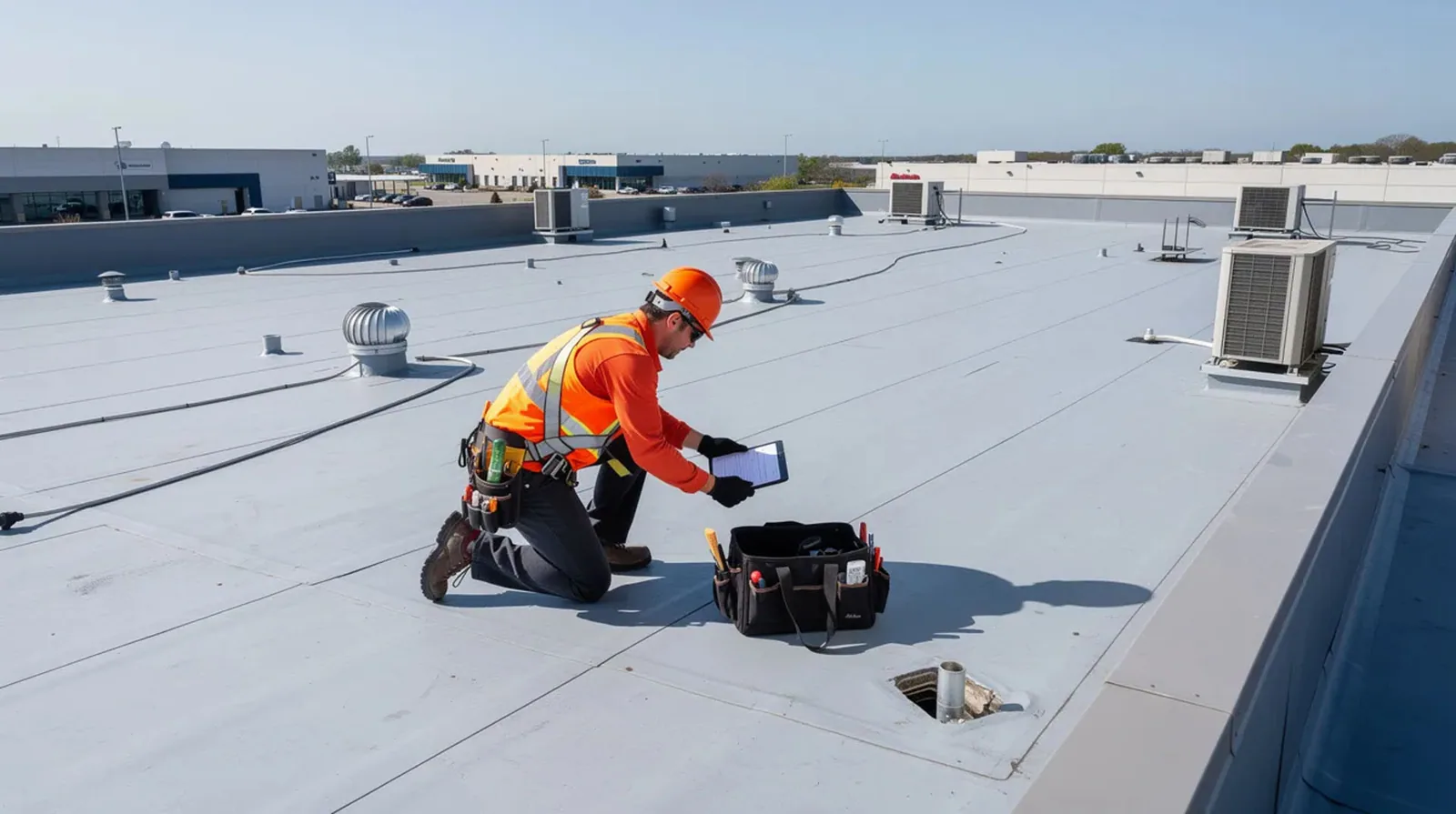
A program begins with a list and a first visit to each roof. The list holds every building, its address, its roof sections, the system on each, its age if known, the warranty status and the person who gives access. The first visit produces a numbered plan, photographs, moisture readings where the insulation is suspect and a grade for each section.
The grade asks three plain questions about each section: does it leak today, how many years does the system have left, and how badly are the edges and flashings exposed. A plant, a strip center and a medical building are scored by the same rules, which is the point, and the rules are written on the first page of the program so any manager can read how a grade was reached. The first round also records how each building works, such as who holds the roof hatch key, which tenant shares the roof and which hours are quiet, and those notes go into the file so every later visit begins with knowledge. The roof asset management record holds the whole list.
Routes and Crews Across the County
A portfolio can sit anywhere along the interstates and US routes that cross the county. A Mercedes-Benz U.S. International plant sits on 1,000 acres at Vance, about 19 miles east of downtown, Cedar Cove Technology Park lies east of the city, retail centers line 15th Street and McFarland Boulevard, and Northport Medical Center stands across the river in Northport.
We group visits by area, so a crew in Vance or Cedar Cove covers every site there on one trip, and a crew in the city covers the corridors on another. McFarland Boulevard is US 82, and University Boulevard is State Route 215, so route planning follows the roads the traffic uses. Space is left each week for urgent calls, so a leak at one site does not delay the scheduled visit at another.
Crew continuity matters in a program. The superintendent who walked a roof in the first round is the one who returns for the second, when it is practical, because a person who remembers the soft spot near the third drain finds the change faster than a stranger with a checklist. When that is not possible, the notes from the first visit carry the knowledge, and photographs are taken from the same spots so changes show.
A Calendar Built on Storm Season and Heat
The calendar follows the weather. Before spring storm season we check the perimeter on every roof: edge metal, cleats, fasteners and the corners. An EF4 tornado estimated at 190 mph hit in April 2011, and a May 2025 survey north of Northport clocked straight-line gusts of 90 to 100 mph, so wind readiness is the first item on the list. After a summer that can reach 107 F, we check seams, sealant and flashings for heat movement.
Drains are cleared ahead of the wet months, since annual precipitation runs about 53.5 inches. Every visit is written to the same format, and preventive maintenance visits are scheduled by grade, so the poorest sections are seen more often. After a major storm, an extra round of inspections is run in the order of exposure, and the results go into the same record.
Access, Tenants and Operating Hours
A program works only if access is smooth. We keep a record for each site of the entry procedure, the roof key holder, the tenant contacts, the lift or ladder rules and the hours when noise is allowed. A plant may run three shifts, a clinic may restrict work near operating areas and a retail center may need work done before opening, and each pattern is written in the file.
The 125-acre VA medical center campus, with 25 major buildings, shows how a single site can have its own access rules, and a program covers such a campus as a set of buildings under one set of procedures. The record is updated at every visit, so a change of tenant or contact is added when it happens, and later crews do not arrive to find the wrong name. Security and safety requirements go in the same file, including site orientation, badge procedures and any restrictions on photography, so a crew arrives prepared and the visit is not lost at the gate.
Reporting and Budget
Each quarter the owner receives a summary of every building by grade, a short list of what changed, the repairs completed and the repairs recommended, and the spending against the budget. Behind it sit the plans and photographs for each roof, so any line can be checked against evidence. Items that were deferred are carried forward with the reason and the date, which keeps a postponed repair from disappearing between reports.
The same record feeds a roof capital plan that spreads replacements across years. Property management companies that report to several owners can produce a separate version for each. The format does not change from site to site, which is what makes comparison possible.
Emergency Response Between Visits
When a roof fails between visits, the call goes to one number, and the crew arrives with the building's file: the plan, the last grade, the access notes and previous repairs. That saves the first hour an unfamiliar crew would spend finding the hatch and learning what was done before. We stop the water, mark the entry point on the plan and add the event to the record.
Emergency roof repair is available at any hour, including holidays. After the dry-in, the permanent repair is scheduled into the program and priced against the budget, not handled as a separate matter, and the ranking is rerun so the owner sees how the event changes the whole list. A repeat call from the same section within a season is flagged, since two leaks from one detail are a sign the repair needs a different scope.
Commercial Roofing Questions
Is a program worth it for three buildings?
Yes. Three buildings still need one list, one scale and one calendar, and a small team often depends on the record more than a large one.
How are different roof types ranked together?
By whether water is entering, how much life remains and how exposed the details are. The scale is the same for a plant, a strip center and a clinic.
How are inspections timed?
Wind readiness before spring storms, heat checks after summer, drains before wet months, and extra rounds after major storms.
Who keeps access information?
We do, in each building's file: entry steps, key holders, tenant contacts and quiet hours. It is updated at every visit.
What does the quarterly report show?
Every building by grade, changes since the last report, repairs done and recommended, and spending against budget, with plans behind each line.
What happens when a roof leaks between visits?
One call brings a crew with the building's file. We stop the water, record the entry point and rerun the ranking.