
Commercial Roof Replacement in Tuscaloosa, AL
A full replacement starts with the deck, because the deck decides whether the new roof will perform for its full service life or fail at the first fastener row. When a superintendent stands on a worn low-slope roof in Tuscaloosa, AL, the membrane tells only part of the story. The rest is underneath: insulation that has taken on water at a drain, steel panels that have lost their bite where fasteners backed out, and wood or concrete decks that have softened along a leaking seam. We cut the roof open in several places before a scope is written, and that is why a replacement here is a set of decisions about the whole assembly and not a swap of one skin for another.
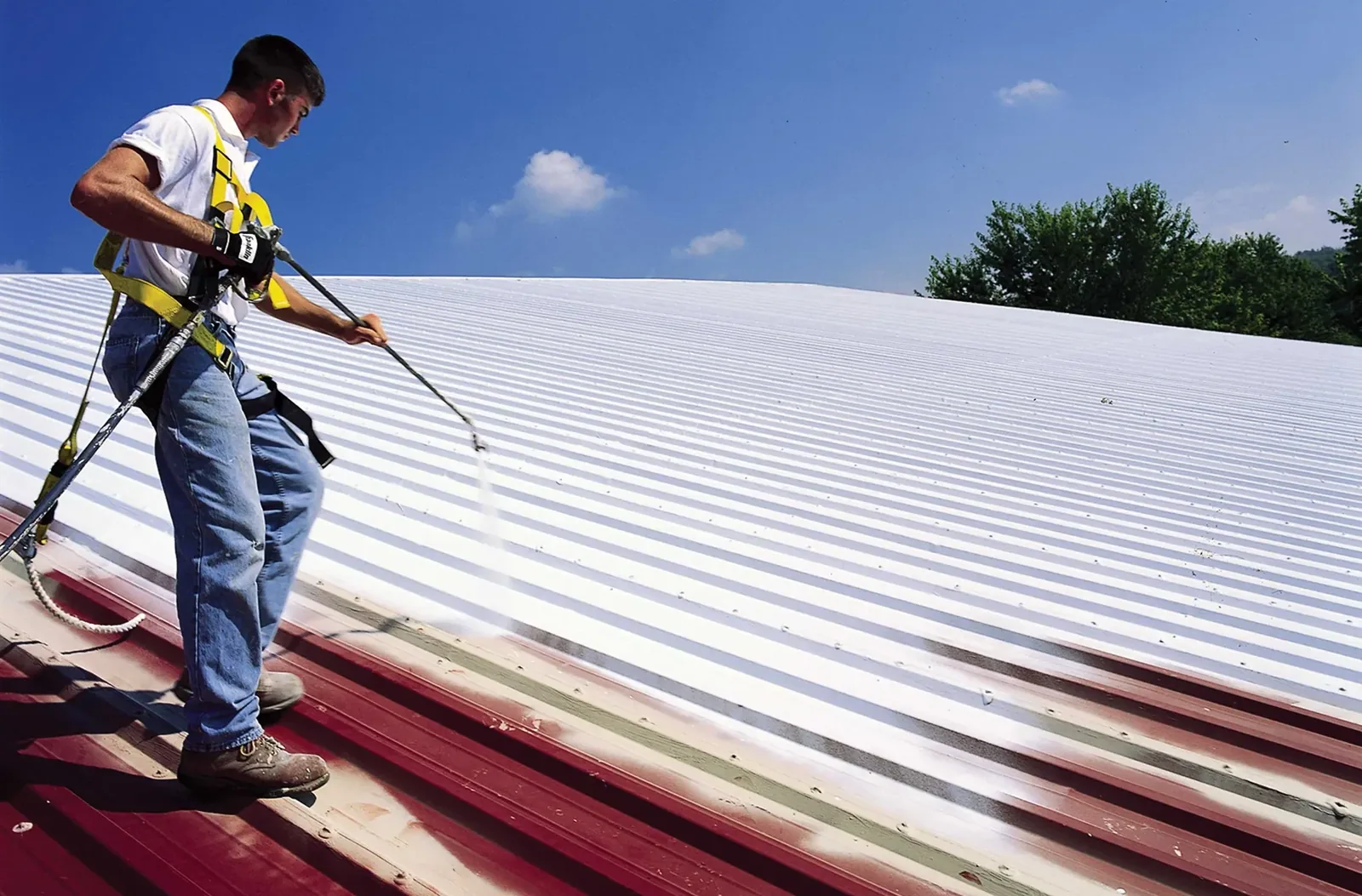
For an asset manager carrying a roof on the books, a replacement is also the moment to correct what the original installation got wrong, whether that is flat spots that hold water, edge metal that never met a wind-uplift standard, or details around rooftop units that have been patched four times.
What We Find Under an Old Membrane
Most tear-offs begin with a surprise at the first drain. Water has a way of traveling along the top of the deck and collecting where the slope runs out, so the insulation near a drain sump is often wetter than the field of the roof. We mark every wet area from the core cuts, then remove only the insulation that has failed, which keeps the cost of the new assembly tied to real conditions.
Fastener condition matters just as much on older mechanically attached systems. Pull tests tell us whether the deck will hold a new set of fasteners at the spacing the wind design calls for. A deck that fails the pull test needs added attachment or a different attachment method before any membrane is rolled out.
Wind Design Starts at the Perimeter
Tuscaloosa has a long memory for wind. The April 27, 2011 tornado was rated EF4 with estimated winds near 190 miles per hour, and its path crossed the warehouse area along 35th Street before it moved over 15th Street and McFarland Boulevard. Few roofs are designed for a storm of that size, and no replacement can promise to survive one. What a replacement can do is raise the odds that a lesser windstorm does not peel the roof from the edge inward.
That work happens at the perimeter and corners, where uplift pressure is highest. We specify heavier edge metal, closer fastener spacing in the perimeter and corner zones, and a coping or fascia that is attached to the wall with a continuous cleat. Damaging wind in Tuscaloosa County is not limited to tornadoes: the National Weather Service put straight-line gusts at 90 to 100 mph in a May 2025 event that cut a swath above Northport. Owners of older buildings often find that the existing edge metal was face-nailed, short on laps and unsealed, so the new edge is the single biggest upgrade in the scope.
Replacement by Building Type
A distribution warehouse in the Airport Industrial Park corridor has very different needs from a medical office near Northport Medical Center. Large distribution and manufacturing roofs reward simple, repeatable details and good access for loading material by crane or telehandler. Healthcare and office roofs usually have more equipment, more penetrations and tighter noise and fume limits, so staging and adhesive choices shift. Retail strips along McFarland Boulevard need phasing so docks and storefronts stay open.
Mercedes supplier plants in Cedar Cove Technology Park are a different case again. Manufacturing buildings of that kind run production on tight schedules, and a leak above a line can cost more than the roof. We build the replacement sequence around the process, closing each section watertight at the end of every working day. The same rule governs manufacturing plant roofs and shopping center roofs: no area is opened that cannot be dried in by evening.
Choosing the Replacement System
The choice of membrane follows the building, not a catalog preference. A single-ply system such as TPO suits large flat roofs where reflectivity helps lower summer heat load, and Tuscaloosa has recorded highs of 107 degrees Fahrenheit. Reinforced PVC makes sense over kitchen exhaust or chemical exposure. Modified bitumen and built-up roofs still earn their place where foot traffic is heavy or where owners want redundancy in layers. Standing seam and retrofit metal fit buildings with steeper pitch or a long hold period.
Insulation is the second choice, and it matters because of the roughly 53 inches of rain Tuscaloosa receives in a year. Tapered insulation creates positive drainage on roofs that now pond, and a cover board over the insulation protects it from foot traffic and hail. The adopted state building code, the 2021 International Building Code with exceptions, sets minimum requirements, and we confirm what applies to your building before the system is finalized.
Keeping an Occupied Building Running
Most replacement projects in Tuscaloosa happen over working buildings. A campus building near the University Boulevard corridor has classes, labs and research that cannot stop. A hospital roof carries air intakes that must stay clear of fumes. A grocery store on Skyland Boulevard has shoppers below and, as a rule, refrigeration equipment on the roof that has to keep running. We plan access routes, staging areas and haul-away paths with the property manager before the first panel is lifted.
Noise, dust and fumes get the same attention as the weather. Tear-off is sequenced away from air intakes, adhesives are chosen with ventilation in mind, and protection is hung inside where ceilings are exposed. Where a tenant needs a quiet window, the loudest tasks move to early morning or weekends. The coordination behind reroofing occupied buildings depends on the people who work inside.
What Drives Cost and Timing
Cost moves with four things: how much of the existing insulation and deck must be replaced, how many penetrations and curbs the roof carries, how much edge metal and flashing the perimeter requires, and how complicated access is. A simple warehouse field with few penetrations prices very differently from a roof full of units, skylights and drains. Separate lines show an owner what can be phased and what cannot.
Timing depends on the weather window more than the crew. Tuscaloosa gets steady rain through much of the year, and a membrane cannot be installed over a wet deck. We watch the forecast closely, hold crews back when a storm is coming, and tarp or dry in any exposed area before leaving the site. A roof in Northport or Tuscaloosa gets the same treatment. A commercial roof inspection before budgeting gives the data needed to pick the right season.
Commercial Roofing Questions
How do I know whether my roof needs a full replacement or a partial one?
Core cuts and moisture readings settle it. When wet insulation covers a large share of the roof, or when the deck is failing, partial work only postpones the cost. If the wet area is limited and the deck is sound, a section replacement or recover may serve.
Will a new roof in Tuscaloosa hold up in a tornado?
No roof is built for a direct hit from an EF4 storm like the one in April 2011. A replacement designed with heavier perimeter attachment and sealed edge metal does reduce the chance that ordinary severe wind lifts it.
Can the work be phased across several fiscal years?
Yes, when the roof is divided into sections that can be dried in independently. We rank the sections by condition and tell you which ones carry the highest leak risk so the first phase goes where it matters most.
What happens to the old insulation and membrane?
Both are hauled away. Where the insulation is dry and sound, part of it can sometimes be reused under a new cover board, which lowers material cost. We confirm with moisture scans before deciding.
Does the building code require anything special for a tear-off?
Alabama's adopted building code is the 2021 International Building Code with exceptions, and it sets requirements for insulation, wind resistance and drainage. We review what applies to your building before specifying the system.