
Shopping Center Roofing in Tuscaloosa, AL
A strip center roof is a long, continuous membrane, usually a single-ply or modified bitumen sheet, that one landlord owns and a dozen tenants live under, and the superintendent who walks it finds the evidence of every lease cycle: abandoned curbs from a former tenant, a new exhaust fan with a hurried boot, signage supports bolted through the sheet. The question is never only whether it leaks, but whose suite it leaks into. Our crews repair, recover and replace shopping center roofs in Tuscaloosa, AL, and we map every roof section to the suites beneath it.
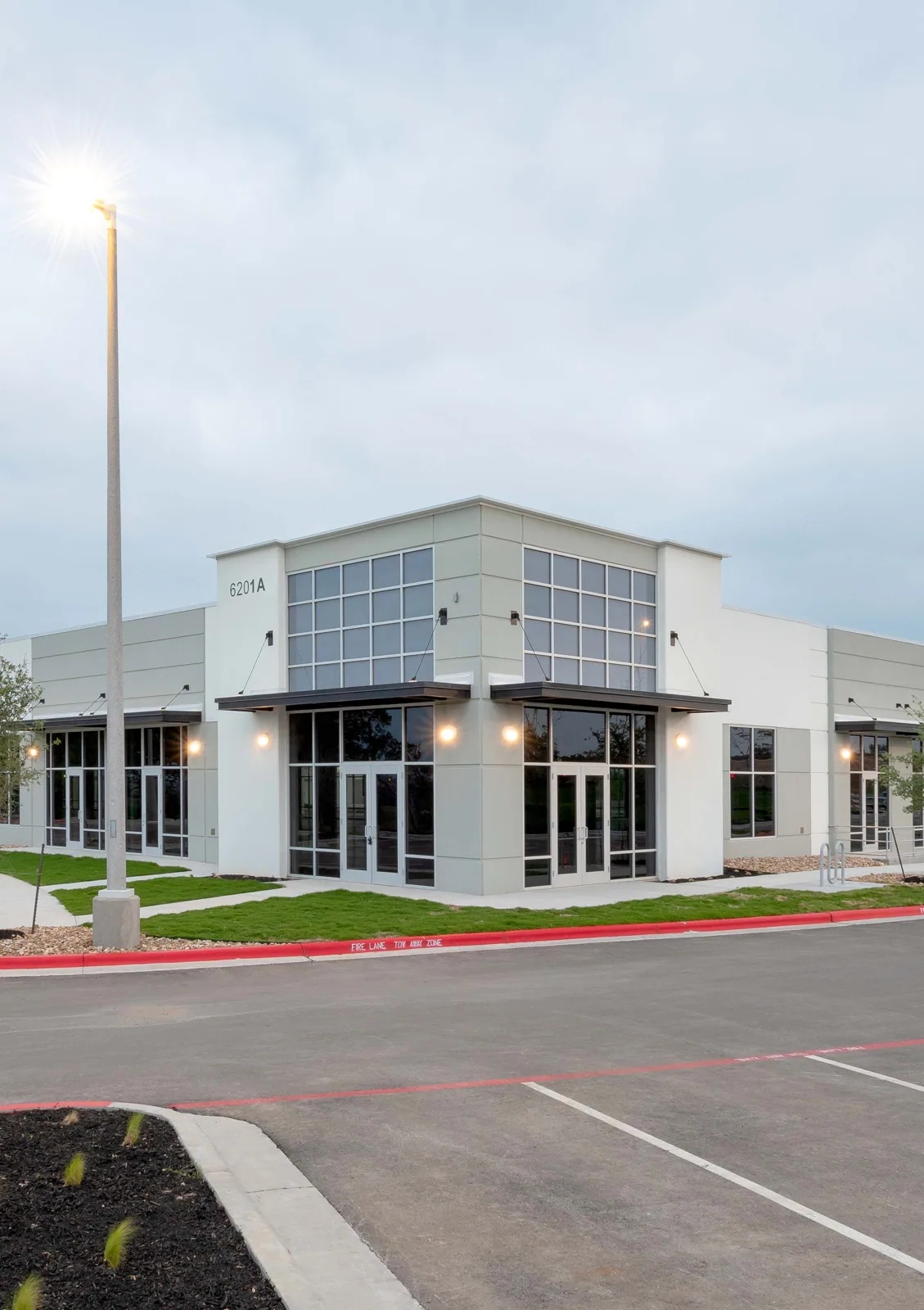
A Shared Roof Over Many Suites
Strip and neighborhood centers have long, narrow roofs divided by firewalls or parapets into sections that do not always match tenant lines. A leak in one section can appear in several suites, and a repair on one tenant's equipment can affect their neighbor's ceiling. The roof plan has to show suite lines, section lines and the drainage pattern across them.
Each suite adds equipment: a package unit, a restroom exhaust, a kitchen hood for a restaurant, a refrigeration condenser for a food user. Signage and satellite mounts add penetrations. We map all of it, rate the flashing on each penetration and flag any that were added without a proper boot or curb. That plan becomes the landlord's tool for assigning responsibility.
Canopies and storefront overhangs add a second roof edge. Front canopies are exposed on three sides, carry signage, and drain toward the sidewalk, so a failed gutter or open seam there drips onto customers instead of into a ceiling. We include canopies in the map, check their fasteners and flashing against the main wall and test where each one drains.
Tenant Penetrations and Restaurant Exhaust
The common findings are cracked pipe boots, opened seams at curbs, clogged scuppers and worn paths where technicians walk. Restaurant exhaust adds grease, which can soften some membranes and stain the roof around the fan. Tenant work that was done without the landlord's roofer leaves flashing details that are short, unsealed or unsupported. We photograph each one and identify which tenant's equipment it belongs to.
Drainage in strip centers is often by perimeter scuppers and downspouts, and when a downspout clogs or a scupper is too small, water backs up behind the parapet. We test the outlets, clear them and note any that need enlarging. A roof drain and scupper correction costs far less than the interior repairs that follow a backed-up roof.
Vacant suites need attention too. A dark suite means nobody reports a drip, and a leak can run for weeks before anyone sees it. Where a suite is empty we ask for access, check the ceiling for stains and compare it with the roof above. A leak found in an empty unit is cheap to fix and expensive to ignore, because mold and ceiling damage spread unseen.
Age shows in the field of the roof too: granule loss on a cap sheet, chalking on a single-ply surface, rust at fastener plates and cracks at seams. We note which condition applies in each section, since one roof can carry several, and the report ranks sections by how soon the condition will let water in.
Storm History Along the Retail Corridors
The 2011 EF4 passed over 15th Street and McFarland Boulevard with winds estimated at 190 mph, then flattened businesses and restaurants near University Mall and a shopping center along University Boulevard. The National Weather Service survey also lists Alberta Park Shopping Center among the properties hit. A later storm in May 2025 brought straight-line gusts, 90 to 100 mph, to the area north of Northport.
For retail roofs, the wind record belongs in the file: edge metal, parapet caps, the first rows of membrane at corners and the fastening of signs and equipment. We check each and record the baseline, so after any event a tornado damage roof repair or wind repair starts from documented conditions.
Signs, rooftop screens and satellite mounts catch wind and transfer the load to the roof. We check that each is fastened to structure instead of the membrane, that the flashing around its base is intact and that no mount has loosened. A sign that moves in a gust works its penetrations open, and the leak that results appears far from the sign.
Retail Settings in Tuscaloosa
McFarland Boulevard carries US 82 through the retail core of Tuscaloosa, and the centers at 15th Street and McFarland Boulevard include Shoppes at Legacy Park, University Mall and Midtown Village. The site of the old McFarland Mall has been cleared. A 105,000 square foot center at Skyland and McFarland Boulevards is slated for redevelopment, with a grocery, a wings restaurant and a closed Walgreens among its current tenants.
The McFarland Boulevard corridor and the Skyland Boulevard corridor are the service areas where the retail roofs are surveyed one by one. A redevelopment often makes a roof decision for the owner, since new tenants bring new equipment.
Keeping Tenants Open
Retail tenants cannot close for roofing, so work is planned around trading hours. We protect storefronts and walkways, stage materials away from parking, schedule noisy tasks outside peak sales and keep delivery routes clear. Sections are closed daily, and the landlord and crew agree on notices to tenants.
The building department confirms insulation and wind requirements. A big-box store or a grocery store shares the membrane types but differs in scale and equipment.
Cost drivers for a strip roof are the area, the number of tenant penetrations to rebuild, the amount of wet insulation, the number of canopies and the staging needed along a storefront. A recover over a dry roof can reduce disruption, and we confirm that with moisture scans and cores before offering it. Landlords often ask for alternates, such as added insulation, and we list them separately.
What to Carry on the Books
For a retail landlord, the roof is a recoverable expense in some leases and a capital cost in others, and the record should show which. We provide a rating per roof section, the suites beneath, the equipment each tenant added and a replacement window as a range. A landlord with several centers can use roof capital planning to rank them against each other.
The record should also state each tenant's roof obligations, notice requirements and approved contractors. Written beside the condition findings, it prevents the dispute that starts when a tenant's contractor damages the roof and no one knows who is responsible.
Leasing activity also changes the roof. A new tenant's exhaust or condenser means a cut in a roof that may be nearly new, so the landlord's work letter should name the roofer who flashes it. The record then shows who cut each opening and when, which settles most disputes before they start.
Commercial Roofing Questions
Who pays when a tenant's equipment leaks into a neighbor?
The lease decides. We map the equipment and the leak path so the landlord can assign responsibility with evidence.
Can a restaurant's grease damage the center's roof?
Yes, around the exhaust fan. We check the surface, recommend containment and repair stained or softened areas.
How do you work without closing shops?
By phasing sections, protecting storefronts and scheduling noisy tasks outside peak sales.
What is an abandoned curb?
A curb left after equipment is removed. It needs a cap and flashing, or it leaks.
Should the landlord control roof access?
Yes. Tenant contractors who open the roof without notice are a common source of damage, and controlled access with a log prevents it.