
Grocery Store Roofing in Tuscaloosa, AL
A grocery store roof carries a heavy equipment load for a retail roof: rows of refrigeration condensers on rails, rooftop units over the sales floor, kitchen and deli exhaust and a network of refrigerant and electrical lines crossing the membrane. A superintendent walking one finds a single-ply or modified bitumen sheet that has been stepped on, drilled through and flashed many times. Our crews repair, recover and replace grocery store roofs in Tuscaloosa, AL, and we report them by section so an asset manager can see which parts protect perishables and which can wait.
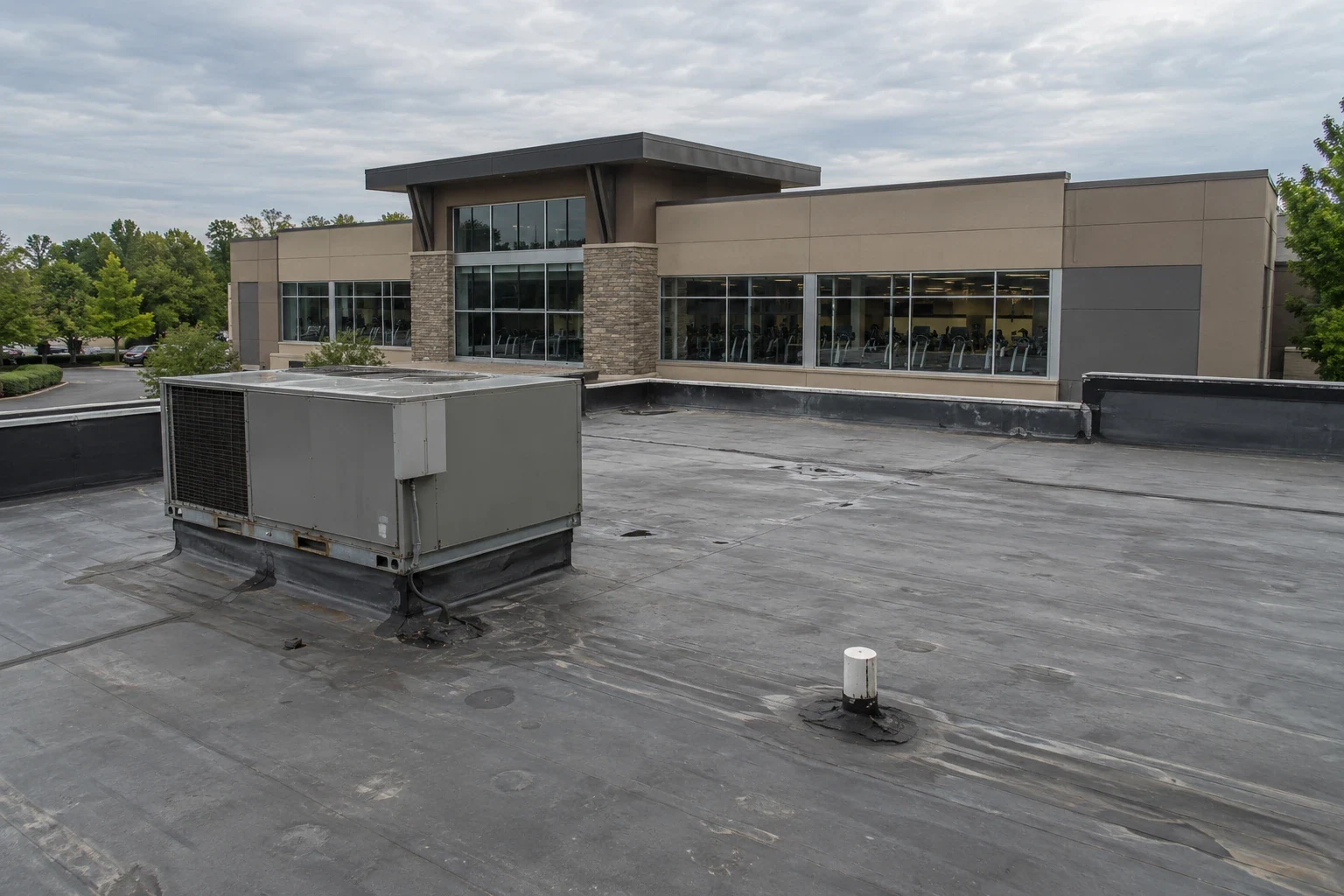
Condensers, Rails and Refrigerant Lines
Refrigeration is the defining load. Condensers sit on rails or stands, their lines run through the roof at several points, and technicians visit often. Each rail leg and each line penetration is a flashing to inspect, and rails resting directly on the membrane concentrate load and wear. We check that supports sit on sleepers or pads, that pipe boots are intact and that no line has been added without proper flashing.
Kitchen and deli exhaust adds grease and moisture. Fans discharge onto the sheet, and without a pan or containment, the surface softens and stains. We record the surface condition around every discharge and recommend containment where the evidence shows damage. The map of equipment, boots and rails becomes the working drawing for all later repairs.
Edge and dock areas add detail. A receiving dock usually has a canopy, a parapet step and a scupper line, and trucks back into it all day. We check the flashing where the dock roof meets the main wall, the condition of its edge metal and the drainage from the canopy, because impact and vibration work on that joint more than on any other part of the roof.
Wet Insulation, Condensate and Interior Clues
A leak over a sales floor or a stockroom can spoil product, close an aisle and draw an inspector, so early detection matters. A moisture scan finds wet insulation before it reaches the ceiling, and cores confirm it. We also look for condensate from refrigeration lines that drips onto the roof or runs along pipes into the building, since not every stain is a roof leak.
Interior clues help. Stains near the dock, in the bakery or over a freezer aisle point to different causes, and the store manager's maintenance log shows where tiles have been replaced. We compare the log with the roof plan and start where complaints cluster. A commercial roof leak repair aims at the source and records it, so the next visit can confirm it held.
Walkways are another recurring point. Refrigeration technicians visit the same rail rows weekly, and where there is no pad the sheet scuffs, thins and eventually punctures. We mark worn routes, recommend pads and replace damaged membrane. A small puncture repair under a rail costs little before it leaks and a good deal after the stockroom floor is wet.
Drains and scuppers get cleared and tested. A grocery roof sheds water into parking lots and truck courts, and a clogged scupper backs water behind a parapet, which can stain the exterior wall and wet the insulation. We record the clearing, the flow test and any outlet that needs enlarging, and our ponding water repair work corrects low areas when drainage alone does not solve them.
Wind, Tornado History and Condenser Anchorage
Wind is the other load on a grocery roof, from the 2011 EF4 that crossed 15th Street and McFarland Boulevard to the 90 to 100 mph straight-line gusts that hit north of Northport in May 2025. Heavy condensers on rails can shift or tip when fastenings loosen, and the penetrations they leave can open the roof.
Rail fastening, edge metal and parapet caps get a hands-on check, along with the first rows of membrane at each corner, and every section carries a wind-uplift note. After a storm, we walk the roof again and compare with the baseline. If damage is found, the storm damage roof repair protects the sales floor first and plans the permanent repair after.
Condenser stands are heavy and carry long lines. If a stand shifts, the lines flex, and the boots around them tear. We look for sheared fasteners, bent rails and gaps at the boots, and we record the condition so the refrigeration contractor and the roofer can agree on repairs. Fastening is a shared concern, and the record keeps both trades informed.
Grocery Settings in Tuscaloosa and Northport
A shopping center at Skyland and McFarland Boulevards lists a grocery among its current tenants, and McFarland Boulevard is US 82 through the retail core of the city. In Northport, the Walmart Supercenter employs 302 people, which makes food retail a daily fixture on both sides of the river.
The Skyland Boulevard corridor and the Northport area are service areas where each grocery roof is surveyed on its own merits. A big-box store shares the wide field but not the refrigeration load, and a restaurant shares the exhaust.
Keeping the Store Open and the Product Safe
Grocery reroofing is planned around food safety. Dust and debris must not reach the sales floor or the stockroom, so we protect interior spaces, seal openings quickly and avoid work above open food. Noise and trucks are scheduled around deliveries, and condensers are shut down only in agreed windows with the refrigeration contractor present.
Crews start early and plan for afternoon storms in a place that has touched 107 F and collects 53.5 inches of rain. Before pricing, the building department confirms which code requirements apply, and the work ends with a punch list and a warranty walk.
What the roof costs follows its area, how many condensers and lines need flashing, how much insulation is wet, what shape the deck is in and how the store wants the work phased. A recover over a dry roof reduces disruption, but the number of rails and boots to rebuild often decides whether tear-off is the more orderly route.
What to Carry on the Books
A grocery operator or landlord should carry each roof section with its rating, equipment load, last inspection and a replacement window as a range, plus the consequence of a leak in the space below. The roof asset management record keeps that current and ranks sections by what they protect.
The record should also list the refrigeration contractor and the approved roofing contractor, so work on one does not damage the other. When equipment is replaced, the roof plan is updated the same week, which prevents orphan curbs and missing flashings.
Lenders, insurers and food safety inspectors each ask about the roof at different times. A single file with dated photographs, moisture findings and repair invoices answers all three, and it saves the store manager from reconstructing the roof's history during a busy week.
Commercial Roofing Questions
Why do condenser rails matter to the roof?
They concentrate load and cross the membrane at several points. Rails need pads or sleepers and proper flashing.
Is every stain a roof leak?
No. Refrigeration condensate and plumbing can cause stains. We trace the source before repairing.
How do you keep food safe during roofing?
By sealing openings fast, protecting interiors and keeping work away from open product.
Who coordinates condenser shutdowns?
The store and its refrigeration contractor set the windows, and we follow them.
What should happen after equipment replacement?
The roof plan is updated and any abandoned curbs are capped and flashed.