
Ponding Water Roof Repair in Tuscaloosa, AL
On a modified bitumen or built-up roof over a concrete or steel deck, a superintendent can read the ponding before reaching the first drain: pale rings of dried silt mark where water stood, algae grows in a band along the low line, and the granules have worn off the surface in a shape that follows the dip in the deck. Ponding water roof repair in Tuscaloosa, AL starts with those rings, measures how deep and how long the water stays, and traces it to a cause that can be fixed, whether that is a drain sump set high, a deck that has deflected or insulation that has compressed. The findings go on the roof plan by section.
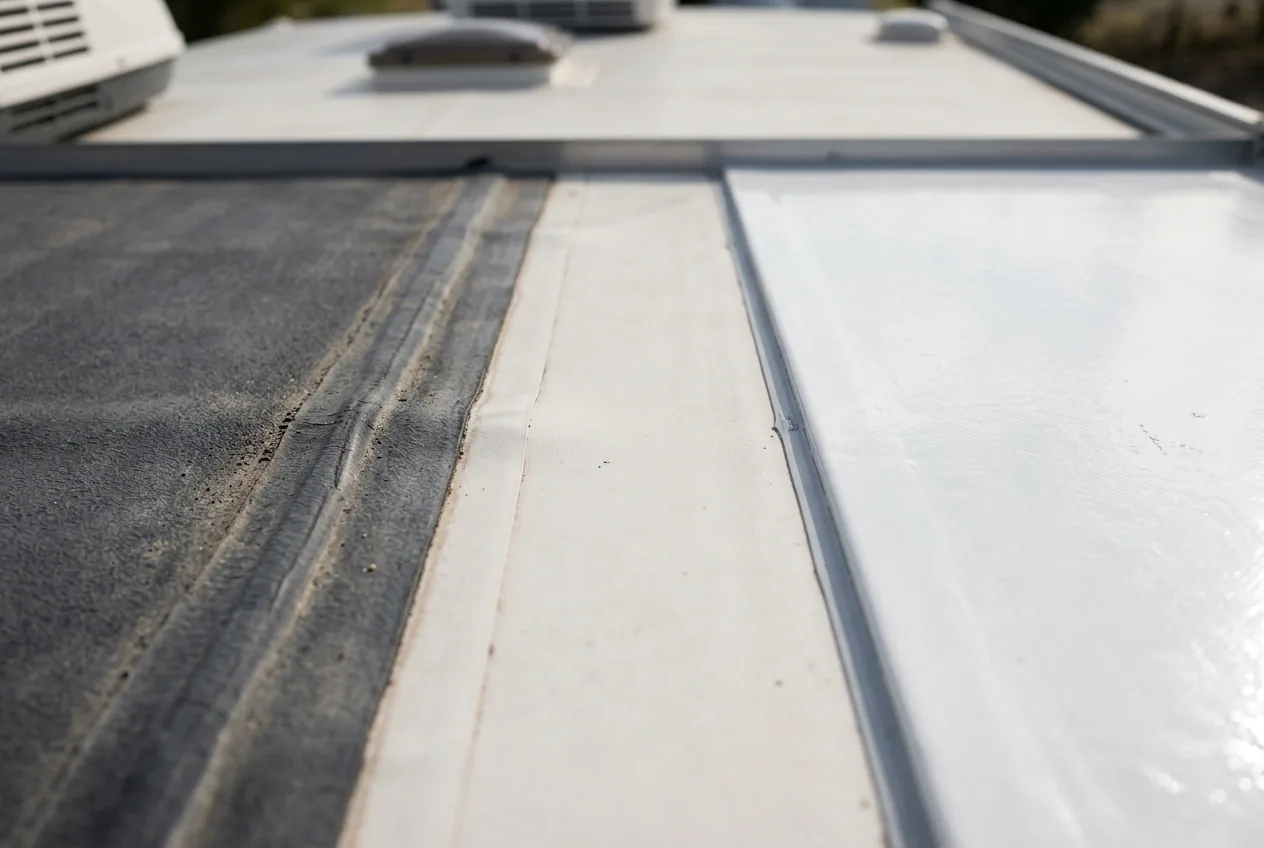
Where the Water Sits and Why
Ponding is defined by time, not by appearance. Water that remains on a roof more than a day or two after the rain has stopped is ponding, and the dry-weather rings tell us how often it happens. We take elevation readings across each roof section with a level or a laser, and mark the low points on the plan with a number and a depth.
The causes fall into a short list. A drain may sit above the lowest part of the surface, so water never reaches it. A deck may have deflected under the weight of equipment or a past wet period. The insulation may have crushed under foot traffic. A scupper may be blocked by silt or leaves. Each cause has a different repair, which is why we do not start by adding a patch or a coating; those hide the cause and leave the pond in place.
Measurements go on the plan in a form the asset manager can use later: the section number, the depth in inches, the estimated area of the pond and the date. After the repair the same readings are taken again, so the improvement is on paper and a later pond can be compared with the original. A ponded section that grows from one visit to the next is a deck problem, and we flag it for a structural look before more material is added to the roof.
Drain Sumps, Scuppers and Slope
The drain is the first thing we test. We clear the strainer, run water into the sump and watch whether it flows freely and whether the sump sits at the lowest point of its section. A sump that has been packed with granules, a drain bowl that has been partly sealed with roofing cement or a clamping ring that has loosened can each hold water back, and a short clearing and a rebuild of the sump detail may be all that is needed.
Where the slope itself is wrong, the repair is to add slope. A drain and scupper scope can include lowering a sump, adding an overflow scupper through a parapet or installing a new drain at the low point, each with a flashing detail matched to the membrane. An overflow scupper also gives the roof a safe exit if a main drain clogs in a heavy storm, which matters on a building with a parapet on all four sides.
Tapered Insulation and Crickets
When the deck is flat and the drains are properly placed but water still sits, tapered insulation corrects it. Boards cut to a slope are laid from the high point to the drain, and crickets, which are small ridge-shaped tapered pieces, divert water around rooftop unit curbs and other obstacles that would otherwise dam it. The design starts from the elevation survey, so every pond gets a defined slope toward a defined outlet.
The work needs a membrane that can be re-laid or a recover that can be installed over the new layer. If the existing roof is sound, a tapered insulation and cover board package can be added over it. If the sheet is old or the insulation is wet, the section is removed to the deck and rebuilt. We price both so the owner can see the difference before choosing.
Cover board belongs in the same conversation. A firm board over soft insulation spreads foot loads and keeps the surface from dimpling again at the same spot, and on a roof where trades walk to rooftop units it protects the new slope from the first season of traffic. Fasteners and adhesive are specified to the wind-uplift rating the building needs, so correcting a pond does not weaken the attachment.
What Standing Water Does to the Membrane and the Insulation
Water stays in contact with a membrane for hours instead of minutes, and the effect builds. Seams soften and open, granules loosen, asphalt oxidizes, and a pinhole that would shed a passing shower lets water through when it sits. Weight matters too: an inch of water over a section adds several pounds per square foot, and a deflected deck holds more water each time.
The insulation below is the quiet casualty. We scan the ponding areas with an infrared moisture survey and verify it with a core cut, because wet insulation under a pond holds heat in summer and loses its thermal value, and it can freeze and expand in a cold snap. Tuscaloosa has recorded a low of minus 1 F, which is rare but enough to matter. Repeated open pools are a common cause of a seam failure, so those laps are probed first.
Rain, Heat and the Local Cycle
Rainfall averages about 53.5 inches a year and the record high stands at 107 F, so a roof here goes through hot, dry stretches and then heavy rain. Dark membranes heat quickly and stress the seams at the edge of a pond, while cooler water below keeps the surface temperature uneven. Heat and UV damage and ponding often appear on the same section.
On a retail roof along McFarland Boulevard, at a center such as University Mall in the Midtown and 15th Street retail area, or on the University of Alabama campus, which covers 1,970 acres and 297 buildings, the drains are only as good as their last cleaning. A maintenance visit before the spring storm season, with each sump cleared and each low spot re-measured, keeps small ponds from growing into a repair.
Commercial Roofing Questions
How long can water stay on a roof before it counts as ponding?
Ponding is water still sitting a day or two after the rain ends, and dried silt rings and algae bands mark the places where it happens often.
Is a coating a fix for ponding?
No. A coating covers the surface and leaves the pond in place. The fix is to remove the cause: clear or lower the drain, add slope with tapered insulation or correct the deck.
Does ponding mean the insulation is wet?
Not always, but it is where we look first. We scan the area with infrared and confirm with a core cut before deciding what to cut out and replace.
What is an overflow scupper for?
It gives water a second exit if a main drain clogs. On a roof with parapets on all sides, it keeps a heavy storm from loading the roof beyond its design.
Can tapered insulation go over an existing roof?
Yes, if the existing roof is sound and dry. If the sheet is old or the insulation is wet, we remove the section to the deck and rebuild with taper.
How often should drains be checked?
Before the spring storm season and again after leaf fall. Any roof with trees nearby or a history of ponding should be checked after major storms too.