
Infrared Roof Moisture Survey in Tuscaloosa, AL
Wet insulation is invisible from the top of a roof, and it is among the costliest things a manager can leave undiscovered. A membrane can look intact for years while water sits in the insulation beneath it, adding weight to the deck, reducing the insulating value and slowly working at the seams from below. A superintendent on a Tuscaloosa, AL roof uses an infrared camera, a moisture meter and a core cutter to find that water and draw its edges on a map, so that repair money goes only where it is needed.
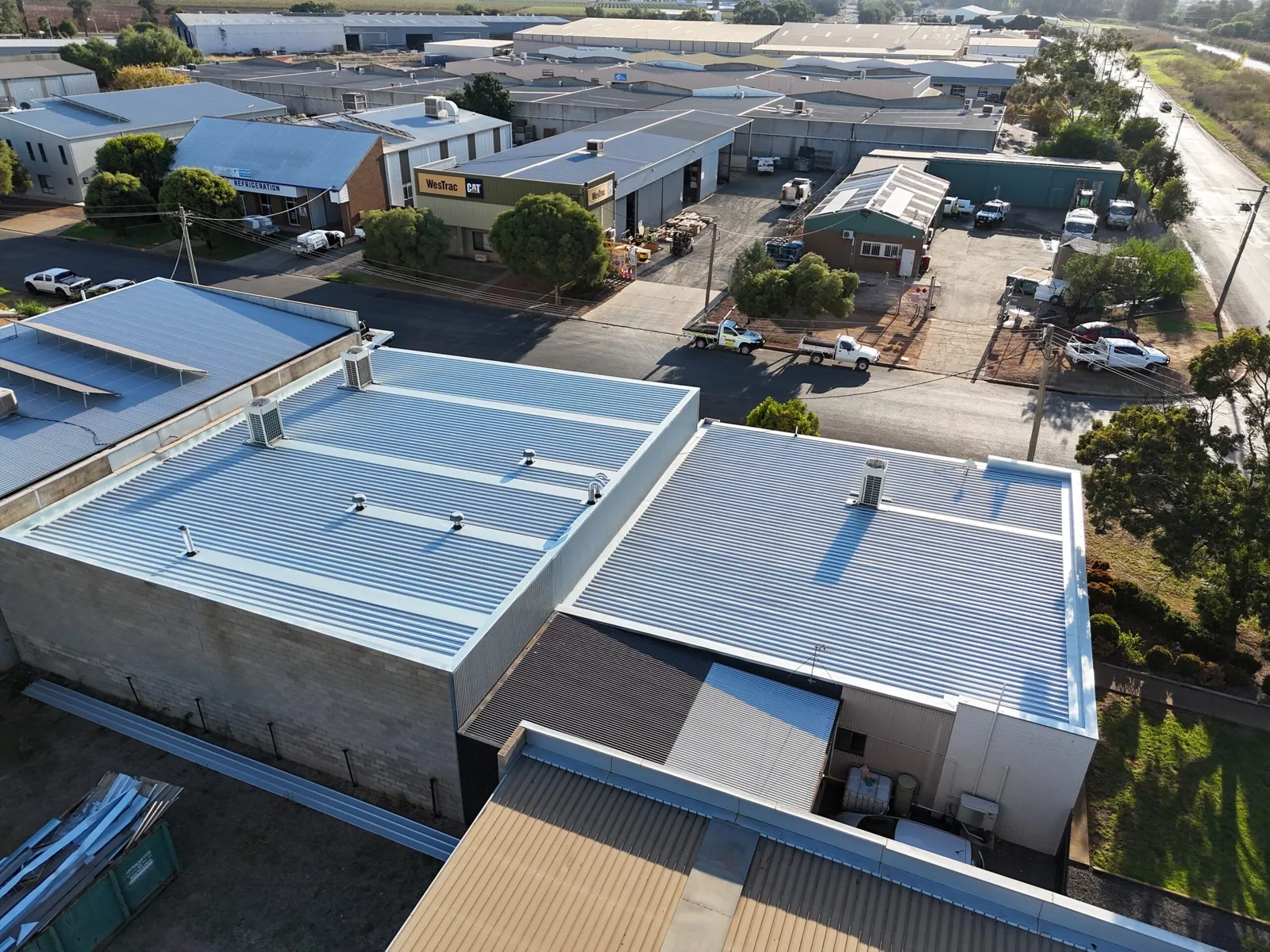
The survey is the evidence behind the biggest decision on most roofs: patch, recover or replace.
How Infrared Finds Wet Insulation
Wet insulation holds heat longer than dry insulation. After a sunny day, a roof begins to cool at dusk, and the wet areas cool more slowly, so they show as warmer patches on an infrared camera. A trained operator walks the roof just after sunset or flies the camera with a drone, recording the pattern and marking the warm areas on the roof surface with paint or tape.
Conditions have to be right. The roof needs a warm sunny day beforehand, clear skies and little wind, and the surface should be dry. Tuscaloosa has long hot stretches that suit this method well, since a summer day of direct sun gives insulation plenty of heat to hold. Spring and fall evenings can work too, though the contrast is smaller, and we pick the visit date with the forecast in front of us.
Flat, simple roofs scan well. Roofs crowded with equipment, with many levels or with heavy shade from adjacent buildings need more careful planning, and we may scan them in sections over more than one evening.
Why Every Scan Needs a Core Cut
An infrared image shows temperature, not water. A warm patch can also come from thicker insulation, a change in material, a hot-air vent below or ballast on the roof. For that reason, we confirm every scan with a moisture meter and core cuts. A core is a small round sample taken through the membrane and insulation, and it shows the layers, the wet or dry state of each and the condition of the deck.
Each core hole is patched on the spot with a matching membrane patch and sealed, and the location is logged. A good survey has enough cores to calibrate the scan: some in warm areas, some in cool ones and some at the boundary, so that the map separates real moisture from false signals. This is why we treat commercial roof inspection and moisture mapping as companion work.
The Moisture Map and What It Drives
The result is a roof plan with wet areas shaded and each core marked. Alongside it, we give an estimate of the share of the roof affected, a note on the likely entry point and a recommendation for each area: remove and replace, monitor, or leave. For many owners, the map is the first time the roof's condition is expressed in a way that supports a budget request.
It also settles the recover question. When wet areas are small and local, they can be cut out and patched, and the roof can be recovered. When wet insulation is widespread, a roof recover would trap moisture, and a full tear-off becomes the better investment. The map makes that choice defensible, because the evidence sits on the page.
Budget planning gets easier with the map in hand. A manager can price the removal of wet insulation as a defined quantity, schedule it in phases and compare it with the cost of replacing the whole roof. Tapered insulation and drainage corrections can be added to the same scope where the map shows that ponding and moisture coincide, which is a frequent finding near drains and low spots in the deck.
Where Moisture Surveys Pay Off
Surveys earn their cost on roofs with older insulation, a history of leaks, or high interior sensitivity. A Mercedes supplier building in Cedar Cove Technology Park cannot afford a surprise leak above a line. A hospital roof such as the one on the 125-acre VA medical center campus carries interior risks that go beyond repair cost.
Retail along McFarland Boulevard and Skyland Boulevard benefits for another reason: where a strip center is headed for redevelopment or a sale, the survey says how much of an older roof is worth keeping. In each case, a survey replaces guesswork with a measured map. The same method applies to commercial roofs in Cottondale and Holt.
Surveys After Wind and Rain Events
Storms often open small entry points that do not leak right away. After the April 27, 2011 EF4 tornado passed through Alberta City, along 15th Street and McFarland Boulevard, a damaged roof can stay wet for months before ceilings show it. Straight-line winds estimated at 90 to 100 mph hit the county north of Northport in May 2025, and any roof that lost flashing in a blow like that can take on rain for weeks.
A survey a few weeks after a storm finds those silent entries while they are cheap to fix. The results also support insurance work, because moisture readings and dated images show what water entered and when. Those records go straight into a roof insurance claim file, and they carry into a long-term roof asset management plan.
Other Moisture Methods We Use
Infrared is the fast tool for large roofs, but it is not the only one. A handheld capacitance meter reads moisture near the surface and works well on smaller roofs or to refine a boundary. A nuclear or electrical impedance method can be used in specific cases, and a plain visual check of a core remains the most reliable test. We select the method for the roof, not the other way around.
Roofs with ballast, heavy gravel, reflective surfaces or thick cover boards can mask thermal differences, and in those cases we rely more on cores and meters. We tell the owner at the start which methods fit the roof, which will not work and why.
Scan results age. A map drawn after a dry month can look different from one drawn after a wet spring, so each map carries its date and the weather behind it, and a repeat scan under the same evening conditions is the fair comparison.
Commercial Roofing Questions
Can an infrared survey be done in the rain?
No. The roof needs to be dry and the sky clear, and the scan is done at dusk after a sunny day. We reschedule rather than collect data that cannot be trusted. Wind and dew also spoil the readings, so those evenings are skipped too.
How many core cuts does a survey need?
Enough to calibrate the scan and confirm the boundaries. A small roof may need a handful, and a large one more. Each cut is patched at once and logged.
What if the survey finds the whole roof is wet?
Then a tear-off is the sound path, and the map explains why. We scope the replacement with the wet insulation removed and the deck checked, so the new roof starts clean.
Do surveys help with a building sale?
A moisture map shows a buyer exactly what is wrong and what it will cost to correct, which can narrow disputes. A formal due diligence roof survey adds the rest of the roof assessment.
How often should a moisture survey be repeated?
Every few years on an aging roof, and after any significant storm or repair. Comparing maps over time shows whether the wet areas are growing or stable.