
Commercial Roof Leak Repair in Tuscaloosa, AL
A leaking low-slope roof on a Tuscaloosa distribution building tells the story in the order the water travels: through a seam or a flashing, along the top of the insulation or the deck, and finally to a joint or a light fixture where it drips. A superintendent works that story backward. We start inside the building with the ceiling, the deck underside and the nearest wall, then go to the roof and follow the water to its entry point. It is slow, patient work, and it is the only way to stop a leak instead of relocating it.
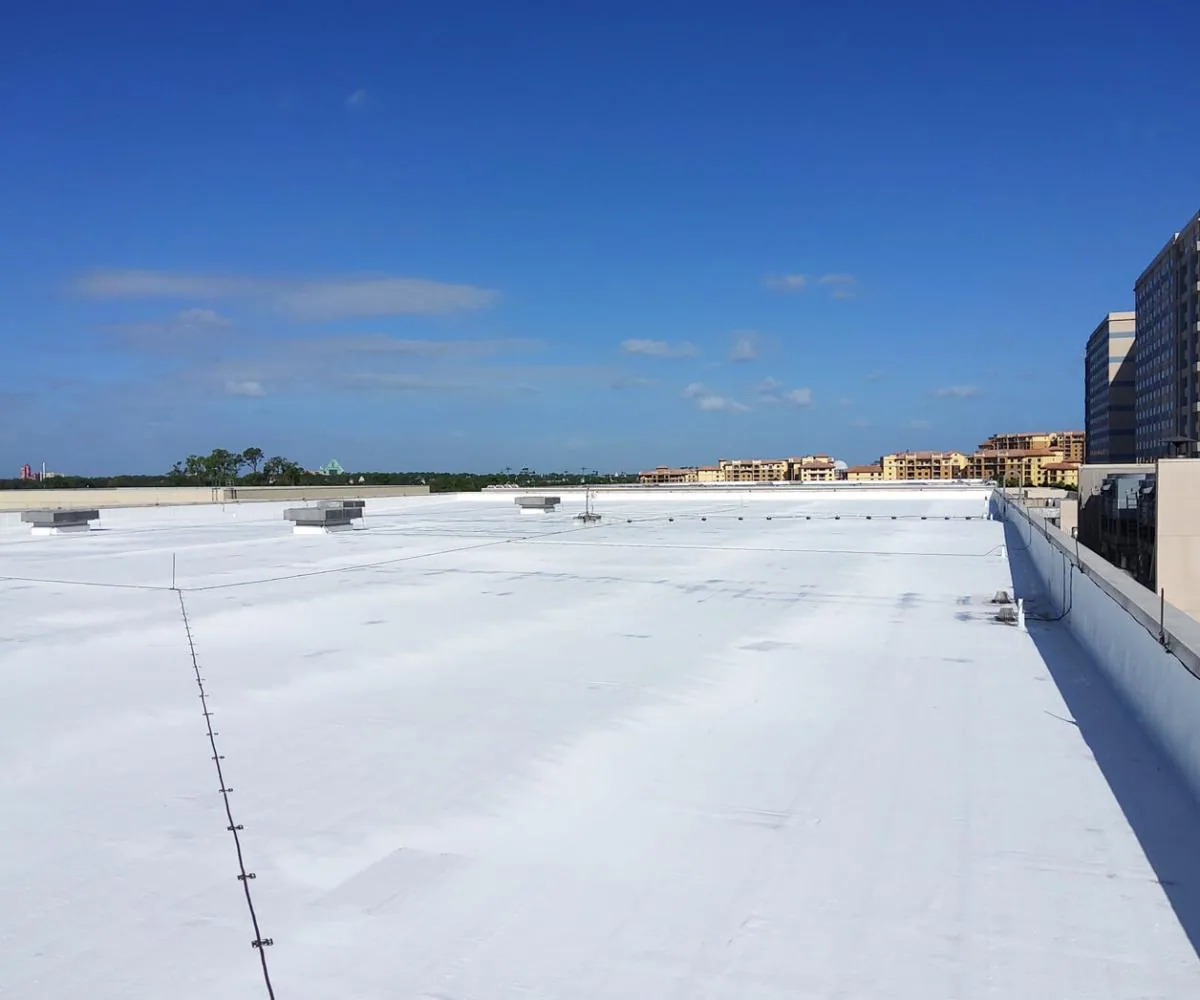
Tuscaloosa gives a roof plenty of chances to leak. The city receives roughly 53 inches of precipitation in a year, and a heavy spring storm can find every weakness in a membrane within one afternoon.
How a Leak Gets Traced
The first step is a walk inside, with the building engineer or manager, to see where the water appears and when. Does it show after every rain or only with wind from one direction? Does it track with air-handler operation, which can produce condensation that looks like a leak? Those questions narrow the roof area to be examined.
On the roof, we check the usual suspects in order of likelihood: drains and scuppers, penetrations, curbs, wall terminations, seams and field punctures. Moisture meters and infrared imaging show where insulation has taken on water, and a core cut verifies it. In large buildings, a controlled water test, applied to one area at a time, separates a flashing leak from a seam leak. The method is deliberate because a roof that has leaked for months has water in many places, and the active entry is not always the one that shows the biggest stain.
The Entry Points We Find Most Often
Drains lead the list. A sump that has settled, a clamp ring that has loosened or a drain bowl with a cracked seal will leak at the first heavy rain. Next are penetrations: pipes, conduits and gas lines pushed through the membrane with a boot or a pitch pan that has dried out and cracked in the heat. Tuscaloosa has hit 107 degrees Fahrenheit, and sealants on dark surfaces age quickly under that load.
Wall terminations and parapet flashings come next. Where a membrane meets a masonry wall, the flashing relies on a termination bar and sealant that open as the building moves. Rooftop equipment curbs follow, with their own corners, laps and fasteners. Finally there are the seams, where a poorly welded or glued lap on a TPO or similar single-ply sheet opens. Each type needs a different fix, which is why a quick coat of sealant over the stain is rarely the answer.
Wet Insulation Complicates the Repair
Fixing the entry point does not dry what the water has already reached. Insulation that holds water loses its thermal value, adds weight to the deck and keeps feeding moisture back into the building. In a summer with long hot afternoons, trapped water turns to vapor and pushes against the membrane, producing blisters that open at the seams.
We map the wet area with an infrared moisture survey and then decide how much to remove. A small wet patch near a drain is cut out and replaced with new insulation and a matching membrane. A larger saturated area may suggest that part of the roof is nearing the end of its useful life. In that case, a controlled replacement of the affected sections is more economical than a string of leak calls over the next year.
Leaks on Different Kinds of Buildings
A leak over a ward or a research lab on hospital roofs is a clinical problem as much as a building problem, so response is prioritized and access is carefully managed. The Veterans Administration hospital on Loop Road East sits on a 125-acre campus of 25 major buildings, and a campus of that scale has many roof sections that each need their own watch. Universities and school districts face the same issue across many buildings with differing roof ages.
For retail along McFarland Boulevard and University Boulevard, a leak is a revenue problem, because water over a sales floor closes aisles. Warehouses care about racked inventory, and manufacturing plants worry about electrical equipment. We shape the response to what is under the leak: temporary protection over product and electrical first, then the roof repair. When the tracing shows more than one failed detail, the fix widens into commercial roof repair across the whole section.
Holding the Building Until the Repair Is Done
Some leaks cannot wait for a full repair. Rain returns before the right membrane can be installed, or a part is on order, or a lease requires that tenants stay in the space. In those cases we place a temporary seal over the entry, redirect water toward a drain and protect equipment below with covers or catch systems. The temporary work is documented and marked on the roof so the permanent repair can replace it cleanly.
If the leak is active during a storm and the building is at risk, our emergency roof repair response covers tarping and dry-in around the clock. We do not leave a temporary seal in place longer than the weather window requires, since temporary materials age faster than permanent ones and hide the next problem.
Leak Records That Protect the Owner
Each leak call should end with a file. We photograph the entry point, mark it on a roof plan, record the moisture readings and describe what was done. Over time that file shows an asset manager whether leaks cluster at certain drains or curbs, which is the strongest evidence for a capital request. It also supports warranty claims, since many manufacturers ask for dated records before they will inspect a failure.
Records matter for insurance too. After the April 27, 2011 tornado crossed Alberta City and the 15th Street and McFarland Boulevard area, a clear pre-loss roof file is what answers a carrier who asks what condition the roof was in. A leak repair log is part of that file, and so is the schedule of preventive roof maintenance that follows the repair.
Commercial Roofing Questions
How long does it take to find a leak on a large roof?
Simple entries are found in a visit. A leak on a large roof with wet insulation may take a second day of testing and core cuts, which is still faster than repeated patching without a diagnosis.
Why does my roof leak only in strong wind?
Wind-driven rain pushes water sideways under flashings and over parapet edges that shed normal rain. The entry is usually at a wall termination, a coping joint or an exposed edge, and we check those first.
Is a roof coating a fix for an active leak?
A coating can seal small seams and fasteners on a sound roof, but it will not stop water coming through a failed flashing or a wet substrate. We repair the entry first, then consider a coating over the whole roof.
Who pays when a leak damages tenant property?
That depends on the lease and the policy, and neither is ours to decide. We document the roof condition and the repair so the owner, the tenant and the carrier work from the same facts.
Can leak repair continue during rain?
Only temporary protection can be installed in rain. Permanent repairs need a dry, clean surface, so we make the area safe and return when the substrate is ready.