
Commercial Roofing in Downtown Tuscaloosa, AL
On a downtown office or civic building in Tuscaloosa, AL, a superintendent heads for the parapet first, since a roof walled in on several sides carries most of its water risk at the wall-to-roof joint. Downtown, a major city area and the county seat on the Black Warrior River, has roofs over offices, public buildings and mixed uses that cannot close for a repair. The work here is planned around the people inside, the street outside and the weather in between.
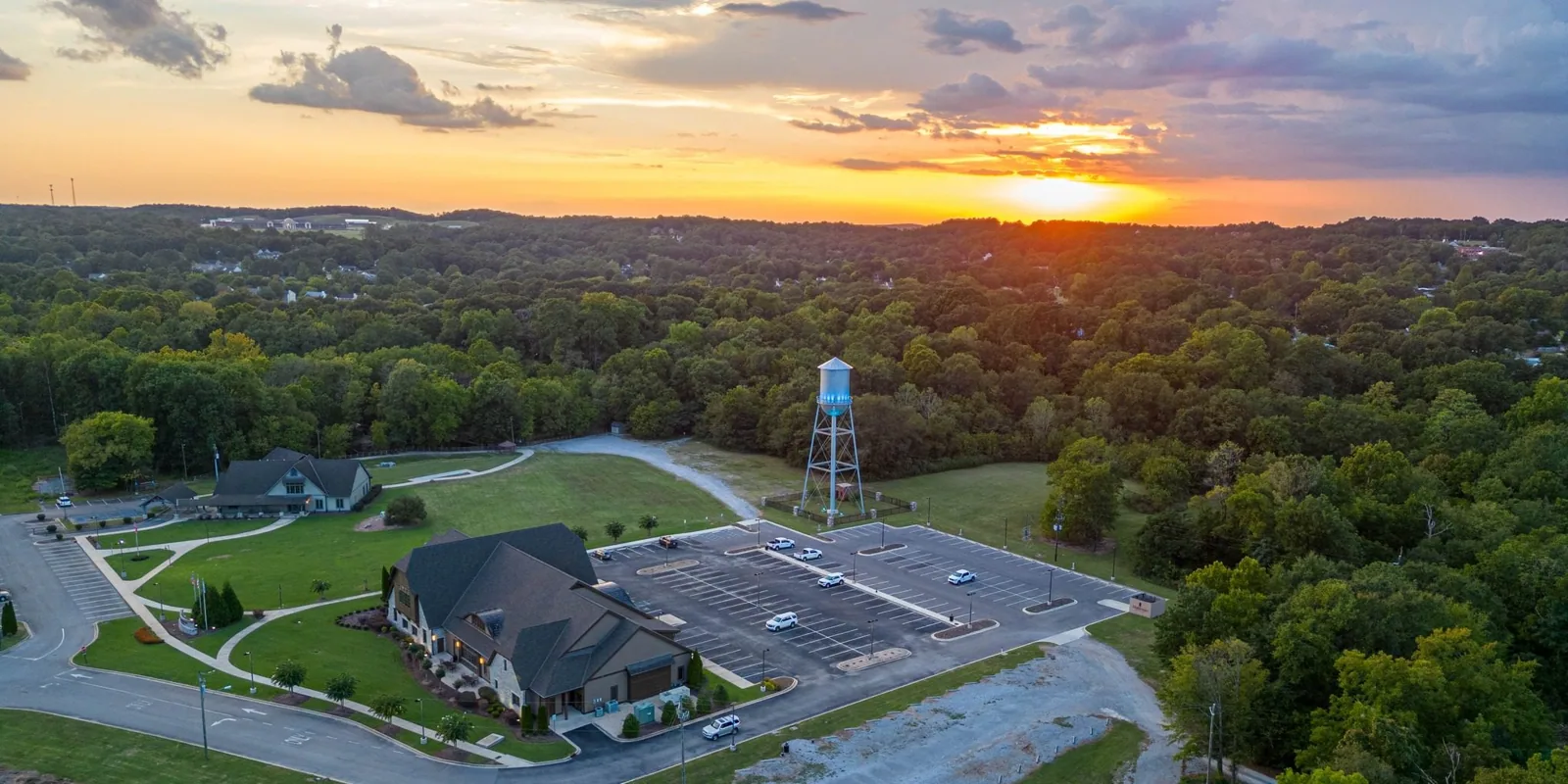
The District and Its Institutions
The City of Tuscaloosa employs 1,303 people and the University of Alabama is the county's largest employer, which keeps government and institutional buildings central to the downtown market. Riverside, the Western Riverwalk starts at Oliver Lock and Dam and heads for the Mercedes-Benz Amphitheater, and Amtrak's Crescent calls at the Tuscaloosa station. Those landmarks draw foot traffic, events and deliveries, all of which affect when and how a roof crew can work.
The first walk reads the roof itself, section by section, and records its membrane, age and drainage before a repair is priced.
What the Crew Finds on Downtown Roofs
Where buildings stand shoulder to shoulder, roofs can meet at a party wall, a step in elevation or a shared parapet, and those transitions are the first thing a superintendent checks. Counterflashing that has pulled out of a masonry joint, a coping with open laps, a scupper that discharges onto a lower roof and a drain bowl partly blocked by debris are the usual findings. Rooftop units and exhaust fans added over the years leave their own curbs and penetrations.
We press on seams, test flashing terminations with a hand, clear drains and measure what water remains on the surface a day after rain. Wet insulation shows up on a moisture survey and is confirmed by a core cut. The result is a roof section list that separates local repairs from conditions that point to a larger scope.
Drainage on a walled roof deserves a separate look. Interior drains run down through the building and can only be cleared from the roof, overflow scuppers sit just above the main drain level, and a blocked scupper turns a parapet into a tub. We test each outlet with water, note how fast it clears and record the discharge point, since a scupper that sends water onto a neighbor's lower roof is a problem for both owners.
Rain, Ponding and Heat on Flat Roofs
The climate is humid subtropical, with rainfall around 53.5 inches a year and temperatures that have ranged from 107 F to -1 F. Flat roofs downtown handle that range by draining quickly and by keeping their seams and flashings tight. Ponding adds weight and tests every seam it touches, so we measure it, flag the drain sump or slope behind it and recommend tapered insulation or a new drain where the deck has a low spot.
Heat works the details. Sealant lines at copings, curbs and penetrations dry out, and sheet flashing shrinks away from walls. We look for gaps at those points and repair them before the wet season, since a gap that is dry in August can pass water in March.
Wind History and the Roof Edge
Across a path 1.5 miles wide at its widest, the April 27, 2011 EF4 tornado drove winds estimated at 190 mph, and above Northport in May 2025 a National Weather Service survey logged straight-line gusts of 90 to 100 mph. Those are reasons to treat the roof edge seriously, and a repair program cannot promise protection from storms of that size.
What it can do is keep ordinary defenses in order. Edge metal, copings and perimeter fasteners are checked on every walk, and loose laps are secured. After a storm, a wind damage roof repair starts at the edge, then moves to equipment and curbs, then to the field.
Repair, Restore or Replace Downtown
Local failures over dry insulation call for a repair. An aging roof that is still dry may take a coating or a recover instead. Saturated insulation or failing seams across a section call for replacing that section, and the report prices each path. Modified bitumen and TPO are two membranes common on low-slope roofs.
Alabama's 2021 International Building Code took effect statewide on July 1, 2022 and was amended on March 17, 2025 to include portions of the 2024 edition, so we confirm the edition at the permit office before a scope is final.
Cost drivers are plain on a downtown job. Access by street rather than by lot adds lift or crane time, tear-off debris has to be chuted or hoisted instead of dropped, and wet insulation turns a patch into a section replacement. A scope written with those items shown separately lets an owner see what is driven by the building and what is driven by the roof.
Scheduling and the Record
Downtown access is part of the plan. Lift locations may need a street or sidewalk permit, deliveries are timed around building hours and events, and a tenant contact is named for each phase. Work is sequenced by roof section, and each section is closed before the crew leaves. Sidewalk protection, flagging and a clear route for emergency vehicles are part of the staging plan, and the property manager gets a daily note on what was opened and closed.
Each section in the record carries its system, findings and photographs, with a cost range that compares repair with leaving it alone. For owners with buildings across the city, the same layout on each lets a roof condition report rank roofs together. Nearby, the Tuscaloosa riverfront and Midtown and 15th Street areas follow the same routine.
Occupied Buildings and Tenant Notice
Most downtown roofs sit over people at work. Tenant notice goes out before the first day, noisy work is scheduled for the hours the occupants prefer, and rooftop equipment stays running unless a flashing job requires a shutdown, in which case the window is stated in advance. Interior protection is arranged below any area where a deck or insulation will be opened.
When the work involves a government or institutional occupant, access procedures and badging are settled with the building contact before dates are set. The same approach carries to any occupied building reroofing project of any size, with the roof sections closed daily and the punch list walked at the end.
Downtown buildings often share party walls, and a roof on one side of a wall can send water into the building on the other. Before a repair is priced, the walk looks at both sides of each shared wall where access allows, notes the owner of each roof and records which side's flashing is failing. That record helps two owners agree on who pays, and it keeps the repair from stopping at a property line.
Commercial Roofing Questions
Can you tell what roof a downtown building has from the street?
No. Address and use do not show the membrane or age. We read the roof on the walk.
How do you work around events?
Lift and delivery days are set outside event hours, and the plan names a contact for each phase.
What is a parapet flashing check?
We inspect the counterflashing, coping and sealant where a roof meets a wall. Those joints carry most of the water risk on a walled roof.
Do you need a permit for a roof recover?
Often yes. We confirm with the permit office and note the code edition in the scope.
How soon after rain can you check ponding?
A day later, once the surface has had time to drain. We measure what remains.