
Roof Insurance Claim Assistance in Tuscaloosa, AL
On a multi-tenant retail roof with a dozen rooftop units, three layers of membrane and a history of patches nobody wrote down, the hardest part of an insurance claim is not the storm. It is separating what the storm did from what the roof already had. A superintendent walking that roof with an adjuster sees a torn seam and asks the question both sides will ask: was it open before, or did it open last week? Without a record, the answer is an argument. With a dated record, it is a photograph.
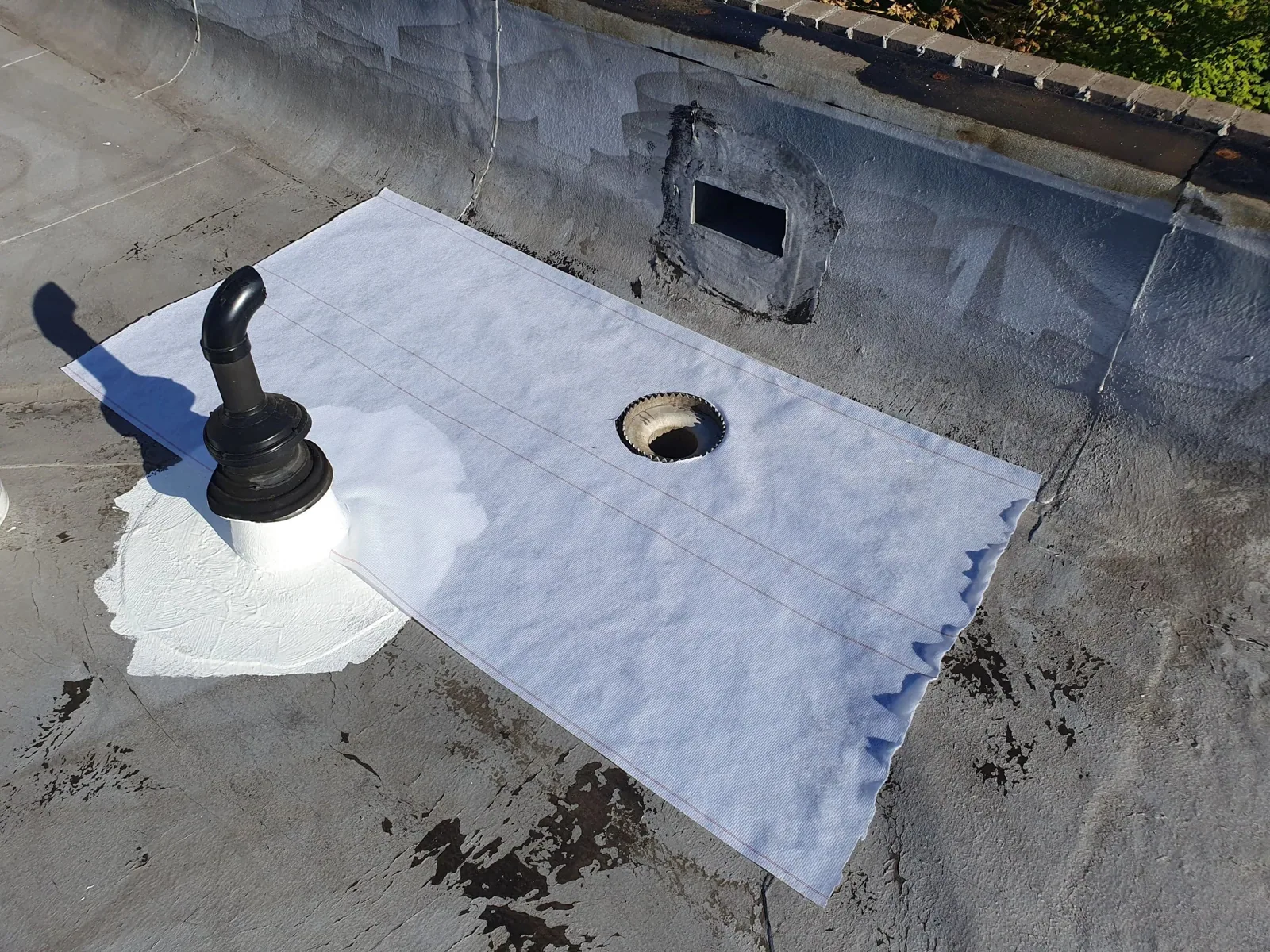
Roof claim assistance is the work of building that record, mapping the damage by roof section, writing a repair scope that matches it, and sequencing the repair so the owner is not waiting on paperwork while water comes in. We document and we repair. The carrier decides coverage. Where the interior also needs drying or rebuilding, the owner often works with a separate restoration contractor, and our roof record gives that contractor the entry point and the date.
What We Document
The record has four parts. First, the condition of the roof before the loss, drawn from earlier inspections, photos and repair logs if they exist. Second, the damage after the loss, mapped by roof section with photos, moisture readings and notes on cause. Third, the temporary work done to stop water, labeled as temporary. Fourth, the permanent repair scope with materials, quantities and sequence.
- Dated photos by roof section, taken before any temporary work
- A roof plan with damage marked by type and location
- Moisture findings from meter, infrared scan or core cut
- Notes that separate storm damage from older wear
- Temporary and permanent repair scopes, listed separately
A property that already has a roof condition report on file gives the carrier a baseline, and the claim goes faster for it.
Reading Damage for the Adjuster
Wind damage has a pattern. It starts at corners and edges, lifts coping and metal, pulls fasteners and flutters membrane, and it follows the direction of the wind across the building. Hail leaves round bruises and dents in a scatter across the field. Debris leaves punctures near the point of impact. Age leaves cracking, shrinkage and seam failure near penetrations and edges, in a pattern that has nothing to do with the storm.
We describe each of these in plain language and mark them on the roof plan, with photos of each section. When damage is clear we say so; when a condition is old we say that too. A report that credits the storm with everything loses credibility with the carrier, and a report that denies the storm any role does the owner a disservice. The adjuster should be able to read the photos and reach the same conclusion we did.
Tuscaloosa's Storm Record
Carriers in Tuscaloosa County have two large events to measure against. One is the 2011 EF4 tornado, which cut a path 1.5 miles wide and passed 35th Street, 15th Street, McFarland Boulevard, Cedar Crest and Alberta City. The other is the straight-line wind of May 2025, which the National Weather Service surveyed at 90 to 100 mph over a belt nearly four miles across north of Northport.
A claim for roof damage after an event of this kind often involves a wind damage scope that covers edges, coping, rooftop equipment and flashings, along with membrane damage from wind and debris. The dry-in photos, the damage map and the permanent scope from a storm damage roof repair are the same documents the adjuster reviews, so the repair file and the claim file never drift apart.
Hidden Damage Under the Membrane
The damage an adjuster sees from the roof surface is often smaller than the damage under it. Wind that lifts a membrane edge lets rain reach insulation, and insulation holds that water for months. A roof that looks repaired at the surface can still carry a wet section that rots the deck, stains ceilings and corrodes fasteners. With rain at roughly 53.5 inches in a normal year, a wet section has little chance to dry out on its own.
Moisture hiding below the surface is read with a meter and a thermal scan, confirmed by cutting a core where the numbers disagree, and entered in the claim record reading by reading. If moisture is found after the first adjuster visit, we document it as supplemental damage with photos and a written cause, so the owner and the carrier can address it before the roof is closed up. A dry roof with a documented moisture check closes cleaner than one that was assumed dry.
Claims by Building Type
A warehouse or distribution building is often the simpler claim to document: a large roof, fewer penetrations and damage concentrated at edges and corners. A shopping center along University Boulevard or McFarland Boulevard has many tenants, many penetrations and shared drainage, so the record must tie damage to each tenant's bay and to the common roof.
A hospital or medical office adds operations that cannot stop, so the temporary work and the permanent schedule are written around patient areas. A school adds a calendar. A manufacturing plant adds process equipment on the roof. In each case the scope is built to the building, and the claim record shows the owner's obligation to protect the property from further loss, which includes prompt temporary repair. An emergency roof repair call starts the clock on that record.
Paperwork the Owner Keeps
An asset manager should keep the pre-loss roof report, the dated photo set, the damage map, the temporary and permanent repair scopes, invoices, correspondence with the carrier and the closeout photos. We assemble the technical documents and hand them over in order, with a short cover summary that lists each document and its date.
Coverage, deductibles, depreciation and settlement are matters between the owner and the carrier, and we do not advise on them. We can answer the technical questions the adjuster raises, walk the roof with the adjuster and supply supplemental documentation if hidden damage turns up once the membrane is opened. A manager along University Boulevard or anywhere else in the city gets value from this record even when no claim is filed, since it also shows condition to a lender or buyer.
Sequence of a Claim Repair
The usual order is dry-in, photo record, damage map, adjuster walk, approved scope, permanent repair, closeout photos and warranty documentation. Each step has a date, and each document is stored in the same set. If the carrier asks for revisions, we update the scope and keep the earlier version, so the file shows what changed and why.
For occupied buildings, the permanent repair is planned around tenants and operations, with notice for noise and access. For roofs under a manufacturer's warranty, we check what the warranty requires before any work starts, since the wrong repair method can create a second problem. The finished work is photographed section by section and filed with the claim record, so the owner has proof of the completed repair at the end of the process.
Commercial Roofing Questions
Do you file the insurance claim?
No. The owner files the claim with the carrier. We supply the technical documentation: photos, damage map, moisture findings and repair scope.
Should I wait for the adjuster before making repairs?
Do not wait to stop active water entry. Photograph first, then make temporary repairs. Permanent work is usually scheduled after the adjuster has seen the damage.
What if the adjuster disagrees with our damage map?
We review the photos and the roof together and explain the basis for each finding. If hidden damage appears during repair, we document it as a supplement.
Can a claim cover the whole roof?
That is the carrier's decision, based on policy terms and the documented damage. Our scope shows what is damaged, what is worn and what repair is needed.
What if I have no earlier roof report?
The claim can still proceed. We document the current condition and note which conditions are old. A report now becomes the baseline for the next event.