Due Diligence Roof Surveys in Tuscaloosa, AL
A buyer under contract on a low-slope warehouse or a mixed retail center gives the superintendent a few days to answer a question the seller's file can only half answer, namely what the roofs will cost in the first three years of ownership. From the parking lot the roof may look intact, and that impression is the first thing a survey tests, but the real condition is in the seams, the flashing, the drains and the insulation under the sheet. Due diligence roof surveys in Tuscaloosa, AL compress a full condition review into the window the deal allows, rank every finding on the roof plan and turn it into a repair list and a reserve the buyer or the lender can use.
What a Survey Covers in a Deal Window
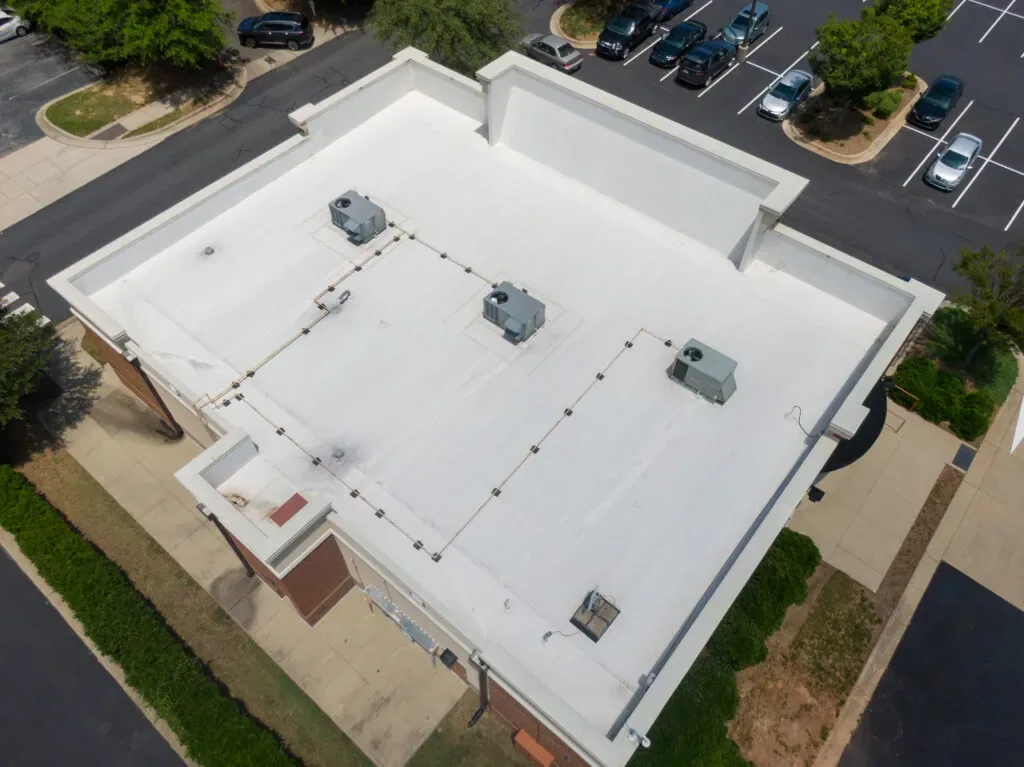
The survey is organized to give the most reliable answers first. We read the seller's documents, walk the roof, probe the seams and flashings and scan the insulation for moisture. A drone pass adds an overview of drainage and equipment, and cores at the suspect areas confirm what the scan suggests. For a single building, the field work fits in a few days, and the report follows on a schedule agreed at the start.
What a short window cannot show is how the roof behaves across a full year, so the report says what was seen and what was inferred, and it flags any area where a second look in a different season would settle an open question. Access is requested in advance: roof keys, lift or ladder permission, tenant notices and any escort the property requires, since lost time at the gate comes straight out of the survey. The drone roof inspection and the infrared moisture survey are used together, because each answers something the other cannot.
Seller Records to Request
The roof plan, the date and scope of the last replacement, repair invoices, warranty documents, leak logs and any storm claims. Each document narrows the search on the roof: an invoice for a curb repair points at a unit worth probing, and a claim date points at a storm worth matching to damage. We also ask for the names of past roofing contractors, because a call to the last installer can settle what material is on the roof and how it was attached. A missing file is itself a finding, because the roof's history then has to be read from the roof.
We read the warranty for its conditions and transfer rules, since coverage may not pass to the buyer without notice or a fee, and we look for repairs that could have affected it. The review also shows who has been on the roof and why. It feeds directly into roof warranty management after closing, so the buyer inherits an organized file and not a binder of loose pages.
Plants, Warehouses, Retail and Medical Roofs
The survey adapts to the building type. A plant or warehouse in the 1,000-acre Tuscaloosa Airport Industrial Park or the 950-acre Cedar Cove Technology Park usually brings long seam runs, many penetrations and a deck whose condition governs the whole decision. A retail center on McFarland Boulevard or 15th Street brings parapets, storefront edges and rooftop units. A medical building brings equipment, strict access and a high standard for dryness.
Every roof is scored on active leaks, years of life left and the exposure of its details, so the comparison does not depend on how large or valuable the building is. That lets a buyer compare a plant to a strip center on one page, and lets a lender see which property carries the larger roof risk without relying on the building's use.
Occupancy and contents are noted for each zone. A leak over stored inventory, a production line or a records room costs the owner more than the roof repair itself, and the survey records what sits below each section so that the reserve reflects consequence as well as condition.
Wind History and Storm Claims
The county's wind record belongs in every survey. In April 2011 an EF4 tornado with estimated 190 mph winds took out warehouses along 35th Street and damaged Alberta City and Cedar Crest, and a survey after the May 2025 storm north of Northport put straight-line gusts at 90 to 100 mph. We ask the seller about storm claims and repairs after each, and we inspect edge metal, fasteners and perimeter membranes with that history in mind.
Signs of past wind lift, such as patched corners, replaced coping or mismatched edge metal, are matched with the claim record. A wind damage pattern the file does not mention is worth a question before closing, and a roof whose perimeter was upgraded after a storm is credited in the grade.
The Report: Ranked Repairs and Reserves
The deliverable opens with a summary a decision-maker can read in five minutes, followed by the roof plan with numbered findings, photographs, moisture scans and core logs. Each finding carries a priority: items that admit water now, items that will within a short period and items that can wait. The report ends with a repair list and a reserve schedule in cost ranges, so the buyer can price the deal or ask for a credit.
Lenders want evidence that the property can carry its debt, and a roof that needs replacement soon changes that picture. The report shows remaining life by zone and by year, which feeds a roof capital plan. The format matches the roof condition report used for owners, so nothing needs translating after closing. Cost ranges are given for repair now, repair within a year and replacement, and the report states what each range assumes about the deck, which is the unknown most likely to move a number once the old roof is open.
After Closing
The survey becomes the first entry in the building's roof record. The buyer can order the high-priority repairs, set a maintenance calendar and plan the capital items against the reserve. For funds and trusts, real estate investors and REITs often ask for roof data in a format that fits their asset system, and the photographs, grades and costs can be provided that way.
If the buyer acquires several buildings, the surveys are combined into one ranked list so the first year's budget goes where water is entering. The file then supports annual inspections, and each later visit adds a dated entry.
Commercial Roofing Questions
How long does a survey take for one building?
Field work usually fits in a few days. The written report follows on a date set at the start.
Can a survey predict when replacement is needed?
It gives a remaining-life range by zone from membrane condition, moisture, seams, flashing and drainage. A range is more accurate than a single year.
What if the seller has no roof file?
The roof supplies the history through patches, layers and prior repairs. We record the gap as a finding so the buyer can ask for a credit.
Do you review storm claim history?
Yes. We ask for claims after the 2011 tornado and later storms and match signs of past repair on the roof to the record.
Will a lender accept the report?
Many ask for a written condition report with photographs, moisture results and cost ranges. We ask for the lender's checklist early and format to it.
What happens to the survey after closing?
It becomes the first entry in the roof record, and the repair list and reserve go into the capital plan.