
Big-Box Retail Roofing in Tuscaloosa, AL
A big-box store roof is a wide single-ply or ballasted field, often white, stretched over a steel deck and dotted with rooftop units, with a front parapet that hides most of the mechanical equipment and a rear dock edge that takes most of the wear. A superintendent walking one counts the units first, because every curb is a flashing, and then follows the seams across hundreds of feet. Our crews repair, recover and replace big-box retail roofs in Tuscaloosa, AL, and we report them by roof section so a retail asset manager can plan capital around store calendars.
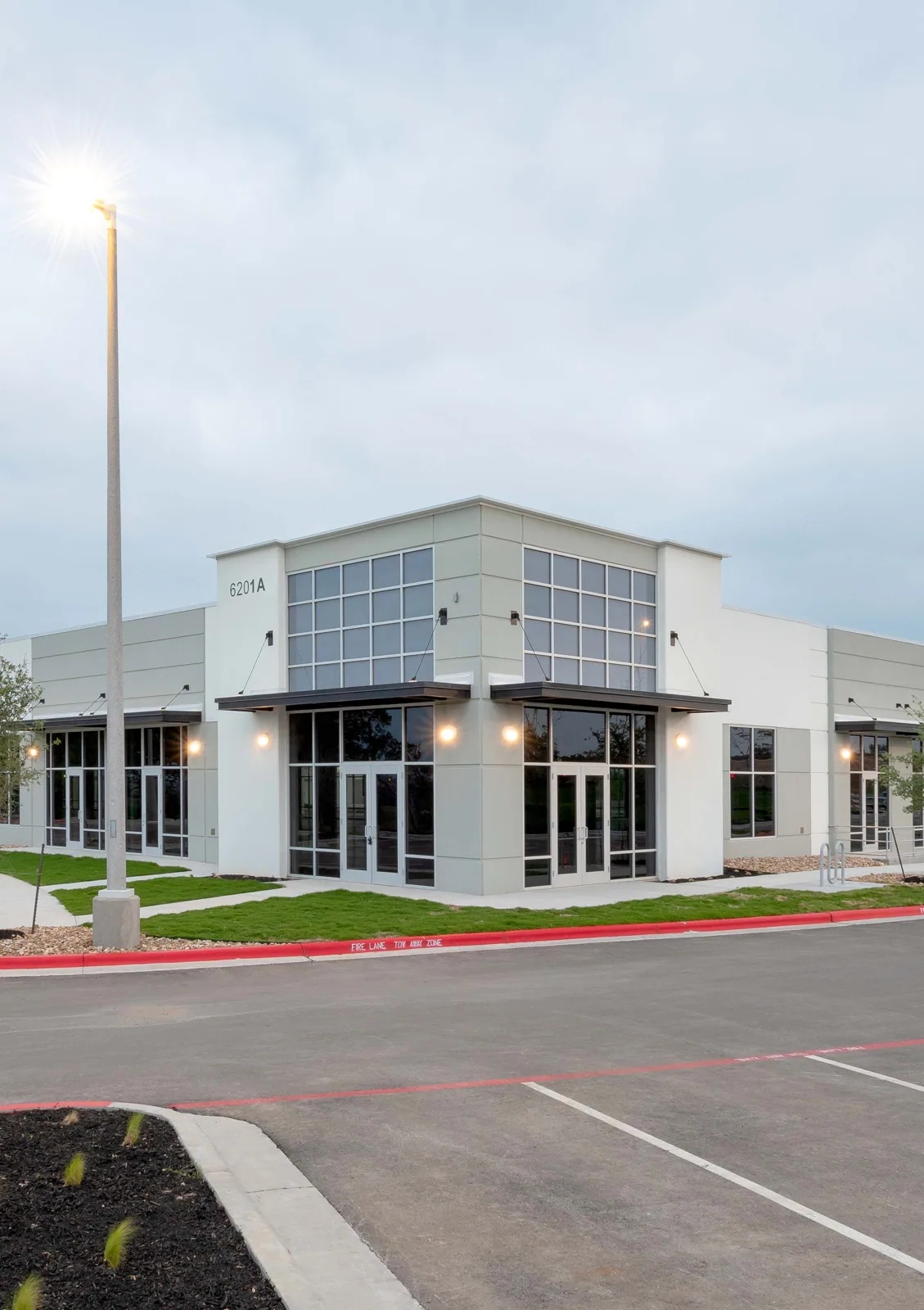
Wide Fields, Many Units and a Hidden Perimeter
A large retail box carries a lot of rooftop equipment relative to its roof: air handlers, exhaust fans, refrigeration condensers and sometimes solar racks or communications mounts. Each unit sits on a curb or a rail, and the cables, gas lines and condensate pipes that serve them pass through the roof at other points. The count of penetrations on a big-box roof runs high, and their flashing quality sets the leak rate more than the field of the sheet does.
The parapet hides the roof from the street, which means problems go unseen from the ground. We walk the full perimeter, check cap joints and base flashing, and test scuppers that discharge through the wall. Rear dock areas and garden or receiving canopies get separate notes, since they are exposed to trucks and weather.
Rooftop screens, solar racks and communications mounts add loads that the original design may not have counted. We ask whether each addition was reviewed by an engineer and whether its supports are fastened to structure instead of resting on the membrane, since a heavy stand on soft insulation slowly crushes the board and forms a depression that holds water.
Seams, Walkways and Ballast on Large Roofs
Seam probing on a big-box roof is slow, and it is where the information is. A weld that takes the probe tip or an adhered lap that has opened shows where water will enter. On ballasted roofs, we measure stone depth at corners and edges, because wind scours those first and leaves the sheet exposed. Where stone has piled against walls or drains, we clear it.
Foot traffic shows as worn routes between hatches and units. A walkway pad on those routes costs little and saves membrane. We also check roof hatches, ladders and guardrails for condition, since a damaged hatch lets rain into the building and endangers service staff. A seam failure repair is scoped from a probe record, not from a guess.
Insulation and cover board get their own check. A core cut at a few chosen places shows the thickness, layers and moisture, and a moisture scan across the field maps wet areas. On a very large roof, one wet area often marks a chronic leak path, and finding it early limits the cost to a section instead of the whole roof.
Drains and scuppers on a roof this size handle a lot of water in a hard rain. We clear them, check the clamping rings, measure the slope toward each and recommend added outlets where the roof has long runs between drains. The report records the flow test result so a manager can see which drains need attention before the next season.
Wind History and Uplift Ratings
The 2011 EF4 tornado, with winds estimated at 190 mph, crossed 15th Street and McFarland Boulevard and flattened businesses and restaurants near University Mall. Then in May 2025 a line of straight-line storms, surveyed at 90 to 100 mph, struck the county north of Northport. A big-box roof is a large sail, and wind pressure peaks at corners and perimeters, so the wind-uplift rating and edge metal condition should be known for every section.
We check edge fasteners, joints and the first rows of the field, record the rating and photograph the baseline. After a storm, we compare. Where flutter is visible, we recommend added attachment or perimeter reinforcement, and the wind damage roof repair record shows what was done.
Rear docks and receiving canopies deserve their own look. They face trucks and forklifts, they carry flashings where roof meets wall, and their edge metal is often bent or loose from impact. We fasten, replace or reseal what we find and photograph the correction for the file.
Retail Corridors Around Tuscaloosa
US 82 is McFarland Boulevard through Tuscaloosa, and it runs through the retail core, where the 15th Street intersection draws Shoppes at Legacy Park, University Mall and Midtown Village. The old McFarland Mall site has been cleared. The McFarland Boulevard corridor is where large-format retail concentrates, and the Midtown 15th Street area is its neighbor.
A big-box store may belong to a national program with its own roof standards, and we follow the retailer's requirements where they exist. The work differs from a strip center, where many tenants share one roof, and from a grocery store, where refrigeration adds load.
Working Around Seasonal Blackouts
Retail calendars decide the work window. Many stores restrict roof activity during the holiday selling season, so large replacements are planned for late winter through autumn, and small repairs are scheduled outside peak trading hours. Heat that has reached 107 F and rainfall near 53.5 inches add a second limit, so crews start early and plan around afternoon storms.
Inside, we protect the sales floor, keep entrances clear and coordinate truck deliveries. Insulation and wind requirements under the state's adopted 2021 International Building Code are confirmed with the building department before pricing.
Cost drivers on a retail roof are the area, the count of curbs and penetrations, the amount of wet insulation, the deck condition, the edge length and the staging the store requires. A recover over a dry roof lowers cost and disruption, and we confirm eligibility with moisture scans and cores before quoting it.
What to Carry on the Books
A retail asset manager should carry each roof section with its system, age, warranty, last inspection, rating and replacement window as a range. For a portfolio of stores, multi-site roof programs keep the format consistent so one store can be compared with another and capital follows condition, not habit.
The record should include the lease or ownership split on roof costs, the retailer's standards and any approved contractor rules. Written beside the condition findings, those notes let a regional manager answer a landlord's question without a new survey.
Insurance renewals draw on the same file. A dated survey with photographs shows condition before a loss, and a log of repairs shows that problems were addressed when found. Both answer questions an underwriter asks about a large-format roof.
Seasonal merchandising adds temporary signs and racks on some roofs, and each attachment goes on the same equipment list as a permanent unit.
Commercial Roofing Questions
Why is the parapet important on a big-box roof?
It hides the roof from view and holds water if scuppers clog. Its caps and flashings are a leading entry point.
Can a store stay open during reroofing?
Yes. We protect the floor, keep entrances clear and close sections each day.
What is the best season for large work?
Late winter through autumn for most stores, avoiding holiday blackout periods and planning around summer storms.
How do you handle a retailer's roof standards?
We follow them where they exist and document compliance in the closeout.
What does ballast loss tell you?
That wind has scoured the roof. We measure depth at edges and corners and restore it or change the attachment.