
School Roofing in Tuscaloosa, AL
Standing on a school, a superintendent sees roofs at several heights and ages: a low-slope membrane over the classroom wings, a taller roof over the gym and cafeteria, a canopy over the entry and a mechanical penthouse tied into all of them. The roofs were not built at once, and a district's roof file rarely reads as one story. Our crews repair, recover and replace K-12 school roofs in Tuscaloosa, AL, and our reports divide each campus into roof sections so a facilities director can fund the worst first and schedule the rest around the school calendar.
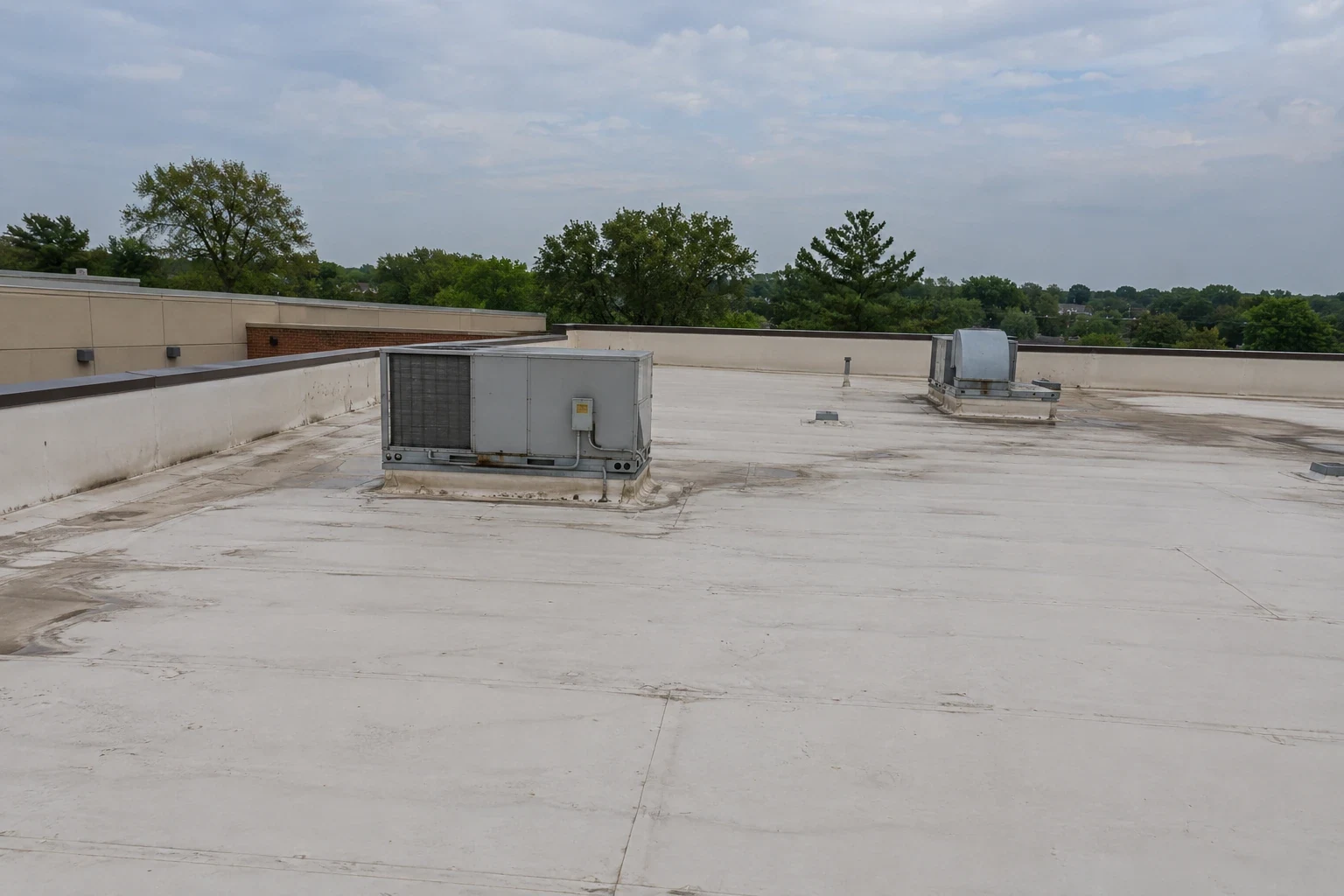
Wings, Gyms and Additions
A school campus usually holds more roof sections than its size suggests, because classroom wings, a gymnasium, a cafeteria, a media center and portable connections each get their own roof, installed in different years. The gym and cafeteria roofs are typically taller and more exposed, and the classroom wings are lower with many rooftop units. Seams between old and new sections are common weak points, and transitions often carry flashing that was patched more than once.
We map each section with its system, age, drains, units and last repair, then walk the campus in a set order. The record is a drawing and a table that a facilities director can hand to a board member, a state reviewer or an insurer without translation.
Rooftop units deserve a separate count. Classroom wings often carry a unit for each room or pair of rooms, so a single wing can have a dozen curbs, condensate lines and electrical conduits. Every one is a penetration, and every one has its own flashing age. Each curb is photographed and its height above the membrane recorded, with a note on whether the unit still runs, because a retired unit left with an open curb will leak in the first heavy rain.
Findings Over Classrooms and Gyms
Over classrooms, the common findings are stained ceiling tiles that return after repairs, rooftop unit curbs with cracked flashing, drains with debris and sections where ponding has started. Over a gym, the high ceiling hides moisture until it drips on the floor, so we scan from above and note any rusted deck or wet insulation. A moisture reading and a core cut give the real picture, and an infrared moisture survey across a campus ranks sections by wetness.
School roofs also take abuse that commercial ones do not. Balls land on them, students climb to retrieve them, contractors access units after hours and vandalism happens. We check for punctured membrane, damaged walkway pads and tampered hatches, and we recommend fencing or hatch locks where roof access invites trouble.
Drainage on school roofs is mixed. Interior drains, perimeter scuppers and downspouts coexist, and leaf litter, balls and trash gather at all of them. A clogged scupper behind a parapet can fill the roof edge with water, and the first sign is a stain on an exterior wall. We clear and test each outlet, record the slope and add a cleaning interval to the maintenance plan.
Wind History and Edge Condition
Several schools were among the buildings destroyed in Alberta City by the 2011 tornado, along with businesses, two police stations and a post office, and a straight-line storm north of Northport in May 2025 was a second reminder. School roofs are low enough that edge metal and parapet caps take the first pressure.
We check edge fasteners, joints and flashing at every roof section and record a wind-uplift note, so the district knows the rating before the next storm. After an event, we walk the campus again and document changes. The wind damage roof repair that follows is tied to those photographs.
Edges on school roofs bear a particular load because they sit where students and staff walk below. Loose metal falling from a roof edge is a safety event as much as a roofing one, so we fasten, seal or replace edge pieces that show movement and record the work. Canopies and covered walkways get the same check, since they are exposed on several sides and often lightly built.
Summer Windows and School-Year Work
The best time for a school reroof is summer, when buildings are empty. Tuscaloosa summers are hot, with a record high of 107 F, so crews start early, stage materials in shade and plan for afternoon storms. A typical campus plan sorts work into summer projects, breaks and emergency repairs, with the largest tear-offs in summer and small repairs scheduled for weekends and holidays.
During the school year, the rules tighten: no work above occupied classrooms during instruction, safe pathways for students, controlled noise, and protection of intakes. Wind and insulation requirements under the state's adopted building code are confirmed with the authority having jurisdiction before pricing.
Procurement shapes the calendar too. Public districts often need specifications, bids and board approval months before summer, so the survey should be done in the fall or winter before the roof season. We provide a scope version with quantities and unit costs that a district can attach to a bid package, and we list the alternates, such as added insulation or cover board, as separate items.
Public Buildings in Tuscaloosa and Northport
School buildings in Alberta City and across Tuscaloosa County each get a walk, cores where the insulation feels soft and a ranked report, since a roof cannot be judged from its address or its age. A district with many buildings benefits from multi-site roof programs, which keep records in one format.
A college or university program has a similar scale but different calendars, and a church sees occupancy peak on weekends. Each setting shapes the schedule and the sequence.
What to Carry on the Books
A facilities director should carry each roof section with its rating, age, warranty, last inspection and a replacement window expressed as a range. The roof capital planning list then ranks sections by condition and consequence, so the board sees a rational order of spending.
The record should also show the repair history, because a section with three repairs in two years is telling the district something. When a bond or capital campaign is considered, a dated, photographed roof record turns a request into a documented need.
Warranty status belongs in the record as well. A section installed under a manufacturer warranty may since have expired, or been affected by a repair made without notice, and knowing which sections are still covered changes the repair order. We list the warranty dates we can document and the notice requirements that apply.
Summer roofing follows a short list of dates the district controls: the last day of classes, the first day of staff return and any summer program in the building. Those dates go on the first page of the schedule so the crew sees the same window the principal does.
Commercial Roofing Questions
When is the best time to reroof a school?
Summer, when buildings are empty. Smaller repairs can run on weekends and breaks.
How do you protect students during the year?
With controlled access, fenced work areas, noise limits and intake protection. No work happens above occupied rooms during instruction.
Why is the gym roof a separate section?
It is taller and more exposed, and its failures show late. We scan and rate it on its own.
Can one report cover a whole campus?
Yes. Each roof section is rated, and a ranked list sets the order of repair.
What if roof access is being misused?
We note it and recommend hatch locks, fencing or cameras. Damage from access shows up as punctures and loose pads.