
Apartment Roofing in Tuscaloosa, AL
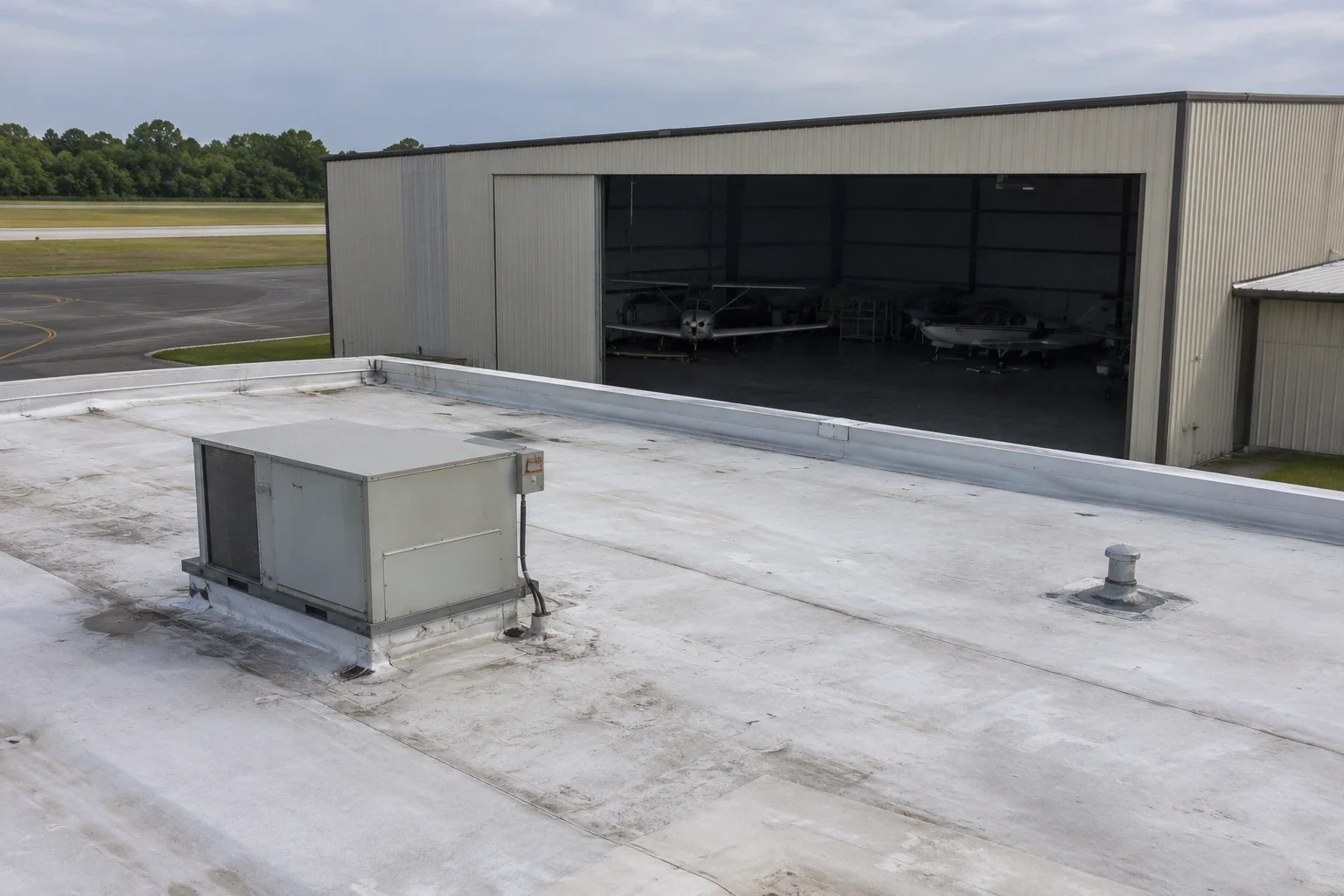
A multifamily complex is a repeated roof: the same building type several times over, each with its own age of repairs, its own set of leaks and its own residents who know exactly which ceiling drips. A superintendent who walks one finds low-slope membrane sections with parapets and vent stacks, sometimes steeper sections at the entries, and balcony and breezeway roofs tying the buildings together. Our crews repair, recover and replace apartment roofs in Tuscaloosa, AL, and our reports rank buildings against each other so a property manager spends roof money where the condition and the unit count justify it.
Repeated Buildings With Different Histories
Garden-style and mid-rise complexes repeat the same plan, but their roofs do not age alike. One building catches more afternoon sun, another sits at the low end of the site and takes standing water, and a third was patched last year by a different contractor. We survey each building separately and give each a record: system, age, drains, vent stacks, known repairs and the units below.
Common features on the low-slope roofs include dozens of plumbing vents, bathroom exhausts, a few mechanical units and a parapet or edge metal at the perimeter. Breezeway and balcony roofs have their own flashings against the main walls, and they leak into units and onto walkways. Each of these is mapped on the roof plan and rated on its own.
Drainage varies from building to building as well. Some roofs shed water to interior drains, others to perimeter scuppers and downspouts that empty onto walkways or landscaping. A downspout that discharges against a foundation or across a breezeway is a maintenance item and, in a freeze or a heavy rain, a safety matter. We follow the water on each building, record where it goes and flag any outlet that needs a splash block, an extension or a larger opening.
Vent Stacks, Parapets and Balcony Junctions
Plumbing vent boots are the most numerous detail on an apartment roof, and they age together in the sun. A building with fifty boots of the same age and pattern of cracking is better served by replacing the group than by answering fifty calls. Parapet caps and base flashing come next, with opened joints and shrunken flashing letting water behind the wall finish and into upper units.
Balcony and breezeway junctions leak into the places residents see. We probe the flashing where roofs meet walls, check the drainage from small roofs and look for staining on the exterior below. A flashing failure repair is scoped from that record, and repeated tickets from the same unit are a clue that the problem is the detail and not the patch.
Resident complaints are a good starting point and an imperfect one. A stain in a unit tells us where water arrived, not where it entered, so we trace it through the ceiling plan to the roof detail above and probe the membrane around it. When several units on one stack report stains, the vent boot or the wall junction above them is the usual suspect, and a moisture scan can confirm it before any membrane is cut.
Common areas deserve the same care. Stairwell roofs, mail kiosk canopies, leasing office roofs and clubhouse roofs are low-slope or small steep sections with their own flashings. They are inspected with the buildings, rated separately and added to the property record.
Tornado History and Storm Documentation
After crossing 35th Street, the 2011 tornado worked through the Rosedale and Forest Lake neighborhoods, and the weather service later clocked 90 to 100 mph straight-line gusts above Northport in May 2025. For a property with many buildings, those two storms argue for a baseline on every roof before the next one, not after.
We record edge metal, parapet caps, equipment fastening and the first rows of the membrane at corners for each building. After an event, we walk them again, compare and document what changed. A roof insurance claim assistance file built on that record is clearer than a general complaint about storm damage, and it helps separate old wear from new damage.
Edge metal on multifamily buildings runs long, and one loose section can peel back a surprising amount of membrane. We fasten, seal or replace pieces that show movement and photograph the correction. Roof access ladders and hatches are checked too, since a hatch left unlatched lets rain into a stairwell.
Residential Areas in the Tuscaloosa Market
Apartment owners in the city work around the paths the 2011 tornado took. It moved through the Rosedale and Forest Lake neighborhoods, which fall in the Rosedale and 35th Street area, and did its heaviest damage in Alberta City, so a complex in either place has a wind history worth putting in its roof file.
A senior living community has the same stack of vents and parapets with different care needs, and a hotel shares the room-by-room risk of a leak into a rented space. Each building is surveyed on its own, and a property manager with many sites benefits from multi-site roof programs that keep records in one format.
Working Around Residents and Turnover
Apartment reroofing is phased by building, with notices posted in advance, parking and walkways protected, and loud tear-off scheduled for hours that residents tolerate. Move-in and lease-end periods are times to avoid. We coordinate with the leasing office, keep staging away from entrances and pick up debris daily.
A 107 F record high and about 53.5 inches of rain a year set the weather limits, so crews start early and close sections before afternoon storms. The building department confirms which requirements of the state's 2021 International Building Code, as amended in March 2025, apply before pricing. We close with a punch list and a warranty walk.
Cost drivers are the roof area per building, the count of vent boots and curbs, the amount of wet insulation found, the deck condition and the number of buildings phased in a season. Doing several buildings in one mobilization lowers the unit cost, and we price a program and single buildings side by side so the owner sees the difference.
What to Carry on the Books
A property manager or owner should carry each building with its rating, age, repair history, unit count and a replacement window as a range. The ranking by building, drawn from the roof capital planning list, sets an order of spending that an investor, lender or board can follow.
The record should also show the work-order history by building, since repeated tickets are the cheapest way to see which roofs are failing. Written beside the field findings, it turns resident complaints into a ranked list of repairs.
Maintenance staff on a property often hold the best leak history, so the walk begins with their work-order list. Matching tickets to roof sections shows which buildings are failing and which only look old.
Commercial Roofing Questions
Why replace all vent boots at once?
They age together and crack in the sun. A group replacement costs less than repeated calls and closes a common leak source.
How do you rank buildings in a complex?
By condition, unit count and the cost of failure. The ranked list sets the order of repair.
Can residents stay during reroofing?
Yes. We phase by building, post notices and protect walkways and parking.
What records help most after a storm?
A baseline survey with dated photographs, and a post-storm walk that records what changed.
How are balcony roof leaks found?
By probing flashing at the wall, testing drainage and checking exterior staining below.