
Roof Coating Restoration in Tuscaloosa, AL
A metal-roofed warehouse at an industrial park, with a standing seam deck that is structurally sound and a finish that has chalked white at the ribs, and a modified bitumen roof over a strip center whose granules have worn thin at the drains, are the two buildings where a coating restoration makes the most sense. In both, the roof still does its job; the surface has simply used up its protective layer. A superintendent standing on either one is asking the same question the asset manager is: can a liquid-applied system add years to this roof, or is the roof past saving?
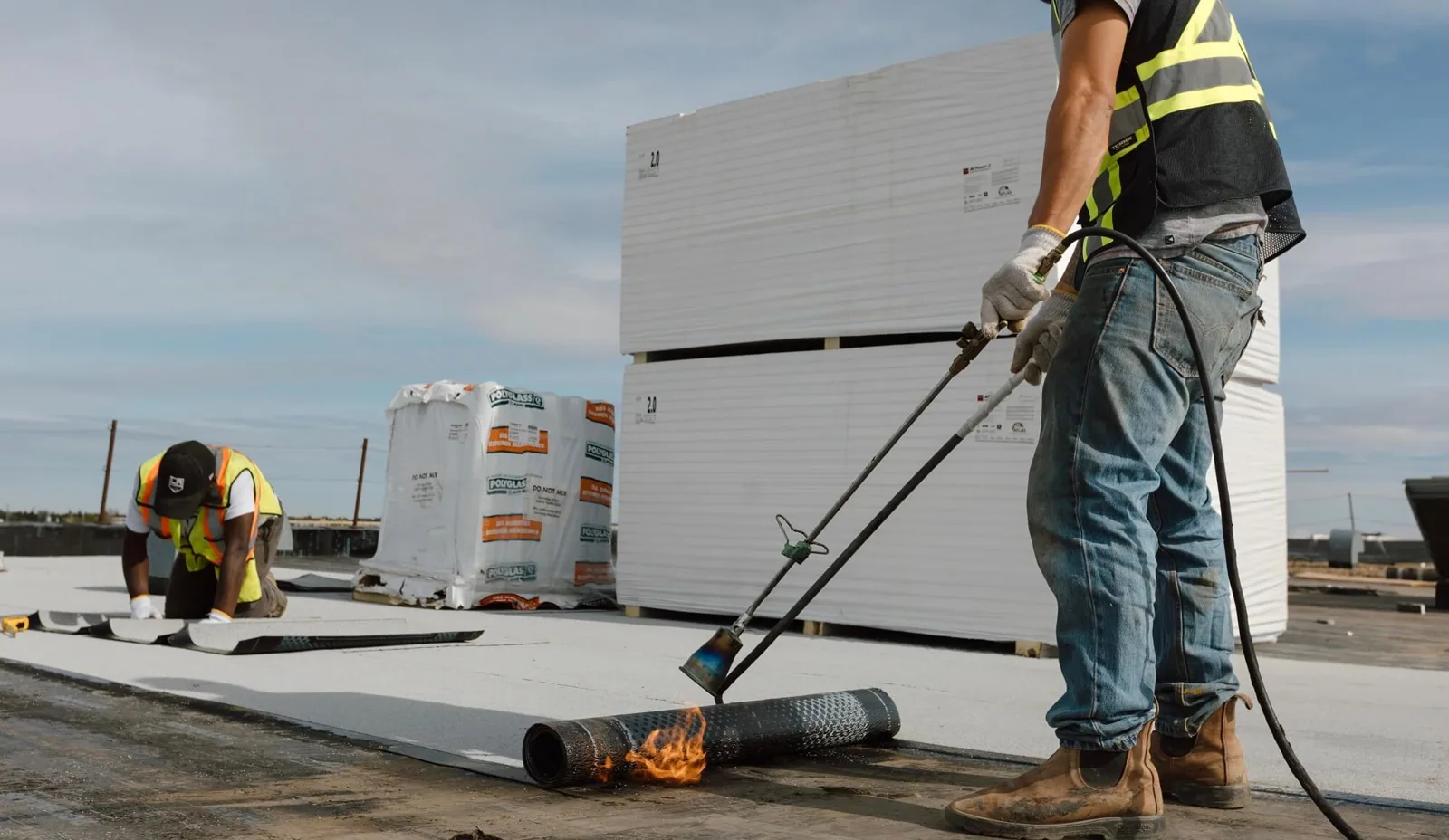
A coating restoration works only when the answer to that question is checked, not assumed. The decision turns on what is under the surface, and we read that before we quote a gallon.
Roofs That Qualify for Restoration
A roof is a candidate when its insulation is dry, its deck is sound, its seams and flashings can be repaired, and its membrane has life left in the reinforcement. Typical candidates include a warehouse roof with aged modified bitumen and built-up roofs with granule loss, TPO and PVC membranes with surface chalking but intact seams, and metal roofs with sound panels and fasteners that need resealing.
A roof does not qualify when the insulation is saturated, when the membrane is cracked through to the scrim, when the deck is rusted or rotted, or when the existing system has already been recoated more than the roof can carry. We say so on the day we walk it, because coating over a wet roof traps moisture and shortens the life of the coating. An infrared moisture survey and a few core cuts are the entry ticket.
What the Surface Tells Us
Tuscaloosa gives a roof about 53.5 inches of precipitation a year and a record high of 107 F, and both leave marks. Ponding stains show where water stood after a storm, algae streaks show where moisture lingers, and blistered laps on a hot membrane show where heat has moved the material. Brittle sealant at curbs and pipes shows where movement has outpaced the flashing.
We map those conditions before the coating is specified. Seams that have opened get repaired with a reinforced detail, penetrations get new flashing or a liquid-applied reinforcement, and low spots get attention: a coating does not cure ponded water into a roof that drains, and a drain that is blocked is a drain that needs repair first. The preparation is most of the work, and it decides how long the coating lasts.
Coating Systems by Building Type
Silicone coatings handle standing water better than most alternatives, so they suit roofs with minor ponding that cannot be fully corrected. Acrylic coatings are lower in cost, reflective and easy to maintain, and they suit roofs that drain well. Each has trade-offs that depend on the roof, the drainage and the maintenance plan, and we describe them by system type: a silicone roof coating is a different material from an acrylic roof coating, with different prep requirements and different cleaning behavior.
A distribution building with a large field of aged membrane, if one turns up in the Tuscaloosa County Airport Industrial Park, is a strong candidate for a fluid-applied system, since one continuous coat covers seams without hundreds of patches. A shopping center roof on McFarland Boulevard or University Boulevard, with many curbs and restaurant exhaust, needs more detail work and a coating that tolerates grease near the vents. The system and the prep are chosen for the building, not the other way around.
Edge Securement Before the Coating
A coating is not a wind system. It does not secure a loose edge, and it cannot make up for fasteners that have backed out. Neither the 2011 tornado nor the May 2025 straight-line winds can say what a coated roof will do, but both are the reason the edge has to be right before anything goes over it. That storm track ran across 35th Street and the McFarland Boulevard retail core, so the perimeter is the first thing we check on any roof being coated.
We check coping attachment, edge metal cleats and the perimeter fastening first, and we make repairs ahead of the coating. Where the edge metal is bent or the sealant is open, an edge metal and coping repair comes before the coating crew arrives. A restoration that skips this step looks good for a season and fails at the edges.
Cost, Life and the Record
A restoration costs less than a tear-off and replacement, avoids landfill, and usually keeps the building operating without a full roof opening. The cost depends on the roof's condition and the prep needed, not just the area. What the owner carries on the books is the expected extension of service life, not a promise; the real life depends on prep, thickness and maintenance.
We document the roof before and after, record the coating system and thickness, and set a recoat interval where one applies. If the roof was warrantied, the paperwork may affect what can be applied, and the owner confirms that with the manufacturer. A roof capital plan that includes restoration where it fits, and replacement where it does not, gives an asset manager a defensible budget.
Scope and Sequence
The work moves in a fixed order: moisture survey and core cuts, repairs and flashing, cleaning and surface prep, primer where the substrate requires it, base coat, reinforcement at seams and details, and finish coat. Weather matters; we watch rain and surface temperature, and we do not coat a damp roof. Adjacent occupants are told about odors and access in advance.
When the roof comes off the list as a restoration candidate, we say so and move to a commercial roof replacement scope, with the same photos and readings as the basis. The line between the two paths is drawn by the core cuts, and the owner sees the cores. Cores also tell us how many layers sit on the deck, how wet each one is and whether the old system can carry another coat or a recover without exceeding what the structure supports.
Photographs of the wet-film and dry-film readings stay with the file, so a recoat decision years later starts from the thickness that was actually applied and not from a guess about it.
Commercial Roofing Questions
How long does a coating restoration last?
It depends on the product, the thickness, the prep and the roof's condition. We state an expected range for each project and record the coating system so the asset manager knows when a recoat is due.
Can a coating fix a leaking roof?
It can seal small defects and seams, but active leaks are repaired first. A coating over wet insulation or an open flashing hides the problem and shortens the life of the work.
Can the roof be coated more than once?
Yes, within limits. Each coat adds weight and must be compatible with the one below. We check the existing layers before recommending a recoat.
Does a coating change the energy performance of the building?
A reflective coating lowers the roof surface temperature, which is the part owners notice first. Whether the state energy standard applies to a given restoration is a question the owner or designer settles before the coating is specified.
Is the building affected during the work?
Usually only by access and some odor, depending on the product. We schedule the application away from air intakes and give tenants notice before the work starts.