
Silicone Roof Coatings in Tuscaloosa, AL
Water standing in a shallow pool on a roof that is otherwise sound is where a silicone coating earns its place, and a superintendent on such a roof looks first at how long the water stays, what the substrate is under it and whether the old surface will take a bond at all. On commercial roofs in Tuscaloosa, AL our crews do the cleaning, repair and coating, and each walk leaves the asset manager a ranked section list in which every coating decision rests on a test result, not a guess. The decision sits between two bad outcomes: coating a roof that should have been repaired, which wastes the coating, and tearing off a roof that could have been coated, which wastes the roof.
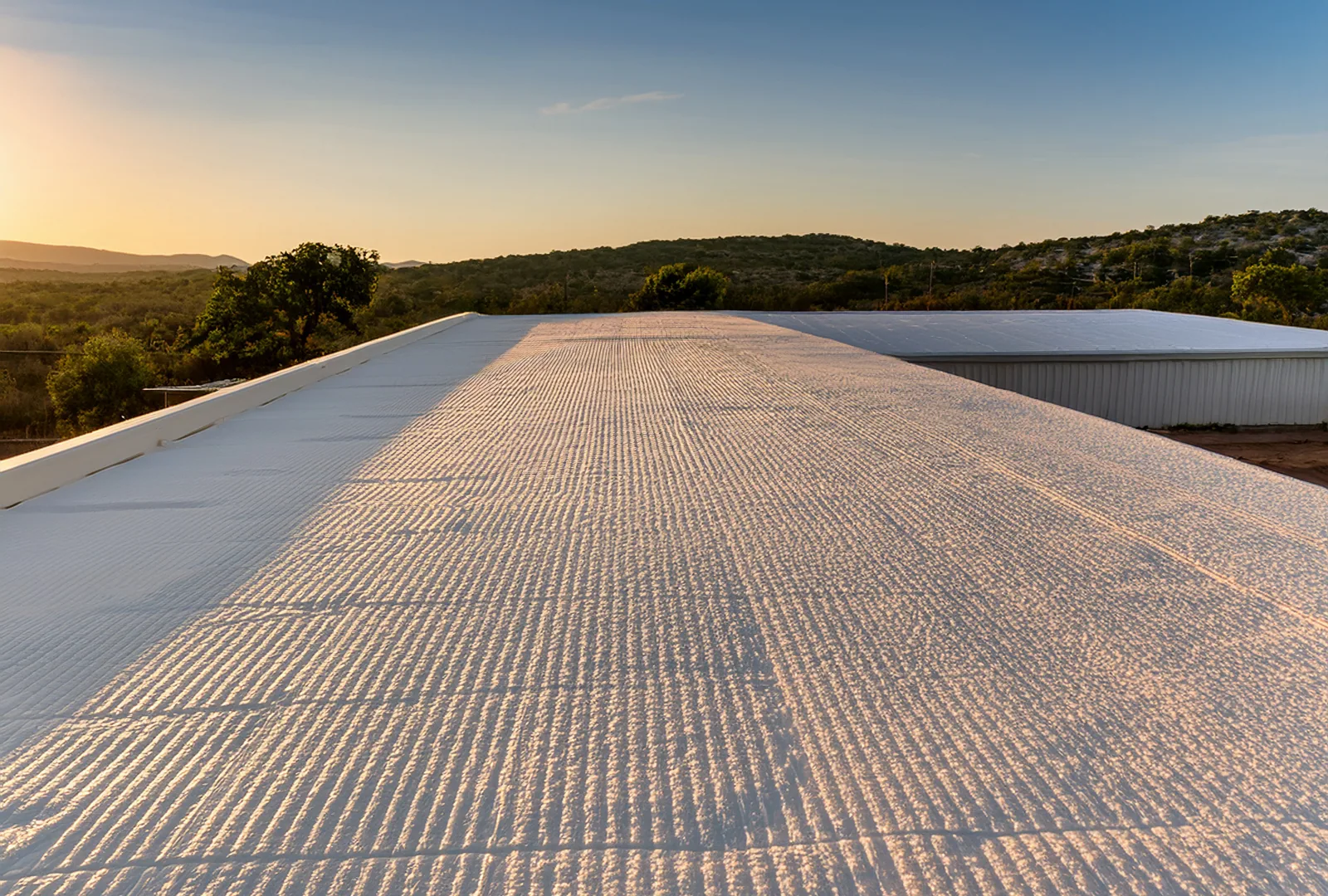
A Liquid Membrane Over an Existing Roof
Silicone roof coating is a liquid-applied polymer that cures into a flexible, waterproof membrane. It is sprayed or rolled over a prepared roof surface in one or two coats, with reinforcing fabric and mastic at seams, flashings and penetrations. Silicone tolerates ponded water better than most coatings, resists ultraviolet light and stays flexible across a wide temperature range.
It does not repair a failed roof. It extends the life of a sound one, and it only sticks to a surface that has been cleaned and tested. Thickness is the number that decides service life, and it is measured in mils of dry film, not gallons per square. We check it with a wet film gauge during application and a dry film check after cure, and the readings go on the roof plan by section so the next inspector can compare them with the original.
Is the Old Roof Ready for a Coating?
Before we recommend a coating we look for wet insulation, open seams, failed flashings, rusted metal and old coatings that will not bond. A moisture scan maps the wet areas, core cuts confirm what is under the surface and a small adhesion test patch shows whether the new coating will hold. Dirt, oils and chalking are cleaned with power washing and detergents, and rust is treated.
If a roof fails any of those tests, a coating is the wrong choice. We repair the roof or replace the affected section first, and coat afterward if the rest is sound. Old coatings matter. An acrylic or asphalt-based coating under a new silicone layer can cause adhesion problems, so we identify what is on the roof before choosing a primer, and a test patch is left to cure and pulled to see how it releases. On metal roofs, we also confirm that fasteners are tight and laps are sealed, since a coating bridges pinholes but not gaps.
Coatings on Retail, Industrial and Institutional Roofs
Coatings suit large low-slope roofs of metal, modified bitumen, single-ply or foam where the owner wants to defer a replacement. Strip centers along McFarland Boulevard and Skyland Boulevard, industrial buildings in the Airport Industrial Park and institutional roofs near the University all share a common pattern: a sound roof, a tight capital year and a long list of penetrations.
We do not assume which of them has a coatable roof. Each is tested, and the report states which sections qualify. For strip centers with many tenants, the coating plan includes a tenant notice, a protection plan for rooftop units and a clear time for each area, because overspray on a parked car is a problem the crew cannot undo. Wind direction is checked before spraying begins.
Wind, Edges and What a Coating Cannot Fix
A coating adds little wind resistance of its own. The EF4 that crossed 35th Street, 15th Street and McFarland Boulevard on April 27, 2011 was estimated at 190 mph, and in May 2025 a straight-line event north of Northport was surveyed at winds of 90 to 100 mph. If edge metal is loose or the attachment is weak, those have to be fixed first.
We check the perimeter, the fasteners and the flashing before coating, and we record the wind-uplift rating of the underlying roof section. Fastener pull tests on the deck or purlins, and a look at the termination bars and coping, tell us whether the roof can be trusted to hold the coating in place through a storm. Where a section fails, the report says so and the coating is limited to the sections that pass.
Ponding, Heat and Reflectivity
Rain near 53.5 inches a year leaves standing water on many roofs here, and silicone handles it better than many alternatives. Heat that has hit 107 F makes reflectivity worth something: a white coating lowers the roof surface temperature and the cooling load below it. Drains still need to work, and we clear them before coating.
Silicone attracts dirt over time, which reduces reflectivity, so a cleaning interval belongs in the file. Roof drains and scuppers are also coated and detailed so that water leaves the surface; an under-coated scupper rusts out and leaks around its edge, which is a common cause of failures on coated metal roofs. After a heavy rain, we photograph ponded areas at several times of day and measure how long they take to clear, because a puddle that is gone in a few hours is a different case from one that is still there on the next morning. The measurement belongs in the roof file beside the coating decision.
Coating Records That Matter
For each section we log the substrate, the coating product family, number of coats and thickness, the date applied, test results, last inspection, warranty terms and an estimated service range. Because a coating can change reflectivity, it is weighed against ASHRAE/IES 90.1-2013 and the 2021 International Building Code, whose July 1, 2022 effective date carries exceptions.
These entries support our roof warranty management and the preventive roof maintenance program that keeps the coating clean and sound. Each entry also prices the choice to wait, so a coating this year can be set against a replacement a few capital years out on the same condition record. Adhesion test results are filed with a photo of each test patch, so a later peeling problem can be traced back to the original surface.
Prep, Coat and Recoat
The sequence is clean, repair, prime where required, reinforce seams and flashings, spray the base coat, spray the top coat and check thickness. Weather matters: the roof has to be dry and the temperature within the product limits. A recoat date is set from the coating's condition, and a coated roof is inspected on the same cycle as any other.
Related options are acrylic roof coatings and spray polyurethane foam roofing, and an owner choosing between restoring and replacing is making a roof coating restoration decision. Work reaches the Skyland Boulevard corridor and the neighborhoods around it. In an occupied building, areas are sectioned off and rooftop units and air intakes are protected, with a written schedule sent to the building contact. Each section closes with a punch list and a thickness check, and the coating warranty papers join the roof file.
Commercial Roofing Questions
Can silicone go over any old roof?
No. The roof has to be dry, clean and sound, and an adhesion test confirms the bond.
How does silicone handle ponding?
Better than most coatings, though drains should still be cleared and chronic ponding addressed.
Does a coating fix leaks?
It seals small defects once the roof is repaired. Active leaks and wet insulation are handled first.
When is the next coat due?
That depends on thickness and condition at the next inspection, and the roof file records the interval.