Acrylic Roof Coatings in Tuscaloosa, AL
A dry, well-drained low-slope roof with a worn but intact surface is the acrylic candidate, and a superintendent confirms it by pouring a bucket of water on the low spot and watching where it goes, because acrylic is a water-based coating that does not belong under standing water. Our crews clean, repair and coat commercial roofs in Tuscaloosa, AL, and each walk ends in a ranked list of roof sections that an asset manager can carry on the books, with the coating decision for each section backed by a moisture scan and an adhesion test. Acrylic is the economical option on that kind of roof, and the reason to pick it is a tight capital year and a roof that tests dry. It is not the reason to put off a repair that is already due.
A Water-Based Coat Over a Prepared Surface
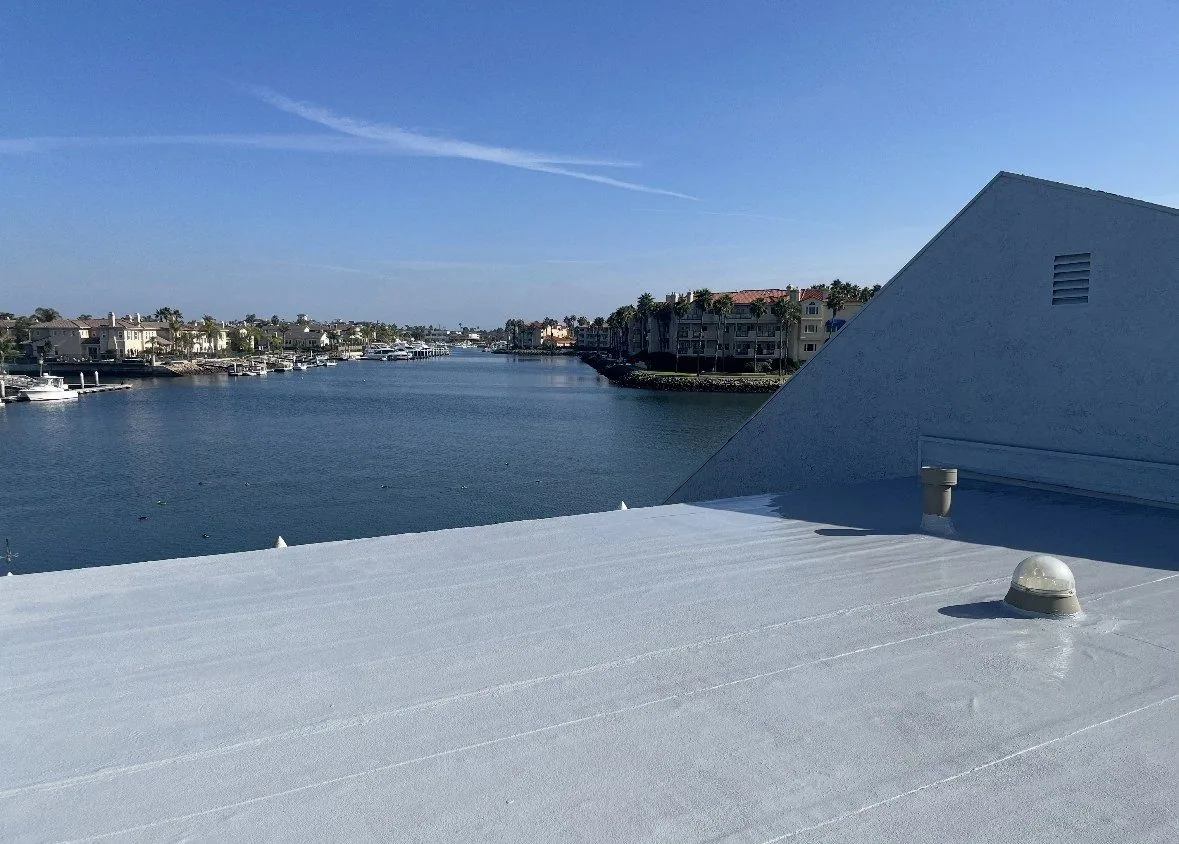
Acrylic roof coating is a water-based polymer applied by spray or roller over a cleaned and repaired roof. It cures as water leaves the film, which is why weather matters at application. It is reflective, flexible and economical per square foot, and it is used over metal, built-up, modified bitumen, single-ply and spray foam roofs when the substrate is sound.
Seams, fasteners, flashings and penetrations get reinforcing fabric and mastic before the field coat, and the number of coats and the final thickness determine how long the coating protects. Because acrylic is thinner per coat than some alternatives, the roof gets more coats or a heavier application when the substrate is rough, and the contractor's mil thickness readings matter. A roof that took two coats in an ordinary pass may need three where the surface is open, and the file records.
Pooling, Chalking and Adhesion Checks
On a roof that has an existing acrylic coating, we find chalking, thin spots, blisters, cracked mastic, coating peeling at laps and dirt that has built up in low areas. A scrape test shows whether the coating is still bonded. On roofs with no coating yet, we look for wet insulation, failed seams and rust that must be handled first.
Ponding is the main disqualifier. Acrylic can soften and break down when water stands on it for days, so a roof with chronic ponding needs regrading or a different system. We also look for the quality of previous coatings. A past coat applied over dirt will peel in sheets, a coat applied too thin will have chalked through and a coat applied in a rainy week may show washout streaks. Each of those tells us how much of the old coating can stay and how much has to be stripped before the new one goes on.
Acrylic on Metal, BUR and Retail Roofs
Acrylic coatings are common on aging metal and built-up roofs over retail, institutional and industrial buildings. Retail along the University Boulevard and Midtown corridors, including the centers around University Mall and Midtown Village, and warehouses near 35th Street all have roofs where a coating might defer replacement. The result depends on the roof beneath.
We test each building's roof before recommending anything. A report may call for acrylic on one section and a different treatment on the next. For multi-tenant retail, rooftop units are protected and tenants are told when each area will be coated, because overspray and fumes from cleaners are tenant-facing problems. The crew also checks wind direction and keeps coating away from vehicles and glass.
Edges Come First
A coating on a roof with loose edges is a coating on a roof that will lose the edge. Tuscaloosa's wind record, including the EF4 of April 27, 2011 and the 90 to 100 mph straight-line winds surveyed north of Northport in May 2025, is the reason edge metal, terminations and fastening have to be right before any coating goes on.
We re-secure trim, replace damaged flashing and pull fasteners to test grip where possible, and we record the wind-uplift rating of the roof section underneath. A coating can bridge small gaps and pinholes, but it cannot replace a missing fastener or a loose panel. Those get repaired before the coating goes on, with a fastener pull test where the structure allows it. Metal panels that have lost their grip on the purlins are re-secured and the screw pattern is recorded.
Rain Windows and Drainage
In a humid subtropical climate with about 53.5 inches of rain a year, the number of dry application windows is the practical limit on acrylic. The coating needs hours of dry weather to cure, and an afternoon thunderstorm can wash fresh coating off a roof. Heat up to the 107 F record speeds drying but can blister the coating on a hot substrate.
We schedule by forecast, apply in sections and keep tarps and materials ready. Drains and scuppers are cleared and coated so that water leaves the roof. We record the forecast and the surface temperature at the start of each section and note any rain within the cure period, so a washout is found and corrected before the roof is signed off.
What the Roof File Records
For each section we log the substrate, the coating family, number of coats, thickness, date applied, adhesion results, drainage tests, last inspection, warranty terms and an estimated service range. A coating that changes reflectivity or insulation gets reviewed against the 2021 International Building Code, which Alabama enforces from July 1, 2022 with some exceptions, and against ASHRAE/IES 90.1-2013.
The entries are the base for our roof condition reports and for the roof capital planning sequence. The file also states the cost of leaving a section alone, so the asset manager can weigh a coating this year against a replacement in a later capital year using the same condition record. Photos of each test patch and each thickness reading are filed by section, so a later peel or wash-out can be traced to the original conditions and not to guesswork. Cure times and the weather during each pass are recorded too.
Restore Now or Replace Later
The sequence is wash, repair, prime if needed, reinforce, base coat, top coat and thickness check. Acrylic is often chosen when an owner wants to push a replacement a few years out, and the roof file shows the date by which a renewal should be considered. A coated roof still needs preventive roof maintenance to clear drains and watch for wear.
Where ponding is present, silicone roof coatings are the usual alternative, and owners who want a new weather layer weigh TPO roofing or a metal roof retrofit against it. We serve the Midtown and 15th Street area and the rest of the city. On an operating building, the schedule is set in sections that can be coated and cured in a single weather window, and a written schedule goes to the building contact. A punch list and a thickness check close each section, and warranty paperwork goes into the roof file.
Commercial Roofing Questions
Why does acrylic need a dry roof?
It cures by water leaving the film, so rain or standing water breaks down fresh coating.
Can acrylic go over rust?
Only after the rust is cleaned and treated, and fasteners and laps are sealed.
How many coats are needed?
Typically a base and a top coat, with thickness set by the product and checked in the field.
When should the roof be recoated?
When the next inspection shows thinning, chalking or exposed substrate; the roof file records the interval.
What roofs should not get acrylic?
Roofs with ponding that lasts days, wet insulation, open seams or loose edges. Those need repair or a different system before any coating.