
Johns Manville Roofing Systems in Tuscaloosa, AL
On a campus building roof where Johns Manville insulation or membrane is listed in the original specification, the superintendent often learns the most from a core cut, because the layers under the surface tell the roof's whole story: the membrane, the cover board, the insulation boards and the deck. Johns Manville is known for commercial roofing membranes and for roof insulation, and in Tuscaloosa, AL, where the University of Alabama campus alone spans 297 buildings, an asset manager may hold several roofs that share a supplier name but differ in age, assembly and condition.
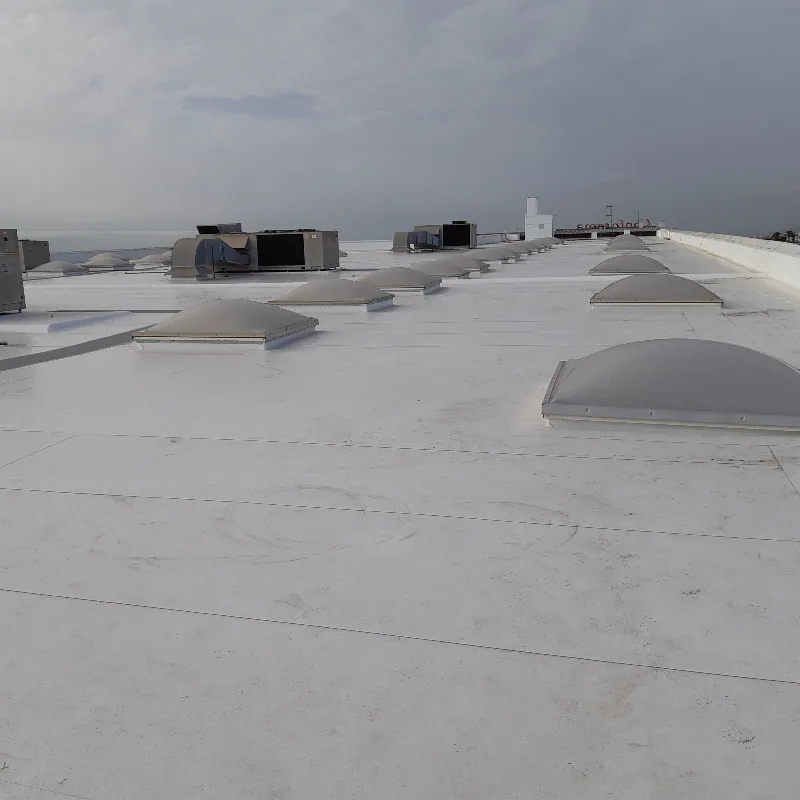
Membrane and Insulation as One Assembly
A low-slope roof is a stack, and the insulation is a working part of it. Polyisocyanurate boards give most of the thermal value, cover boards protect them from traffic and hail, and the membrane keeps water out of both. Tapered insulation, cut at a slight pitch, directs water to drains and removes the low spots where ponding forms. The layout is drawn as a plan with each board numbered, so a crew can set the pieces in order and a later inspector can find the crickets that divert water around curbs. When a manufacturer supplies both the boards and the sheet, the pieces are designed to work together, and a repair that swaps one layer for something else needs a compatibility check.
The membrane side of the offering includes single-ply sheets and layered asphalt-based assemblies, so the family has to be identified on each roof. We record the insulation thickness, the number of layers, the attachment method and the cover board in the roof file, because those numbers drive both the thermal performance and the wind-uplift rating.
What Core Cuts and Moisture Surveys Show
Insulation fails quietly. A seam leak that goes unnoticed for a season can soak the top board, which loses thermal value and weight-bearing strength, and the membrane above it then stretches or sags. On the surface it may look intact. A moisture survey maps cool, wet zones across the roof, and a core cut, a small round sample through all layers, confirms whether the board is damp, crushed or delaminated.
We cut the core at a chosen location, record the layers, photograph the sample and patch the hole the same day with a compatible repair. The results go on the roof section drawing, so the asset manager can see where wet insulation ends and sound insulation begins. That boundary decides whether the scope is a repair, a partial replacement or a full tear-off.
Fastener condition is the other thing a core shows. Rusted plates, backed-out screws and crushed insulation around a fastener head all point to attachment problems that a surface walk misses. When we see them, we pull a sample of fasteners across the roof section, test them in the deck and report the pattern, since an attachment problem is a wind problem as much as a leak problem.
Heat, Rain and the Thermal Load
Heat up to a record 107 F and roughly 53.5 inches of precipitation a year put insulated roofs under both heat and moisture. Dark membranes in a long summer expand and contract, and the cycle works at seams and flashings. White or reflective surfaces reduce the surface temperature but do not remove the movement. Insulation does its work only when it stays dry, so a roof that ponds after rain loses thermal performance as well as membrane life.
The record low is -1 F, which is far less demanding, but it still matters to adhesives and sealants, since many have minimum application temperatures. We schedule adhesive-based work against both limits and write the weather hold rules into the plan.
Campus, Hospital and Institutional Roofs
The University of Alabama is the county's largest employer, DCH Regional Medical Center and Northport Medical Center follow in size, and the Tuscaloosa VA campus runs to 125 acres and 25 major buildings. Institutional roofs like these are often a patchwork of additions built across decades, each with its own membrane, insulation and drainage. On a college or university building and on a hospital, access, noise and air intakes shape the work.
For a multi-building owner, a roof condition report in one format shows which roofs are close to the end of service life and which can wait. Our University Boulevard corridor work follows the same approach, with roof sections ranked by risk.
Repair, Recover and Tear-Off Decisions
With wet insulation the choice is between replacing the affected boards and replacing the whole roof. A recover, a new membrane over a dry existing assembly, saves tear-off cost where the existing roof can carry the added layer, and the code sets limits on the number of layers. Alabama's 2021 International Building Code took effect July 1, 2022 with exceptions, and a March 17, 2025 amendment pulled in portions of the 2024 edition, so we confirm the applicable edition with the permit office.
A roof recover is considered only after the moisture survey. If the scan shows scattered wet areas, those are cut out and replaced before the recover goes over them. If the whole roof is wet, tear-off is the sound route and the scope says so with a cost range. Whether a GAF or Holcim Elevate system suits a building is a matter of fit to that roof.
What the Asset Manager Carries Forward
At the end of the work the file lists each roof section with its assembly, layer thicknesses, age, repairs and next inspection date. The punch list is closed on the roof with the asset manager present, and photographs show every flashing and penetration. Any item left open is dated and assigned, so a minor detail does not drift for a season. That file is the part of the work that serves the owner for the next ten years, because it tells the next crew what is under the surface without another core cut.
It also gives the asset manager a basis for budgeting. A roof section with dry insulation, sound seams and a clean maintenance history goes on a long horizon, a section with scattered wet boards goes on a repair-and-watch list, and a section with saturated insulation goes on the capital plan with a target year. Each line carries a range, so a budget meeting can decide between spending now and spending later with real numbers on the table.
When the record is shared across several buildings, the same layout is used on each, and a multi-site roof program can rank the roofs together instead of one at a time.
Commercial Roofing Questions
Do you work on roofs with Johns Manville products?
We install, repair and maintain commercial membranes and insulation of this kind, and we identify what is on the roof before choosing repair materials.
What is tapered insulation for?
It adds slope so water moves to the drains. It removes low spots where ponding and early membrane wear begin.
How big is a core cut?
A few inches across. It is patched the same day with a compatible repair. We mark each cut on the roof drawing with a number and a photograph, so the location is known to the next crew and a repeat cut is not made in the same spot.
Can wet insulation dry out under the membrane?
Rarely enough to matter. Wet boards usually have to be replaced, and the survey shows how much.
Does adding insulation change the wind-uplift rating?
It can. Thicker assemblies need longer fasteners and a recalculated pattern, so we review the attachment.