Solar-Ready Roofing in Tuscaloosa, AL
On a large standing seam metal roof over a Tuscaloosa distribution building, a solar array can be clamped to the seams without a single hole through the metal, and a superintendent will check whether the panels, clips and seams are healthy enough to carry it for the life of the array. On an aging single-ply membrane roof beside it, the same array would need ballast or penetrating mounts, and the roof under it might have a decade less life than the panels above. The question is never only whether a roof can hold solar. It is whether the roof will outlast it.
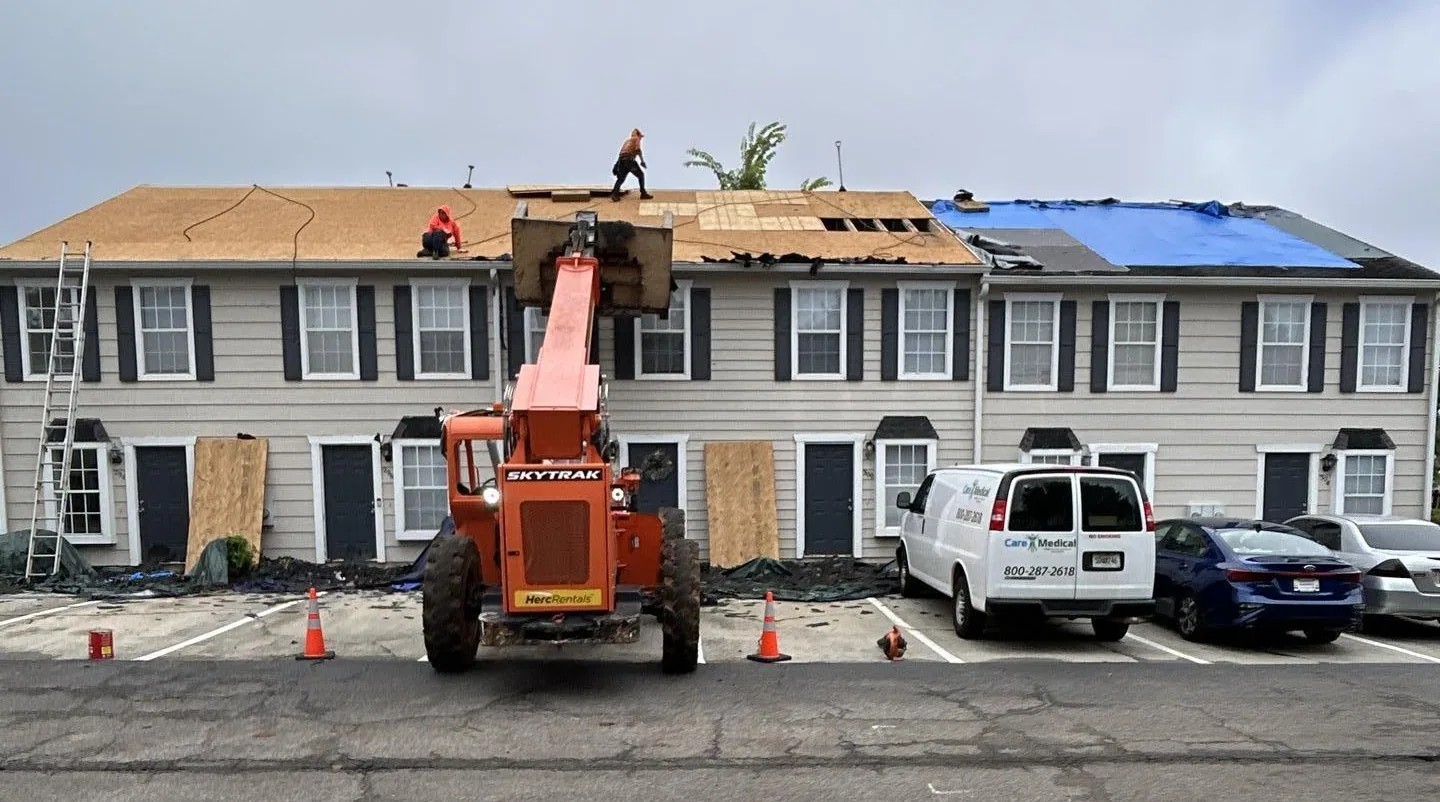
A solar-ready roof is a roof that has been prepared before the array arrives: repaired, restored or replaced as needed, with the structure confirmed, the drainage corrected and the mounting method chosen to protect the warranty. Roofs that skip that step end up with the array removed so the roof can be replaced.
What a Solar Array Asks of a Roof
An array adds weight, wind load and foot traffic, and it blocks sun and rain from the roof underneath. It adds mounts, conduit runs and sometimes penetrations. The roof must hold that load for the life of the array while staying watertight, and the work under the array can only be done by moving the array.
- Structural capacity for added dead load and wind effects
- A membrane or metal system with enough remaining life
- Attachment by clamp, ballast or flashed mount, matched to the roof
- Drainage that works around the rows of panels
- Access paths, setbacks and clearances for service and safety
Every item on that list is a roofing question, and every one is cheaper to answer before installation than after.
Condition Before Installation
Before an array goes up, we walk the roof and cut cores. Dry insulation, a sound deck and a membrane or metal system with years left are the baseline. Wet insulation, ponding, failed seams, corroded fasteners and loose flashing all need correction first. Annual rain near 53.5 inches means water-related defects show up quickly.
If the roof is near the end of its life, installing solar over it is the expensive way to replace the roof twice. A better plan is to replace or restore the roof first, and to choose a system whose service life matches the array. A roof coating restoration can extend a sound roof under a planned array, and a commercial roof replacement is the answer when the roof is failing. The decision rests on cores, moisture readings and a look at the deck.
Solar by Building Type
Large, flat warehouse and distribution roofs are common solar sites, since they have area and few obstructions. A warehouse roof at the Tuscaloosa County Airport Industrial Park, say, may offer the structure and open area an array needs, once the cores say the roof is healthy. Retail centers on McFarland Boulevard have many tenants and mixed roof ages, which complicates ownership and warranty.
Schools and colleges have varied roofs, and a hospital has dense mechanical equipment and rules for access. A plant may have room but also process exhaust. Metal roofs allow clamp-on mounts that avoid penetrations, and membrane roofs need flashed mounts or ballast. We assess each section separately, since a single building can have one roof ready for solar and another that is not.
Wind Load and Perimeter Setbacks
An array changes how wind acts on a roof. Panels catch wind from above and below, and the edges of the array and of the roof see the highest pressure. Wind in this county has run from an EF4 tornado in 2011 to surveyed gusts of 90 to 100 mph north of Northport in May 2025. The array engineer designs the mounts for the wind zone, and the roofer checks that the roof beneath will accept those loads.
Perimeters matter. Arrays are set back from edges for wind and for firefighter access, and the edge metal and coping must be in good condition before the array arrives. The owner's engineer and the local authority confirm which provisions of the state's adopted 2021 International Building Code apply to a rooftop array.
Drainage Under and Around Arrays
Panels shade the roof and shed rain in lines. Water that falls off a panel row lands in the same strip each time, and over years that strip wears, stains and grows algae. Ballasted arrays can also block the path to a drain, and a blocked drain under a row of panels is invisible from the ground.
We check slope, drain location and overflow before installation, and we recommend corrections where water stands. Where a roof drains poorly, tapered insulation placed with the new roof can fix the problem before the array covers it. Walk paths and clear lanes are marked, so the drains stay reachable for cleaning and the membrane under the panels is not trapped under debris.
Warranty, Records and Working Around Panels
Mounting on a warrantied roof can affect the warranty. Many membrane and metal manufacturers publish approved mounting methods and may require notice or inspection, and the owner confirms the terms before work begins. We document the roof before installation with photos and moisture readings, so the roof's condition at the day of installation is on file. A roof warranty management record keeps the paperwork together.
After an array is up, roof work happens around it. Repairs near panels require access, and large repairs require removal and reset of rows, which is a cost to plan for. Drains under arrays must be cleared, and the inspection route is marked on the roof plan. Owners at the Airport Industrial Park and elsewhere can use a condition report as the baseline for the whole life of the array. Roof penetrations from mounts are logged beside rooftop equipment curbs and supports.
Scope and Sequence
Solar-ready work begins with the survey and cores, then repairs or replacement, then flashed mounts or curb blocks if the array design calls for them, then a clean, photographed roof handed to the solar contractor. The roofer and the solar contractor agree on mount locations, conduit paths and who seals each penetration, and that agreement goes in writing.
After the array is installed, we walk the roof with the property manager to check that mounts are sealed and the membrane is intact, and we update the roof plan with array rows, access lanes and drain locations. If a repair is later needed under the array, the plan shows which rows must be lifted and what the work will involve.
Commercial Roofing Questions
How much life should a roof have before solar?
Enough to outlast the array, or the roof should be replaced first. We assess remaining life from cores, seams and moisture, and give a plain recommendation.
Does solar void a roof warranty?
It can if installed outside the manufacturer's terms. Many manufacturers publish approved methods. Confirm the terms before installation.
Can solar be installed on a metal roof without holes?
On standing seam, often yes, with clamps on the seams. Other metal profiles use flashed mounts. The panel and clip condition must be sound.
Do you install the panels?
No. We prepare the roof, repair or replace it, flash the mounts if required and work around the array afterward.
What happens when the roof needs repair under the array?
Rows are disconnected, lifted, and reset by the solar contractor. The cost and downtime should be planned. A condition report on the roof before installation reduces surprises.