Commercial Roofing in Gordo, AL
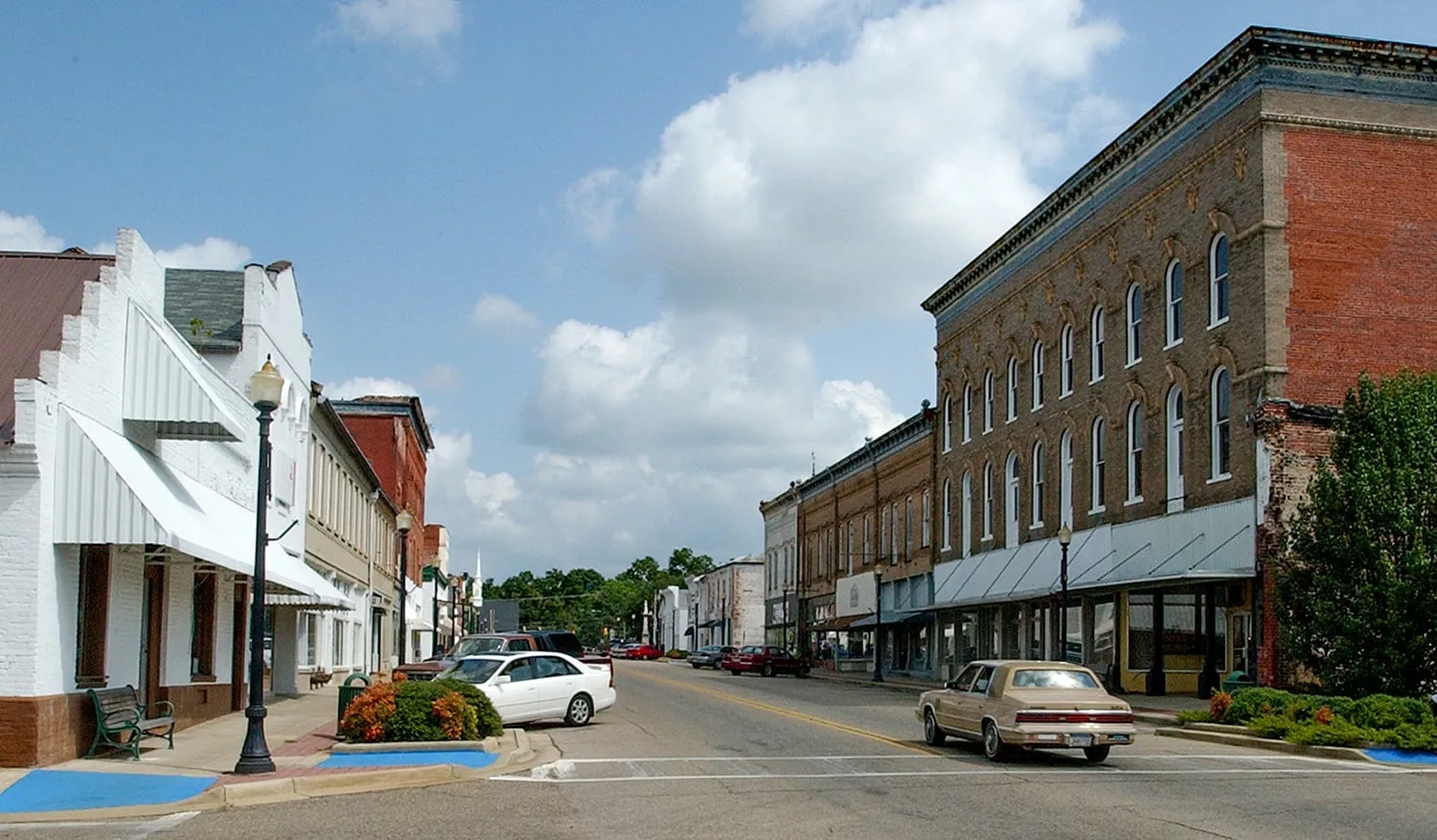
On a flat-roofed storefront at a highway crossroads, a superintendent finds the rooftop unit curb before anything else, because that is where a membrane roof gives up first. Gordo, AL sits in Pickens County on US 82, where State Routes 86 and 159 meet the highway, and the town of 1,628 residents (2020) lies 23 miles out of Tuscaloosa and 22 out of Northport. The roofs we plan for at a crossroads like that are retail, office and service buildings, and the sheds and shops behind them.
Every walk follows the same order: the roof type, the deck, the penetrations, the drains and the edges. At the end, the asset manager gets a ranked list of sections and what each one costs to leave alone.
Crossroads Storefront Roofs
A storefront or small strip building has a flat or low-slope roof behind a parapet, with a handful of units, a few vents and a scupper or two. Because there are few outlets, one clogged scupper sends every storm's water against a wall. We clear each outlet, probe the flashing at the parapet and look for the dirt ring where water stood.
Canopies and overhangs over the doors take wind and rain together. Their edge metal is easy to dent, and the flashing where the canopy meets the wall is a common leak point. We tug on the trim, check the sealant and photograph the joint so the next visit can compare.
The parapet is the second concern. Cap flashing loosens, mortar cracks and the through-wall termination lets water behind the membrane. We press on the cap, tap the joints and mark anything that moves. A commercial roof repair at the wall often ends a leak that patches in the field never reached.
Rooftop Unit Curbs and Penetrations
Every unit sits on a curb, and every curb has a flashing that moves as the metal heats and cools. Tuscaloosa's record high is 107 F, and a dark roof surface in that sun expands the curb and works the corners loose. We probe each corner, press the flashing and photograph the termination.
Pipe boots and vent stacks dry out in the same way. A boot with a hairline crack lets in a thread of water that travels along the deck before it shows. Replacing a boot costs little, and our penetration flashing work covers boots, curbs and skylight frames in one pass.
Heat also dries sealant at laps and terminations. We cut out failed sealant, clean the surface and lay new material, and we note which details have been resealed more than once, since a detail that keeps failing needs a rebuild and not a third bead.
Ponding and Drain Sumps
About 53.5 inches of rain fall on Tuscaloosa in a typical year, and a flat roof in Pickens County drains through the same few outlets in every storm. A low spot that holds water after rain is ponding, and ponding ages a membrane faster than any other condition. The fix may be a cleaned drain sump, an added drain or tapered insulation that gives water a slope.
We map every low spot with a level and a photograph, then match the correction to the cause. Our ponding water repair work starts by finding out whether the deck has sagged or the outlet has clogged, since the two need different fixes. Any section where the core cut shows wet insulation moves to the replacement list.
Wind History and Edge Metal
Tuscaloosa's EF4 tornado of April 27, 2011 was estimated at 190 mph, and an F0 on April 30, 2005 traveled about 6.75 miles from near Northport toward Lake Tuscaloosa. Both belong to the wider Tuscaloosa area, and they are the reason the edge metal, the attachment and the wind-uplift rating sit at the top of a Gordo file.
We pull on every length of edge metal, probe the fasteners behind it and test a sample of roof screws. A section that fails the pull test goes on the punch list for refastening. Loose edge metal gets tightened on the visit. In 2007 an EF1 tornado near Samantha stripped part of the roof from a brick house, and a loose edge is how losses of that kind begin.
Highway Access and Open Hours
US 82 carries the traffic through Gordo, so we agree on the delivery route, the lift position and the daily closeout with the owner before the first day. A store that stays open needs a fenced work area, a clear entrance and a roof that is watertight each evening.
We schedule noisy work for the hours the owner picks. Gordo is 23 miles from Tuscaloosa, so we load the truck for the whole day and avoid a second trip for a missing part. Open items go on a weekly punch list, and the warranty walk at the close of the job confirms them. For an emergency roof repair, we cover the opening first and plan the lasting repair second. Temporary protection is photographed, so the insurer sees what was done and why.
Repair, Coat or Replace
The core cut makes the call. Dry insulation under sound membrane suits a repair or a coating, while wet insulation through a section means tear-off. The 2021 International Building Code is the statewide standard in Alabama, in force since July 1, 2022, so a replacement scope lists insulation, attachment and wind rating to match.
Owners in Reform and Northport are choosing among the same options. Pricing depends on section area, deck condition, access and penetration count, and the report lists each driver along with the timing each option needs. A coating needs several dry days, a recover needs dry insulation and a tear-off needs a planned weather window with temporary protection on site. Larger work fits the cooler months well, and we plan it with the owner's budget year in mind, when adhesives and sealants cure on a predictable timeline.
Commercial Roofing Questions
How often should a storefront roof be inspected?
Twice a year at minimum: once before the wet season and once after the heat of summer. Add a visit after any severe storm. Each visit takes a few hours, ends with photographs and a short list, and keeps small defects from turning into wet insulation.
Why do rooftop unit curbs leak so often?
Heat moves the curb, the flashing dries and the corners split. Service traffic around the unit wears the membrane, and a unit added later may sit on a curb that was never tied in. We probe every corner, press the flashing and replace the worn termination.
Can ponding be fixed without replacing the roof?
Often. A cleaned sump, an added drain or tapered insulation can end it. A sagging deck needs more, and a core cut shows whether the insulation under the pond has soaked up water. The cause decides the fix.
What does a fastener pull test tell you?
How much holding power remains in the screws or plates. We pull a sample from each roof section and record the readings. A weak reading marks the section for refastening, and a strong reading lets the section stay on the plan.
What should I send first?
Send the building list and the last roof report along with any leak history. The first walk covers the highest-risk sections, and a ranked condition summary shows what leaving each one alone would cost.