Sika Sarnafil Roofing Systems in Tuscaloosa, AL
A gray thermoplastic sheet with welded seams over a hospital wing or a kitchen exhaust line is what a superintendent expects to find where a Sika Sarnafil system is on the books, and the first step is to confirm it with the seam, the sheet thickness and the attachment instead of the name. Sika Sarnafil is a manufacturer of thermoplastic roofing membranes and of liquid-applied waterproofing, and in Tuscaloosa, AL, those systems turn up on buildings where chemical exposure, cleanliness and long service lives all matter, from medical campuses to restaurants and retail centers.
Welded Thermoplastic Sheet and What Sets It Apart
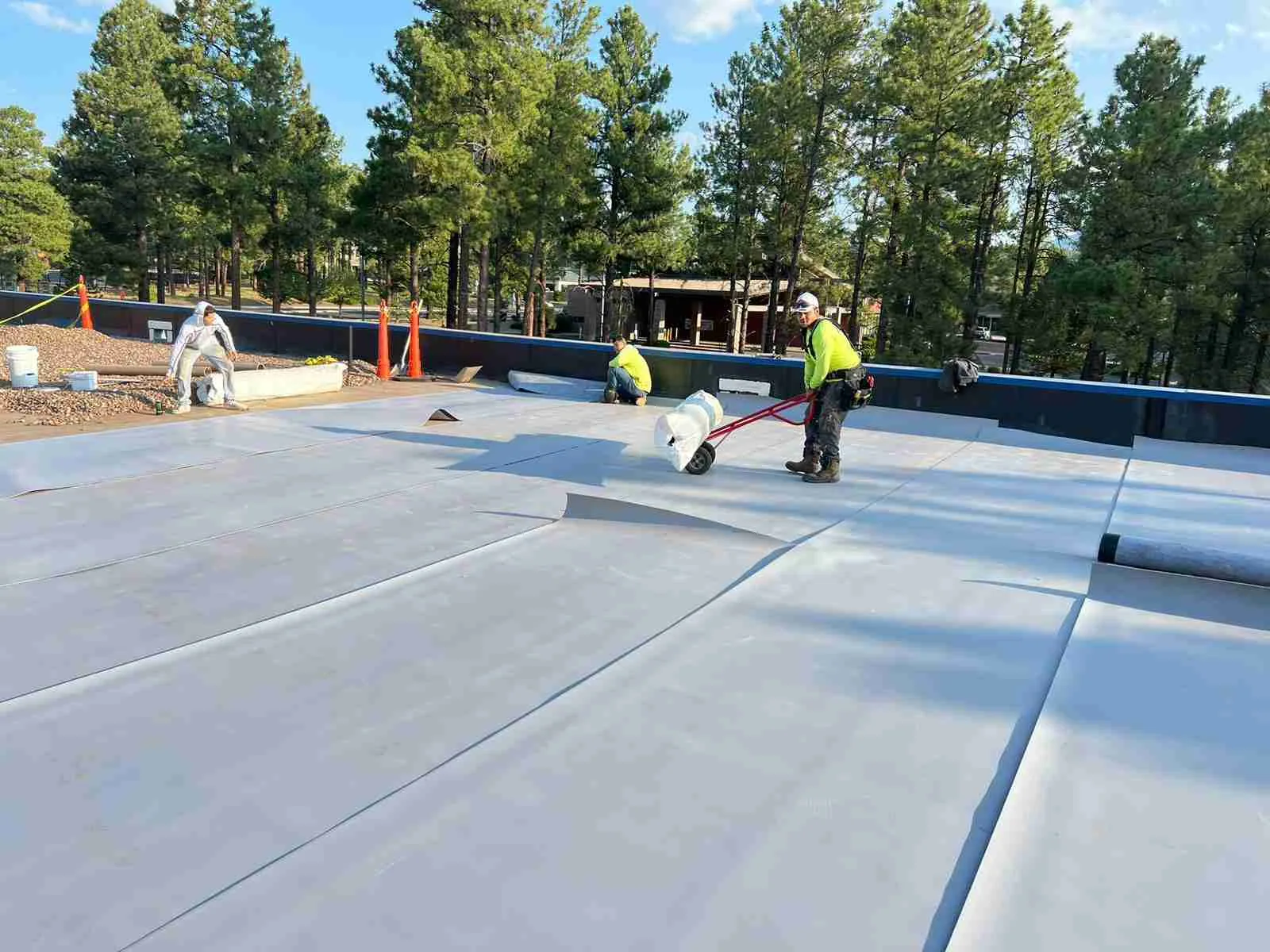
A thermoplastic membrane is a sheet of polymer, usually reinforced with a scrim, that softens under hot air and fuses at the seam. Done correctly, the weld is a continuous bond with the same strength as the sheet around it, and it can be tested with a probe along the edge. Because the material is thermoplastic, a later repair can be made by cleaning the old sheet and welding a new piece over it, which is a real advantage on a roof that will be serviced for decades.
The category is also known for chemical resistance. Grease, oils and many cleaning agents attack some single-ply sheets, and a PVC-family sheet tolerates them better, which is why this type is common near kitchen exhaust and on healthcare buildings. That family ages through the slow loss of plasticizer that can stiffen an old PVC sheet.
What the Crew Finds on an Older Welded Roof
On an older welded roof the usual findings are specific. Seams that are intact but dirty, flashing corners that have stiffened and cracked, patches made with a material that does not fuse to the sheet, and walkway areas worn thin by service traffic. Where the exhaust from a kitchen discharges onto the roof, the sheet beneath it may be stained and slick with grease, and the weld lines close to it deserve extra probing.
We run a probe along seams, flex the sheet at corners to test for brittleness, and cut a small sample when we need to see the scrim and thickness. A moisture survey checks the insulation underneath, since a roof can be sound on top and wet below, and the report puts the wet boundary on the drawing so the repair is sized to the problem.
Medical Campuses, Clinics and the Roof Above Them
By headcount the county's healthcare employers rank DCH Regional Medical Center first at 3,444, Northport Medical Center next at 1,761 and the Veterans Administration Hospital third at 1,256. The VA campus in Tuscaloosa spreads across 125 acres and 25 major buildings. Roofs on campuses like these are worked with care for patients, air handling and infection control.
The plan for a healthcare roof sets air-intake protection, noise limits and delivery windows before dates are fixed, and the superintendent checks with the facility contact each day. Access and escort rules shape scheduling on a hospital or a VA medical center, and a roof in the East Tuscaloosa and Loop Road area near the VA campus follows the same plan. Single-ply ranges such as Duro-Last and Versico come with their own details.
Wind, Edges and the Records After a Storm
The EF4 tornado of April 27, 2011 moved through Tuscaloosa at an estimated 190 mph, and straight-line winds in May 2025 north of Northport reached 90 to 100 mph. The point for an asset manager is practical: keep the edges tight. Edge metal, coping and perimeter fasteners are checked on every walk, and a welded roof is only as secure as the attachment at its borders.
After a storm, the first walk looks at the perimeter, then at rooftop units and curbs, then at the field. Photographs are dated and located on the roof section drawing, which gives the adjuster what a claim needs and gives the owner a clean record of what changed. After a direct hit, the sequence moves into tornado damage roof repair.
Drains, Ponding and Heat
A sheet here sees ponding and heat in the same year, given about 53.5 inches of rain and a 107 F record high. A thermoplastic sheet tolerates standing water better than some membranes but should not be asked to carry it, since ponding adds weight and invites algae and dirt that accelerate wear. We check drain sumps, slopes and scuppers, recommend tapered insulation where the deck has low spots, and keep drains clear as part of any maintenance visit.
Sediment and leaf litter collect at drain bowls on a flat roof, and a partly blocked bowl can hold several inches of water long after a storm has passed. We clear the bowls, check the clamping rings and strainers, and photograph the water level and the surrounding sheet, so a repeat visit can compare conditions. Where a scupper has been set too high, we raise the question of lowering it or adding an overflow.
Heat movement is controlled by good detailing: welded corners that are properly cut and reinforced, flashing that is fastened at the right spacing and curb bases that are sealed. Where an older roof shows shrinkage at a wall, we cut back, rewelded or replace the flashing instead of caulking over the gap.
Code, Warranty and What to Carry on the Books
Which edition of the International Building Code applies is settled at the permit office for each project, and the state's 2021 adoption has since been amended. We confirm it for each permit, and we read the warranty terms before we schedule work, since a repair outside the published method can put coverage at risk.
The record handed back lists each roof section, its system, age, seams, flashings, repairs and next inspection date. A roof condition report turns that into a ranked list with cost ranges, and the owner can decide whether to repair, restore or plan a commercial roof replacement.
Records matter more on a healthcare or institutional roof because the people responsible change over time. A facilities director may move, a contractor may be replaced, and a new asset manager inherits a roof with no history. A dated file with photographs, weld probe results, core samples and repair locations lets that person pick up the thread in an afternoon, and it gives the adjuster and the lender the same facts without a second visit.
Sequence of Work on an Operating Campus
Work on an operating campus follows an order the facility contact has approved. The access route and lift location are marked on a site plan, deliveries are scheduled outside peak hours, and each roof section is opened, repaired or replaced and closed within the day. Welded seams are probed before the crew leaves, and the punch list is walked with the asset manager at the end.
If weather turns, the plan includes a tie-in at the edge of the open area so water cannot run under the existing sheet, and the section is closed before the first rain line arrives. That discipline is what lets work continue near patients, classes and customers without leaving the building exposed.
Commercial Roofing Questions
Do you work on Sika Sarnafil roofs?
We install, repair and maintain welded thermoplastic membranes of this kind, after identifying the sheet and attachment on each roof.
Can an old welded sheet be re-welded?
Often yes, after cleaning. A hot-air weld fuses new material to the old, and the seam is probed for bond.
Why is this membrane used near kitchens?
Its PVC-family chemistry resists many fats and oils that attack other single-ply sheets.
What is plasticizer loss?
A slow loss of softening agents that leaves an old sheet stiff. It shows as cracking at folds and corners.
How do you protect patients during roof work?
Air-intake protection, noise limits and delivery windows are agreed with the facility contact before the first day.