
Soprema Roofing Systems in Tuscaloosa, AL
On an industrial roof near the Tuscaloosa Regional Airport that carries a Soprema modified bitumen membrane, the superintendent's first questions are about heat and fuel: whether the original installation used a torch, whether the roof can take one again, and what sits below that could ignite. Soprema is a manufacturer known for asphalt-based membranes and for liquid-applied waterproofing and flashing products, and the choice between those two kinds of work on a roof in Tuscaloosa, AL, shapes the schedule, the permit and the safety plan before anything else.
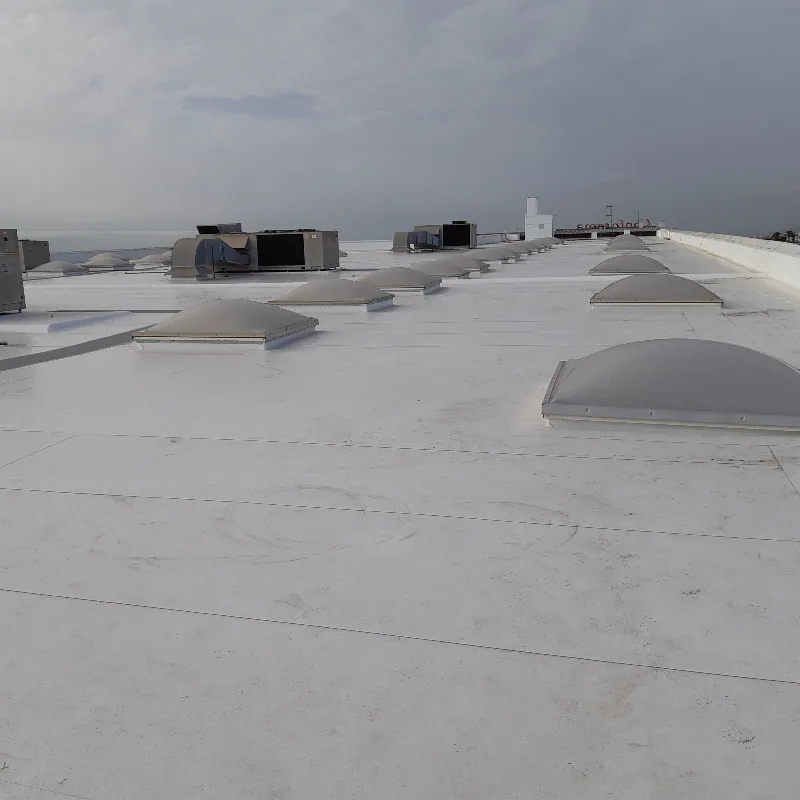
Layered Membranes and Liquid-Applied Details
Modified bitumen is asphalt blended with polymers and reinforced with fabric, supplied in rolls that are laid in two or more plies. The plies can be torched to the base, set in hot asphalt, bonded with cold adhesive or self-adhered with a sticky back. Each method changes the fire risk, the odor and the speed of the work. The top surface may be a granule-surfaced cap sheet or a smooth sheet protected by a coating.
Liquid-applied products work differently. A resin is brushed or rolled over a prepared surface, often with fabric embedded in it, and it cures into a continuous layer around penetrations, drains and irregular shapes. Soprema's Alsan line is an example of that kind of flashing resin. Where a roof has many odd details, a liquid-applied flashing can be more reliable than cut and folded sheet.
Torch, Hot Asphalt and Cold-Applied Choices
Open-flame work needs a fire plan. The crew carries extinguishers, keeps a fire watch on the roof for a set period after the last torch is shut off and checks the deck, the insulation and the walls for materials that burn. On some buildings the owner or insurer rules out torches entirely, and cold-applied or self-adhered plies fill the gap, as they do for asphalt-based systems from GAF or Johns Manville. They cost more in materials and run slower, but they keep flame away from combustible decks and occupied interiors.
We write the method into the scope with the reasons. The choice depends on the deck type, the neighbors, the access for a kettle or tanker and the schedule. A modified bitumen roof is built from base and cap plies, and a built-up asphalt roof from alternating felts and asphalt, which is why the repair method follows the build.
What the Crew Finds on an Aged Layered Roof
The usual findings on a layered asphalt roof are blisters that mark trapped moisture, cracks at the laps where the cap sheet has aged, granule loss that exposes the underlying mat and open flashing at walls and curbs. Foot-traffic lanes wear faster, and patches placed over a wet substrate do not last. A repair has to go to the cause, which may be a failed term bar, a blocked drain or a split at a corner.
We probe laps, tap blisters, cut cores and run a moisture survey, because insulation under layered membranes holds water and gives few clues from the top. The report separates cosmetic wear from conditions that lead to leaks, and it gives a cost range for each repair path.
Flashings get the longest look. On a layered roof, the base flashing climbs a wall or a curb and is capped with metal or a counterflashing, and each of those joints is a place where heat, sun and movement open a gap. We check term bars, sealant lines, reglets and the ends of cap sheets, and we note any place where a previous patch was applied with the wrong material. A small liquid-applied repair at the right place often does more than a large patch in the wrong one.
Industrial Parks and Long Low-Slope Roofs
The county's airport industrial park covers 1,000 acres along Robert Cardinal Road, with WATCO rail service and I-59 and I-20 within 4.5 miles, and the regional airport sits beside the Tuscaloosa Industrial Park a few miles northwest of the city. Roofs in an industrial setting like this are long and low-slope, and the owners are asset managers who want a record of each section more than a pretty surface.
Our Airport Industrial Park work begins with drains, curbs and penetrations, since those are where layered membranes fail first. Hunt Refining and Nucor Tuscaloosa are among the county's employers, so the safety plan for hot work in the park is written with neighboring industrial activity in view.
Heat, Rain and Wind on an Asphalt Roof
Summer highs have reached 107 F on record, and rain totals about 53.5 inches a year. Asphalt softens in summer heat and scuffs under foot traffic, so hot-weather work is scheduled early and walkways are protected. A day in July can push the roof surface well past the air temperature, and asphalt that is too soft marks under a boot or a ladder foot, which is why the crew lays boards or walk pads along the routes it uses. After every rain the roof is checked for standing water, since ponds speed granule loss and invite algae.
The EF4 of April 2011 tore warehouses apart in the 35th Street industrial area, and a May 2025 storm with straight-line winds of 90 to 100 mph struck above Northport. Neither gives a design wind for a particular roof, but both explain why we test edge metal and perimeter attachment on every walk, and why a wind damage roof repair begins at the edges.
Permits, Fire Rules and the Warranty Walk
The state's 2021 International Building Code applies, as amended in 2025, and the permit office confirms the edition for each submittal. Hot work may also require a local permit or an insurer's approval, and we collect those before the date is set. The warranty terms for the system are read too, since an unapproved method can put coverage at risk. Where the building is insured by a carrier with its own hot work rules, the written approval goes into the roof file so there is no question later about who agreed to what.
After the work, the record lists each section, ply count, surfacing, repairs and next inspection date. The roof warranty management file keeps the terms and dates beside the roof drawing. For a larger program, a commercial roof replacement can be staged section by section.
Sequence on an Operating Building
On a working site the sequence follows the fire plan. The access route for rolls, drums or tankers is fixed first, then the staging area, then the hours when work may run. Each roof section is opened, the deck is checked, insulation is replaced where wet, the plies go on and the edges are sealed before the fire watch begins. Curbs for rooftop units and other penetrations are completed along with their own section.
The asset manager and superintendent walk the punch list on the roof, and the file takes in materials, locations and dates. A commercial roof repair handled between larger projects follows this order too, only smaller.
Commercial Roofing Questions
Do you work on Soprema roofs?
We install, repair and maintain modified bitumen and liquid-applied systems of this kind, after identifying the plies and surfacing.
Is a torch always needed for modified bitumen?
No. Cold-applied and self-adhered plies avoid open flame, and we use them where fire risk or insurance rules call for it.
What is a liquid-applied flashing for?
It seals penetrations, drains and irregular shapes where cut sheet is hard to detail.
Why do blisters form?
Moisture or air trapped between plies expands in heat. A cut and a core show whether the cause is local or spread.
How long is the fire watch?
It runs for the period the site rules and the insurer require after the last open flame, and we log it.