
Membrane Puncture Repair in Tuscaloosa, AL
On a single-ply roof over a manufacturing building with a dozen rooftop units, the superintendent finds the punctures along the route the service technicians take: a worn track from the access ladder to each unit, scuffed shiny where boots have dragged grit, and every few yards a dimple, a nick or a hole the size of a pencil where a tool landed or a screw came through. Membrane puncture repair in Tuscaloosa, AL starts by walking that route, locates every opening in each roof section, checks the insulation below with a scan and a core cut, and marks the findings on the plan so the patch, the cut-out and the walk-pad layout follow the evidence.
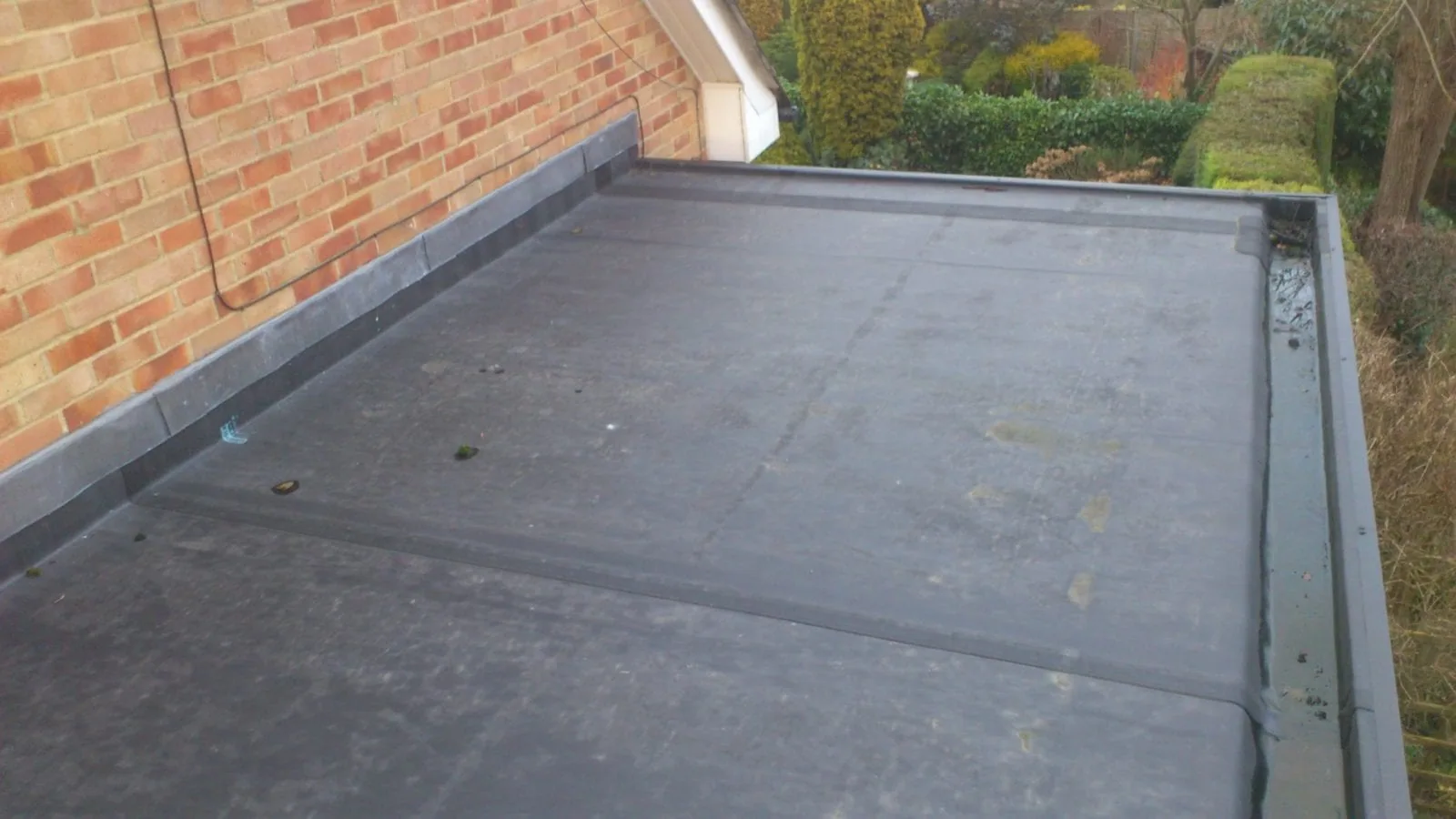
Where Punctures Come From
Most punctures have a human source. A technician drops a nut driver, a contractor drags a ladder, a crew replaces a unit and leaves a screw tip projecting from a curb. Storm debris is the second source: wind carries sheet metal, branches and gravel across a roof, and the membrane downwind of an edge takes the impact. The third is the roof itself, since a loose fastener plate can rise through the sheet as the deck moves.
The pattern on the plan tells us which source we are dealing with. A line of marks from a hatch to a unit means traffic. A cluster near a downwind corner means debris. A scatter of small holes over a section that has been recently worked means a trade left tools or screws behind. We mark all three, because the repair differs and so does the prevention.
Finding the Hole: Probe, Scan and Core Cut
A ceiling stain rarely sits under the hole. Water enters at the puncture, runs along the deck and drips where a joint or a fixture allows it, so we trace the path from the interior back to the roof section above. Once we have found a candidate, we press the membrane around it to feel for softness, which indicates that the board below has taken on water.
An infrared moisture survey across the surrounding zone outlines the wet area, and a core cut through the membrane and insulation confirms the reading. The result sets the size of the repair. If the scan is dry, a small patch is enough. If it is wet, the insulation has to be cut out and replaced, and the deck checked for corrosion or softness before a new layer goes in. The leak repair scope uses the same sequence, with a punctured membrane as the cause.
Patching Each Membrane Type
The patch has to match the sheet. On TPO and PVC, we clean the surface, round the corners of a cover patch so they cannot peel and weld it with hot air until a continuous bead shows at the edge. On EPDM, a primed, cured splice or tape is used because the rubber does not weld, and the patch is rolled from the center outward. On modified bitumen, the patch is a layered piece of the same sheet, heat-fused or set in cold adhesive.
Every patch extends well beyond the damaged area, and every edge is probed after it cures. Where the original sheet is brittle with age, a patch may not bond, and we say so before starting. A hole in a field that is otherwise sound is a simple repair. A hole in a section that is cracking everywhere, or one with laps opening nearby as in a seam failure, is a sign that a recover or replacement is coming, and the owner should know that before paying for a patch.
Foot Traffic, Walk Pads and Access Routes
Walk pads move the wear to a layer designed to be replaced. We lay them from the access point to each unit, around service panels and at the foot of every ladder, and we bond them so they cannot slide. The route is recorded on the roof plan so that the next contractor arriving with a tool bag knows where to step.
Foot traffic is heavier than it looks on a building with many units, and heat softens the sheet. At a record high of 107 F, a dark membrane in direct sun runs far hotter than the air, so a boot that leaves no mark in March can scuff in July. Where a roof carries a lot of equipment, such as a plant of the size an automotive supplier planned in Cedar Cove Technology Park, access control becomes part of the maintenance plan.
Storm Debris and Dropped Tools
After a storm, a puncture sweep is part of the inspection. Straight-line gusts of 90 to 100 mph, surveyed north of Northport in May 2025, and the EF4 tornado of 2011, which crossed the 35th Street warehouses, show that loose metal and debris are a real source of roof damage in this county. We walk the downwind edges and the areas around equipment, probe every mark and record the location for the claim file.
Where the roof was worked during repairs, we look for screws, offcuts and tool marks, because a crew leaving a roof is the last chance to find what it left behind. Repairs after wind damage often include punctures along the downwind edge, and the two scopes are written together. The asset manager receives a section list with each hole's location, its cause, the repair and a cost, and the record supports an insurance claim if one is filed.
What to Carry on the Books
A puncture is a small repair that points at a larger question, which is how often the roof is visited and by whom. The record we leave has a numbered plan, dated photographs of every hole before and after, the moisture scan outline, the cause noted for each and the walk route marked in a color that can be seen from the hatch. With that file the asset manager can see whether a roof is taking damage from traffic, storms or trades, and can place walk pads, access rules or a recover where the pattern says they belong.
We also list the roof sections where the sheet is too thin or too old to take another patch. Those are the sections that move into the capital plan, and the list gives the owner a reason to budget before a leak forces the decision. The cost to leave each section alone is written next to its entry.
Commercial Roofing Questions
Can a small puncture be patched without removing insulation?
Only if the scan around it reads dry. A wet reading means the insulation is cut out and replaced before the patch goes on.
Why does a leak appear far from the hole?
Water runs along the deck and drips where a joint allows it. We trace the path from the interior back to the roof and then scan the membrane.
Do walk pads help?
Yes. They move wear from the membrane to a replaceable layer, and the recorded route tells the next contractor where to step.
Can an old brittle membrane be patched?
Sometimes not. Brittle sheet may not bond. We test a small area first and tell the owner if a recover is the better spend.
What do you check after a storm?
The downwind edges and the areas around equipment, where debris lands. Every mark is probed and located on the plan.
How are punctures recorded?
Each gets a plan number, a dated photograph, a cause note and the repair method, so the next inspection can find it.