
Standing Seam Metal Roofing in Tuscaloosa, AL
Panels run eave to ridge with raised seams and no exposed fasteners on a standing seam roof, and a superintendent on one starts at the clips and the seams, not the pan, because the roof lives or dies by how well those hidden connections hold in wind and heat. Standing seam metal is installed, repaired and replaced by our crews on commercial buildings in Tuscaloosa, AL, and every walk finishes with sections ranked by condition, so an asset manager can carry the wind rating, trim condition and repair history of every roof on the books.
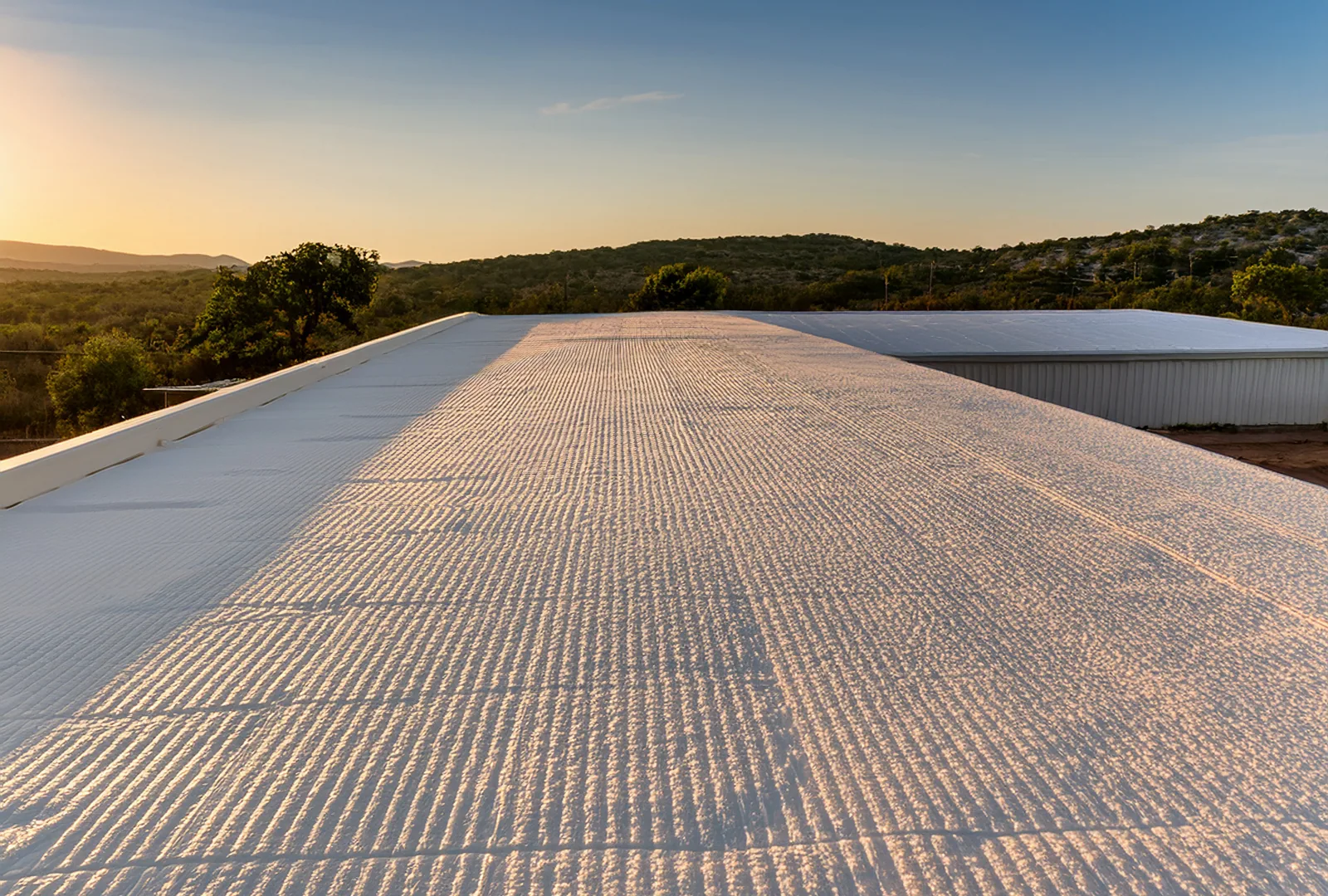
Panels, Clips and Concealed Fasteners
A standing seam roof is made of long metal panels, steel or aluminum, with vertical legs that interlock at the seam. The panels are held to the structure by clips that slide with thermal movement, which is why the roof can be long and still stay flat. Under the panels sit an underlayment, insulation and a deck or purlins, depending on the building.
The seams are either snapped together or mechanically seamed with a tool that crimps the legs closed, and the choice matters for wind resistance. Trim at the eaves, rakes, ridges and penetrations completes the weather line. Panel gauge, rib height and the spacing of the clips set how much wind a section can resist, and those three numbers belong on the roof file for every section. A panel that looks identical from the ground can be a different gauge from its neighbor, especially on a building that was added to over the years.
Seams, Clips and Fastened Trim
On an aging standing seam roof, we find open or unseamed legs, clips that have shifted or pulled, loose or dented trim, sealant that has dried at penetrations, corrosion at cut edges and fasteners at the trim that have backed out. Panels are walked over the seams where the roof structure allows, and pans are inspected for dents and scratches.
Leaks are usually at penetrations, trim and end laps instead of at the panel field. A core of the insulation under a section where we find a leak shows how far the water has spread, and a moisture meter checks the deck. We look at the finish as well. Chalking, fading and scratches that expose the base metal point to corrosion at cut edges, and industrial fallout can speed it up. At roof penetrations, we check the boot or the curb flashing, because a rubber boot that has cracked in summer sun is the most common single leak on a metal roof.
Metal on Industrial, Institutional and Retail Buildings
Standing seam is common on large industrial, institutional and retail buildings, where long panel runs and low maintenance are priorities. Two large industrial parks sit in the county: the 1,000-acre Airport Industrial Park off Robert Cardinal Road and the 950-acre Cedar Cove Technology Park at Progress Drive and Ed Stephens Road. On the University Boulevard and McFarland Boulevard corridors, retail and institutional buildings share the same weather.
We identify the panel profile, gauge, finish and attachment on each roof before recommending a repair, since the clip type and seam style govern what can be done. On a large industrial roof the question is how many sections there are and which of them hold the equipment. On an institutional roof it is how many ages are present. On a retail roof it is how many tenants share a ridge. The answer sets how the roof is divided in the report and how the repairs are priced.
Wind Uplift, Trim and the Roof Edge
Wind lifts a metal roof from the eave and the rake, and the trim and the first few clips there carry the most load. Warehouses along 35th Street were destroyed by an EF4 tornado on April 27, 2011, with winds estimated at 190 mph, and a damage swath nearly four miles wide west of US 43 was tied to straight-line winds of 90 to 100 mph in May 2025. For each section we record the wind-uplift rating, the clip spacing where it can be checked and the trim condition.
Loose rake trim is a priority repair. It lets wind under the panel and starts the unzipping that wrecks a roof. The clip is only as good as what it is fastened to, so we also check the purlin or deck connection where we can see it, and pull a fastener to confirm the grip when the structure allows. A roof that was installed to one wind rating and then had a rooftop unit added may carry local loads that nobody recalculated, and the report flags any section where that looks possible.
Heat Movement and Drainage Off the Panels
At the 107 F record high a metal roof grows, and the clips are designed to slide. If they are stuck or overtightened, panels buckle or oil-can. Water has to leave the roof cleanly, because gutters, valleys and downspouts clog with debris and a year's 53.5 inches of rain will overflow a blocked gutter into the wall.
Low-slope standing seam needs extra care at the seams, since slow-draining water can find a pinhole. We check gutters, valley pans and curb crickets and mark any low spot that holds water. The record low is -1 F, and ice that forms at a cold gutter during a hard freeze can lift trim and back water under a panel. After a freeze, we check eave trim and the first few feet of the roof for movement.
What Goes in the Roof File
For each section, we record panel profile, gauge and finish if known, clip type, seam style, last inspection date, trim condition, repair count and estimated service range. Two state documents govern a replacement review here: ASHRAE/IES 90.1-2013 for energy and the 2021 International Building Code, with its July 1, 2022 start date and exceptions.
Findings go into our roof condition reports, and the records support roof warranty management, since finish and weathertightness warranties set conditions the roof file has to meet. Clip spacing, where it can be checked, goes into the entry beside the wind-uplift rating, so the next reviewer sees how the rating was supported.
Repair, Retrofit or Replace
Repairs include re-seaming legs, replacing trim, resealing penetrations and swapping damaged panels. When the panels are sound but the system is aging, a metal roof retrofit adds a new layer. Replacement proceeds by section: remove panels and clips, inspect and repair the structure, set new underlayment and insulation, install new clips and panels and finish the trim.
Owners compare the option with TPO roofing on low-slope buildings, and edge work on metal is detailed in edge metal, coping and gutters. The Cedar Cove Technology Park and the surrounding county are within reach. In an operating building the work is staged bay by bay so the roof is closed at the end of each shift, and the building contact gets a sequence in writing. The job ends with a punch list and a warranty walk, and finish warranty paperwork goes into the roof file.
Commercial Roofing Questions
Why are clips important on a standing seam roof?
They hold the panels to the structure while letting them move with temperature, so a bad clip can cause buckling or loss of uplift resistance.
Where do standing seam roofs usually leak?
At penetrations, trim and end laps more than in the panel field.
Can a standing seam roof be repaired panel by panel?
Yes, in most cases, as long as panel profile and clip type can be matched.
What is oil-canning?
A visible waviness in flat panel areas. It is usually cosmetic, but stuck clips can cause it.